

Business Operation · 2025
In this section23 topics
- Corporate Information4 items
- Dividend Policy2 items
- Major Shareholders3 items
- Business Strategies Overview5 items
- Material Changes & Developments1 item
- Use of Proceeds from Securities Offerings4 items
- Commitments Made in the Registration Statement2 items
- Group Operating-Structure Policy1 item
- Shareholders with Potential Conflict of Interest1 item
- Relationships Among Major Shareholders1 item
- Shareholders' Agreement1 item
- Shareholding Diagram (Group Structure)2 items
- Income Structure3 items
- Product / Service Characteristics2 items
- Research & Development7 items
- Assets Used in the Business6 items
- Marketing Policy & Competition3 items
- Procurement of Products & Services8 items
- Nature of Business — Overview1 item
- Product Information — Overview1 item
- Projects Under Construction8 items
- Debentures & Bills of Exchange3 items
- Convertible Securities1 item
Corporate Information
Company Name
GUNKUL ENGINEERING PUBLIC COMPANY LIMITED
Telephone
0-2242-5800
Website
http://www.gunkul.com
comsec@gunkul.com
Dividend Policy
Dividend Policy
The Company has a dividend policy to pay dividends at a rate of not less than 40% of the net profit based on the Company’s separate financial statements, after deduction of corporate income tax, legal reserves, and other reserves (if any). However, the Company may determine a dividend payment at a rate lower than the above-mentioned level, depending on the necessity to maintain sufficient working capital for operations, investment plans, future business expansion, and other relevant factors relating to the Company’s business management.
Historical Dividend Payments
| This Year | Last Year | 2 Years Ago | 3 Years Ago | 4 Years Ago | Metric | Description | Remark |
|---|---|---|---|---|---|---|---|
| 0.14 | 0.12 | 0.13 | 0.14 | 0.25 | Net profit per share (Baht : Share) | Net profit per share (baht : share) | - The earnings per share are based on the Company’s separate financial statements and are presented for comparison with the Company’s dividend policy. |
| 0.12 | 0.08 | 0.06 | 0.12 | 0.18 | Dividend per share (Baht : Share) | Dividend per share (baht : share) | - The dividend per share represents the total cash dividend paid per share for the year, derived from net profit and retained earnings (if any). |
| 0 | 0 | 0 | 0 | 0 | Dividend stock ratio (Number of original shares: dividend shares) | Ratio of stock dividend payment (existing share : stock dividend) | |
| 0 | 0 | 0 | 0 | 0 | Dividend share value per share (Baht : Share) | Value of stock dividend per share (baht : share) | |
| 0.12 | 0.08 | 0.06 | 0.12 | 0.18 | Total dividend payment value (Baht : Share) | Total dividend payment (baht : share) | |
| 85.71 | 66.67 | 46.15 | 85.71 | 72 | Dividend payout ratio to net profit (%) | Dividend payout ratio compared to net profit (%) | - The dividend payout ratio is calculated based on the Company’s separate financial statements. The Company’s dividend payments in each year are made in accordance with its dividend policy, which stipulates a payout of not less than 40% of the net profit based on the Company’s separate financial statements, after deduction of corporate income tax, statutory reserves, and other reserves (if any). |
| 0.08 | 0 | 0 | 0 | 0 | Interim dividend (Quarter 1) | - At the meeting of the Board of Directors held on 14 May 2025, a resolution was passed approving the appropriation of retained earnings from the Company’s operating results for the period ended 31 March 2025 to pay an interim dividend in cash at the rate of THB 0.08 per share, totaling not exceeding THB 690 million, with the dividend payment scheduled for 13 June 2025. | |
| 0 | 0.08 | 0 | 0 | 0.06 | Interim dividend (Quarter 2) | - At the meeting of the Board of Directors held on 11 August 2021, a resolution was passed approving the appropriation of net profit from the Company’s operating results for the period ended 30 June 2021 to pay an interim dividend in cash at the rate of THB 0.06 per share, totaling not exceeding THB 535 million, with the dividend payment scheduled for 9 September 2021.
- At the meeting of the Board of Directors held on 6 August 2024, a resolution was passed approving the appropriation of net profit from the Company’s operating results for the period ended 30 June 2024 to pay an interim dividend in cash at the rate of THB 0.08 per share, totaling not exceeding THB 690 million, with the dividend payment scheduled for 5 September 2024. | |
| 0.04 | 0 | 0.06 | 0.06 | 0 | Interim dividend (Quarter 3) | - At the meeting of the Board of Directors held on 10 November 2022, a resolution was passed approving the appropriation of net profit from the Company’s operating results for the period ended 30 September 2022 to pay an interim dividend in cash at the rate of THB 0.06 per share, totaling not exceeding THB 535 million, with the dividend payment scheduled for 8 December 2022.
- At the meeting of the Board of Directors held on 8 November 2023, a resolution was passed approving the appropriation of net profit from the Company’s operating results for the period ended 30 September 2023 to pay an interim dividend in cash at the rate of THB 0.06 per share, totaling not exceeding THB 535 million, with the dividend payment scheduled for 6 December 2023.
- At the meeting of the Board of Directors held on 13 November 2025, a resolution was passed approving the appropriation of net profit from the Company’s operating results for the period ended 30 September 2025 to pay an interim dividend in cash at the rate of THB 0.04 per share, totaling not exceeding THB 345 million, with the dividend payment scheduled for 11 December 2025. | |
| 0 | 0 | 0 | 0.06 | 0.12 | Final dividend | - At the Annual General Meeting of Shareholders held on 27 April 2022, a resolution was passed approving the appropriation of net profit and retained earnings from the Company’s operating results for the year ended 31 December 2021 to pay an annual dividend in cash at the rate of THB 0.12 per share, totaling not exceeding THB 1,068 million, with the dividend payment scheduled for 23 May 2022.
- At the Annual General Meeting of Shareholders held on 21 April 2023, a resolution was passed approving the appropriation of net profit and retained earnings from the Company’s operating results for the year ended 31 December 2022 to pay an annual dividend in cash at the rate of THB 0.06 per share, totaling not exceeding THB 535 million, with the dividend payment scheduled for 18 May 2023. |
Business Strategies Overview
Chairman's Message
Dear Shareholders, Customers, Business Partners, and All Stakeholders,
The year 2025 marked another significant milestone for Gunkul Engineering Public Company Limited in reinforcing its position as a leader in green energy and integrated infrastructure. Under our new vision, “The Most Recognized Partner in Inclusive Green Energy and Infrastructure across Asia,” we are committed to becoming the most trusted partner in driving the transition toward clean energy across the Asian region.
Amid challenges arising from economic conditions, geopolitical changes, and the global climate crisis, GUNKUL continues to move forward with determination toward sustainable growth. In addition to maintaining our leadership in renewable energy and engineering, procurement, and construction (EPC) services for electrical systems, we have further transformed the organization into a comprehensive Energy Technology Provider. This transformation is supported by the expansion of our business portfolio into promising new areas, including Battery Energy Storage Systems (BESS) and the development of Green Data Centers, which represent essential infrastructure for the digital economy. These developments reaffirm that GUNKUL is not only an energy producer, but also a developer of a comprehensive and sustainable energy ecosystem.
In terms of sustainability, I am pleased to report that GUNKUL achieved the highest level of SET ESG Ratings in 2025 at “AAA”. This achievement reflects our commitment to conducting business in accordance with environmental, social, and governance (ESG) principles, as well as our determination to create “Inclusive Green Energy” that is accessible to all, contributing to the national goal of achieving Net Zero Emissions.
Finally, on behalf of the Board of Directors, I would like to express my sincere appreciation to our shareholders for their continued confidence, to our customers and business partners for their trust, and most importantly to all employees—the “GUNKUL Family”—for their dedication and collective efforts in driving the Company’s progress. I firmly believe that with our strong foundation and forward-looking vision, we will continue to grow steadily and create sustainable value for society and the nation.
With gratitude and confidence,
-Gunkul Dhumrongpiyawut-
(Dr. Gunkul Dhumrongpiyawut)
Chairman of the Board of Directors
Gunkul Engineering Public Company Limited
Vision
The most recognized partner in inclusive green energy and infrastructure across Asia.
Objectives
To maintain the Company’s business growth target at no less than 10–15% per annum.
To set a target for cumulative green power generation capacity of 2,000 megawatts.
To manage greenhouse gas emissions in alignment with the government’s policy on climate change by establishing targets to reduce greenhouse gas emissions from business operations in accordance with international guidelines and standards, with the aim of progressing toward a low-carbon society.
To manage and mitigate risks that may impact business operations in all aspects, with emphasis on employee safety, business continuity, and support for communities and society as a whole.
To expand investments and develop businesses in new industries in order to diversify and extend the Company’s business portfolio, creating new S-Curve opportunities that contribute to revenue expansion and efficient profitability.
Goals
The Company aims to establish a strong operational foundation while developing New S-Curve businesses to drive stable and continuous growth and achieve its long-term objectives.
Enhancing business value by expanding investments into high value–added business segments and further developing products to ensure a comprehensive product portfolio that responds to the needs of a broader customer base.
Leveraging technology and fostering innovation in all dimensions to extend business opportunities, enhance competitiveness, and reach a more diverse customer base, while driving the organization and society toward a new ecosystem of the energy system.
Reducing greenhouse gas emissions under Scope 1 and Scope 2 by 42% by 2030, in alignment with the Science Based Targets initiative (SBTi) framework and internationally recognized sustainable development guidelines.
Strengthening collaboration through joint ventures with leading partners, both domestically and internationally, to enable the Company to achieve growth in line with industry trends and global developments in a timely manner.
Supporting the growth of each business segment in new industries that align with national development directions, in order to enhance management efficiency and increase opportunities for sustainable long-term growth.
Business Strategies
Under the Progress Equation strategy, the Company aims to drive growth on the foundation of strong operational capabilities while giving comprehensive consideration to ESG dimensions. At the same time, the Company continues to develop businesses in new industries that represent “New S-Curve” opportunities in order to build a stable organization, ensure continuous growth, and achieve long-term objectives.
Build Business Muscles: Focus on revenue growth from the three core business segments while expanding into related new businesses by investing in high value–added sectors and reaching a broader and more diverse customer base.
Trim Operational Fat: Leverage technology and innovation across all dimensions to enhance operational efficiency and strengthen competitiveness.
Create Stakeholder Impact: Drive organizational and societal progress alongside systematic stakeholder engagement to create a sustainable, stable, and equitable business ecosystem.
Material Changes & Developments
Material Changes & Developments
| Year | Description | |||||||||||||
|---|---|---|---|---|---|---|---|---|---|---|---|---|---|---|
| 2,023 |
| |||||||||||||
| 2,024 |
| |||||||||||||
| 2,025 |
|
Use of Proceeds from Securities Offerings
Introduction
As of 31 December 2025, the Company had outstanding debentures totaling THB 2,300 million. The proceeds were intended to support the expansion of investments in solar power projects both domestically and internationally, rooftop solar power projects, and wind power projects under the Power Development Plan of Thailand B.E. 2561–2580 (PDP 2018 Revision 1), as well as other new investment projects of the Company, and for use as working capital.
The Company has utilized the proceeds from the issuance and offering of debentures in accordance with the objectives disclosed in the registration statement and prospectus. Details of the outstanding debentures are presented in Note 14 to the Financial Statements.
In this regard, the Company has complied with applicable laws, rules, and regulations prescribed by the Office of the Securities and Exchange Commission, and/or the Capital Market Supervisory Board, as well as other relevant regulations.
Is There Money Raised from a Securities Offering Still to Report On?
Yes
Offerings
| Type of Securities | Amount Raised Given As | Amount Raised (Million Baht) | Uses of the Money | Used as Declared? |
|---|---|---|---|---|
| Debt Instruments | 2873 | 1,500 | 2023-04 · Objective: For the repayment of debentures · Period type: 2871 · Start period: 2023-04 · Spent amount type: 2873 · Start spent amount: 907.1 · Expected amount type: 2873 · Start expected amount range: 907.1 · 2023-05 · Objective: For working capital purposes · Period type: 2871 · Start period: 2023-05 · Spent amount type: 2873 · Start spent amount: 592.9 · Expected amount type: 2873 · Start expected amount range: 592.9 | Y |
| Debt Instruments | 2873 | 800 | 2024-12 · Objective: Investment in new projects of the Company · Period type: 2871 · Start period: 2024-12 · Spent amount type: 2873 · Start spent amount: 800.0 · Expected amount type: 2873 · Start expected amount range: 800.0 | Y |
Law Governing the Debt Securities
In accordance with the relevant notifications of the Securities and Exchange Commission (SEC) (e.g., KorJor. 5/2009 and KorJor. 39/2021) and the notifications of the Capital Market Supervisory Board (e.g., TorJor. 16/2022).
Commitments Made in the Registration Statement
Are There Commitments or Conditions from an Offering or Listing?
Yes
Commitments and How They Were Met
The Company has stipulated financial covenants in the Terms and Conditions of the Debentures, requiring the Company to maintain a debt-to-equity ratio not exceeding 3:1. The Terms and Conditions of the Debentures also specify the rights and obligations of the issuer as well as events of default, as set out therein. In this regard, the Company has fully complied with such conditions throughout 2025.
Group Operating-Structure Policy
Description
The Company organizes its operations into three main business segments: the energy business, the engineering and turnkey business, and the high-voltage electrical equipment business. This structure enables each business unit to operate efficiently and with clear focus, in alignment with the Group’s overall strategy, while reducing duplication in management.
Shareholding Diagram (Group Structure)
Introduction
Shareholding Structure of Gunkul Engineering Public Company Limited
1. Subsidiaries
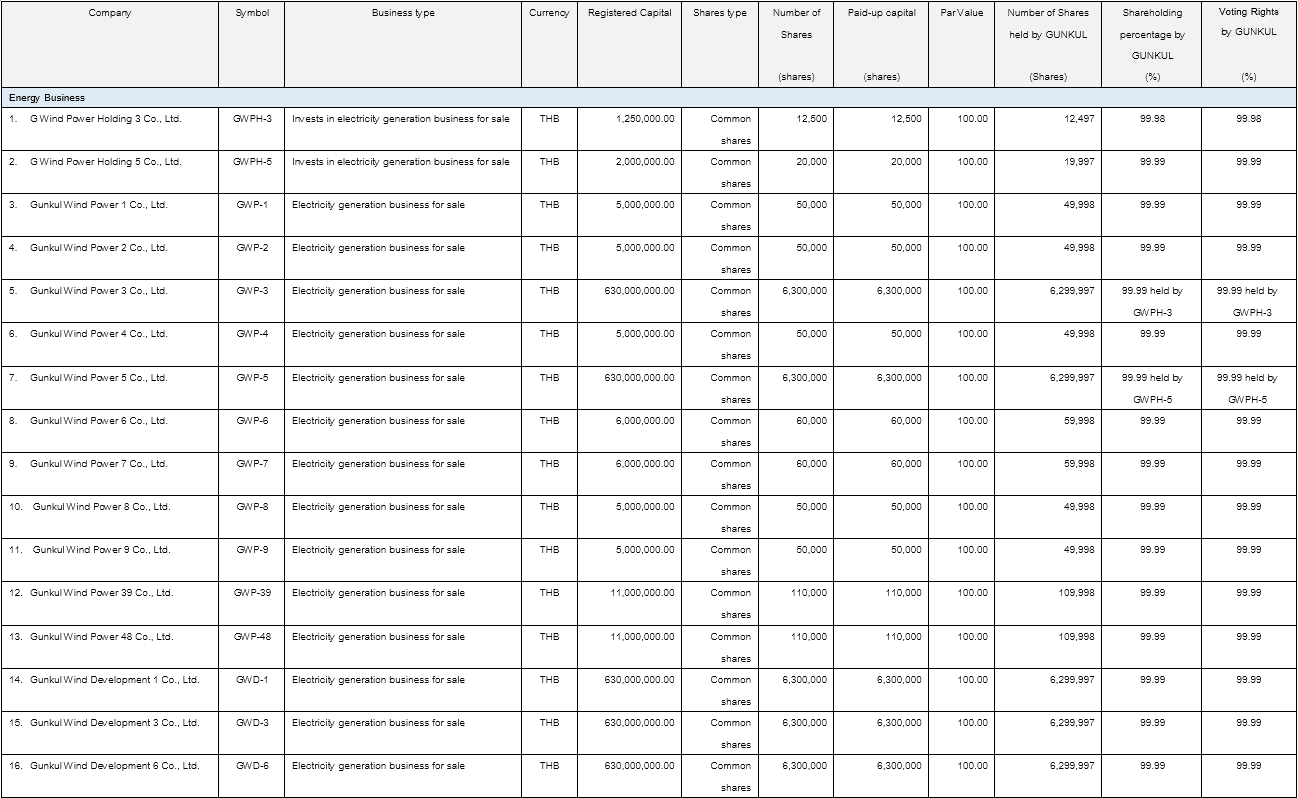
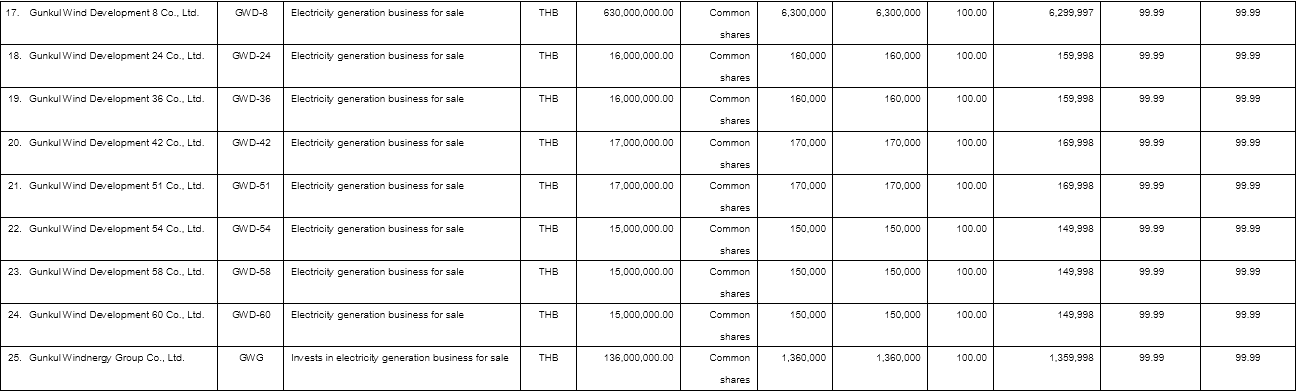
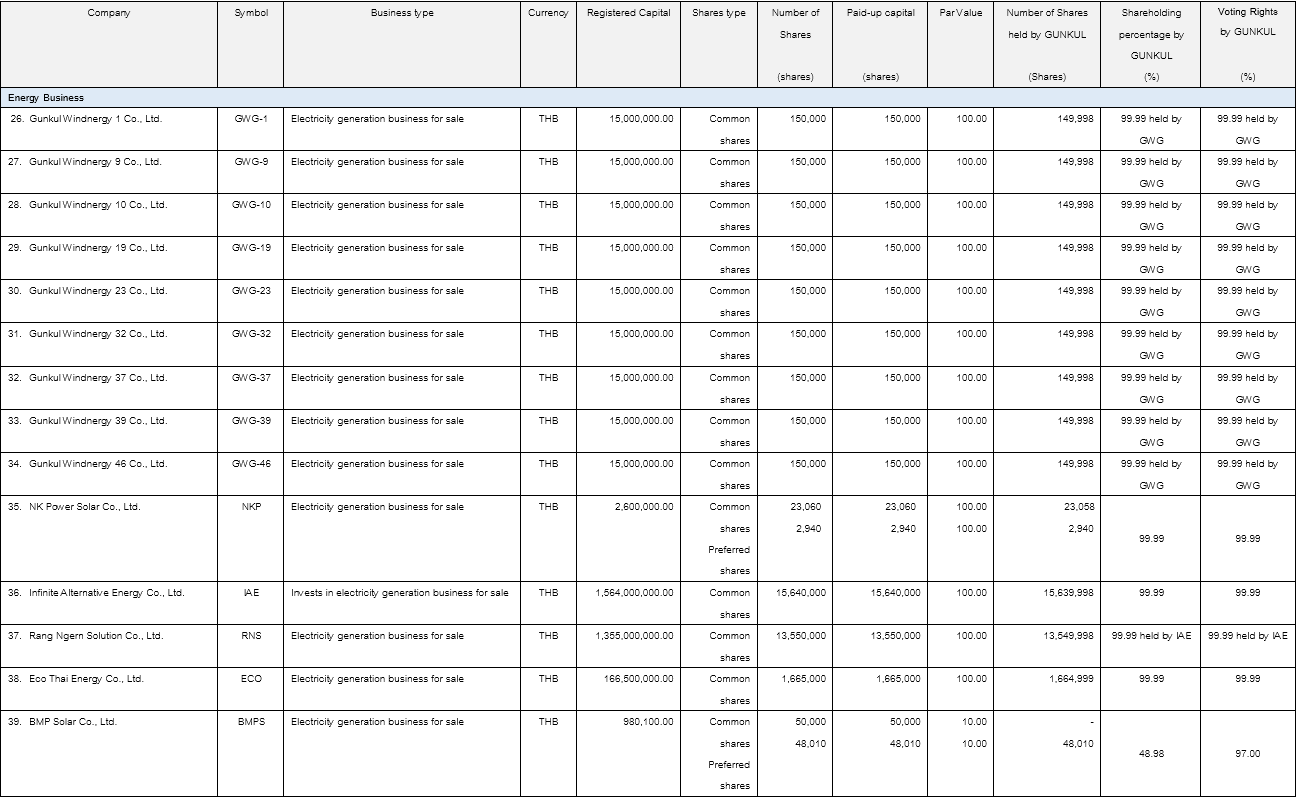
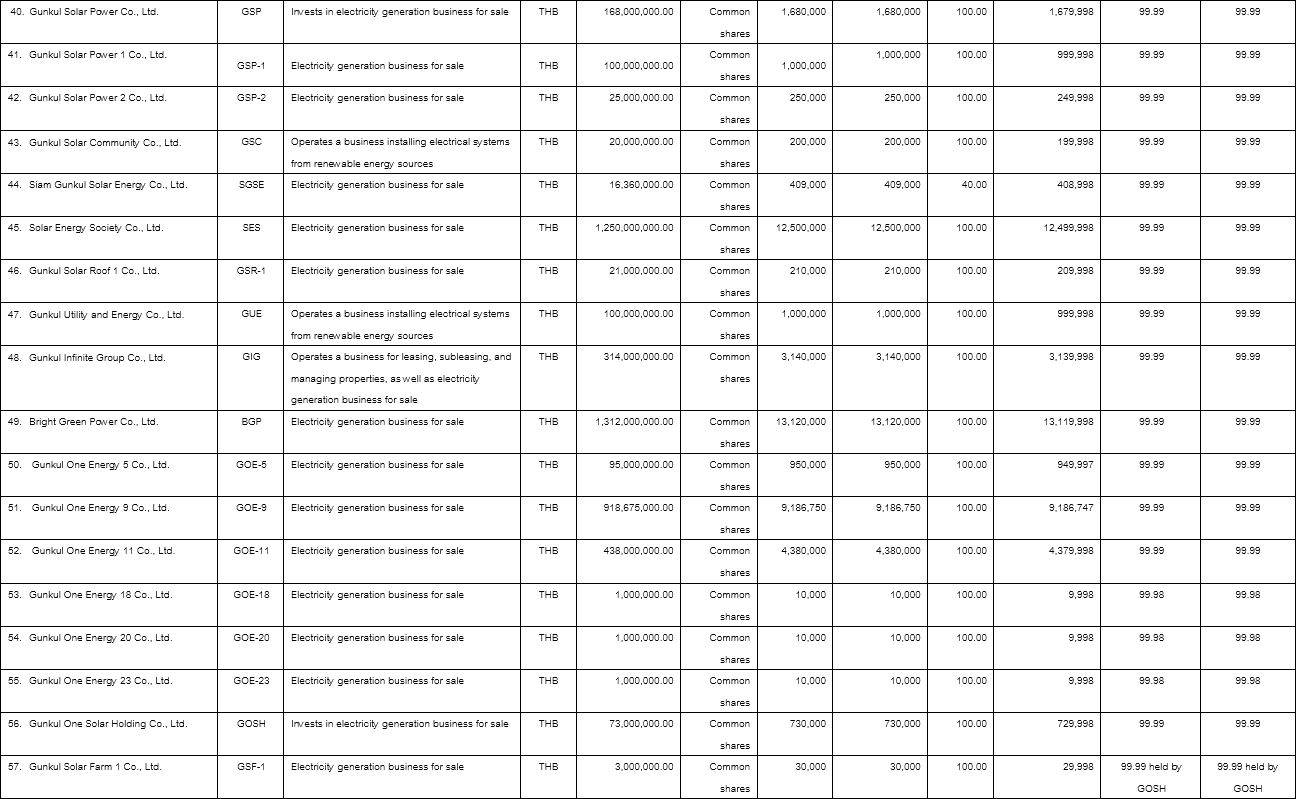
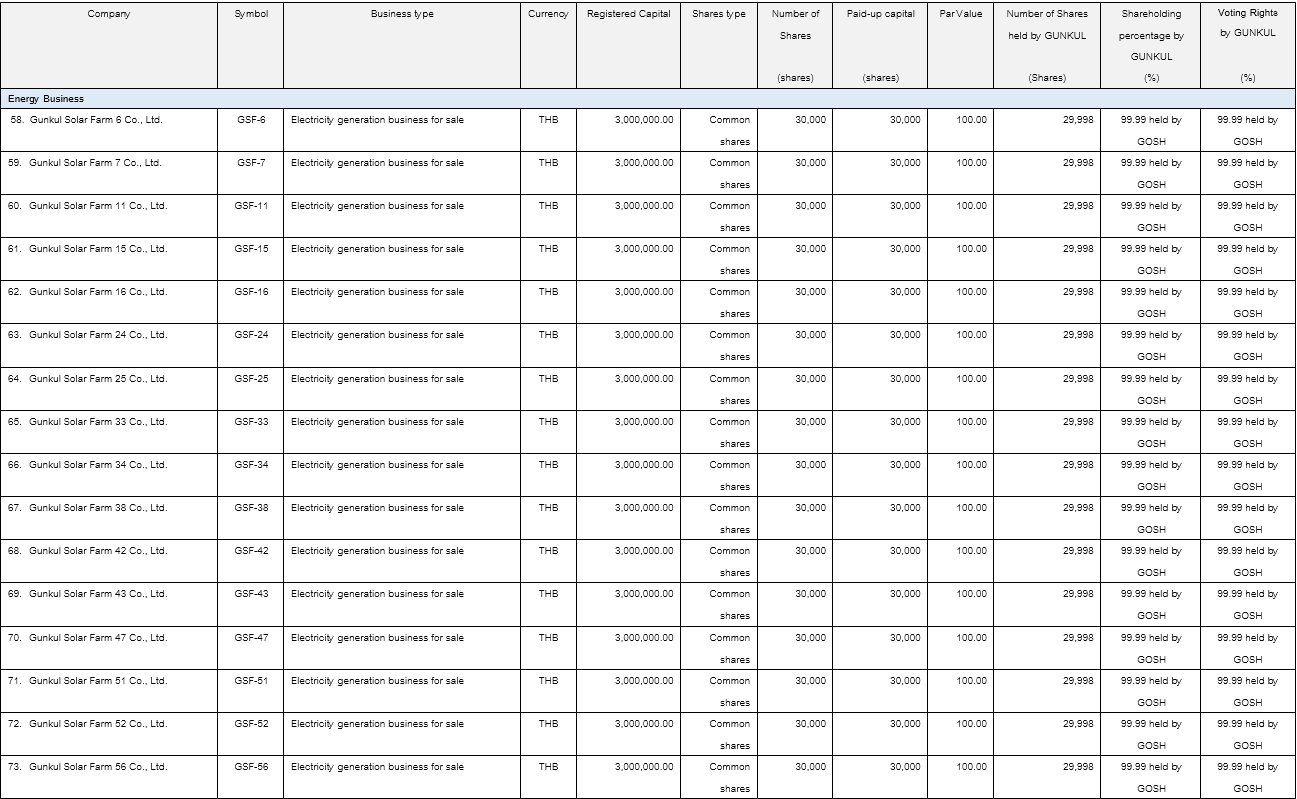
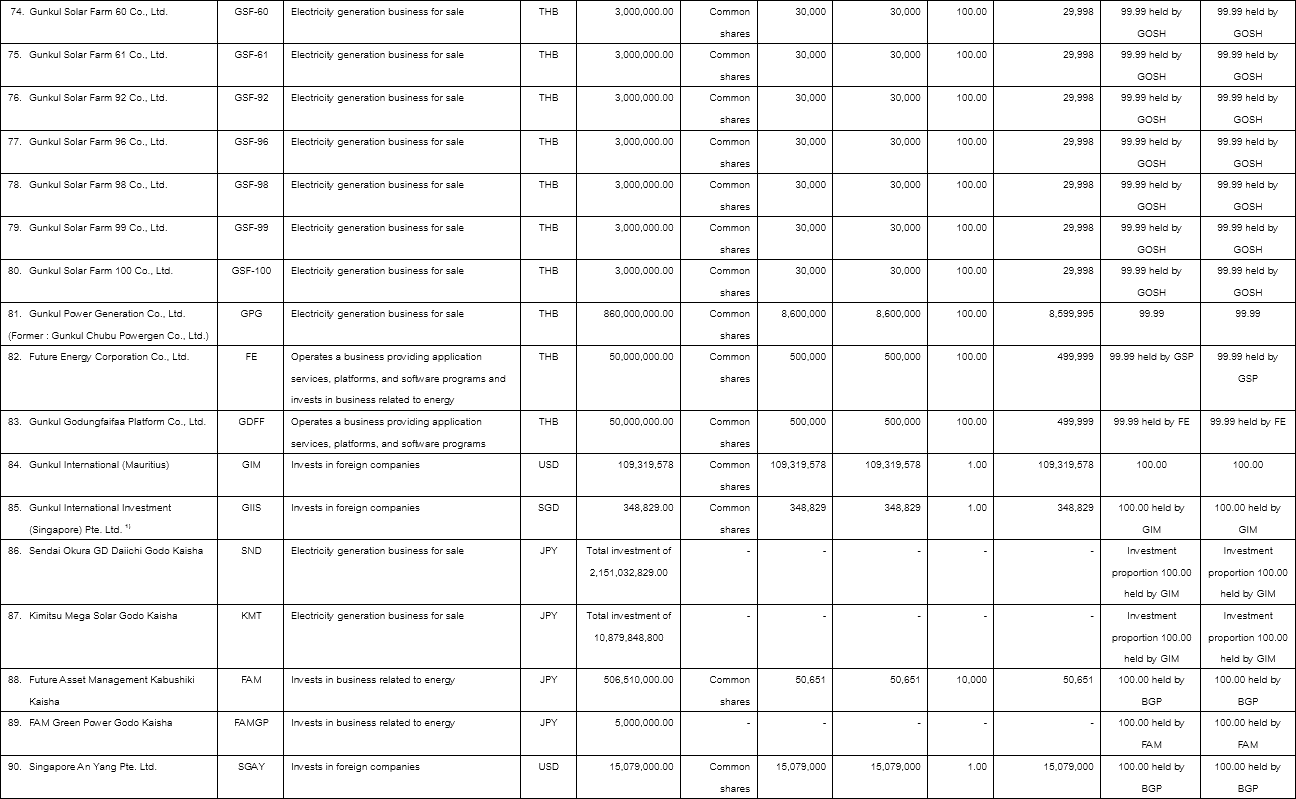
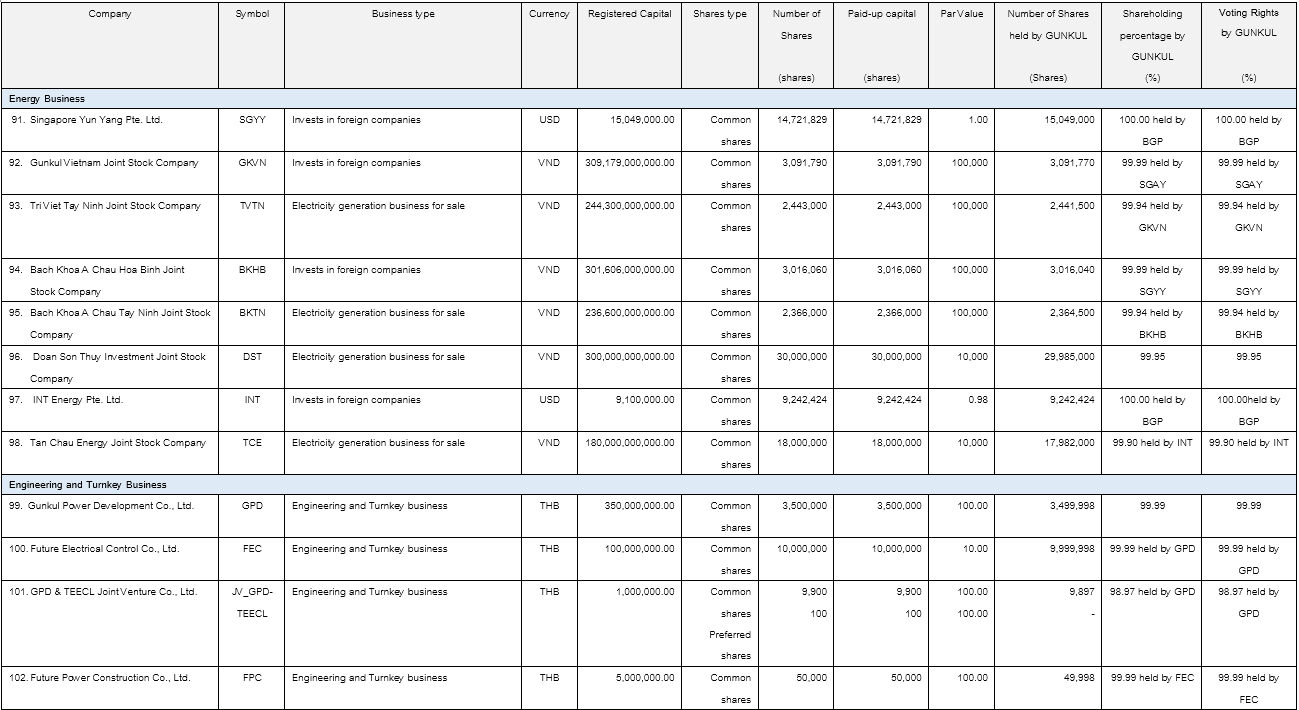
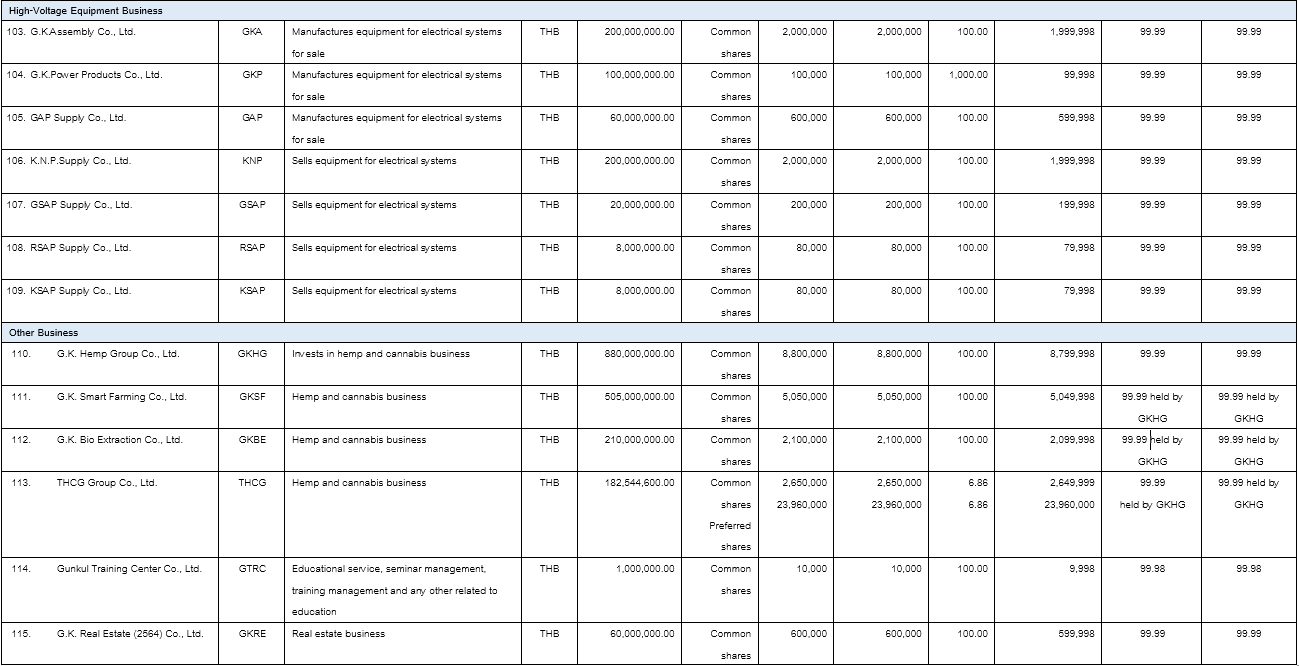
2. Associates / Joint Ventures
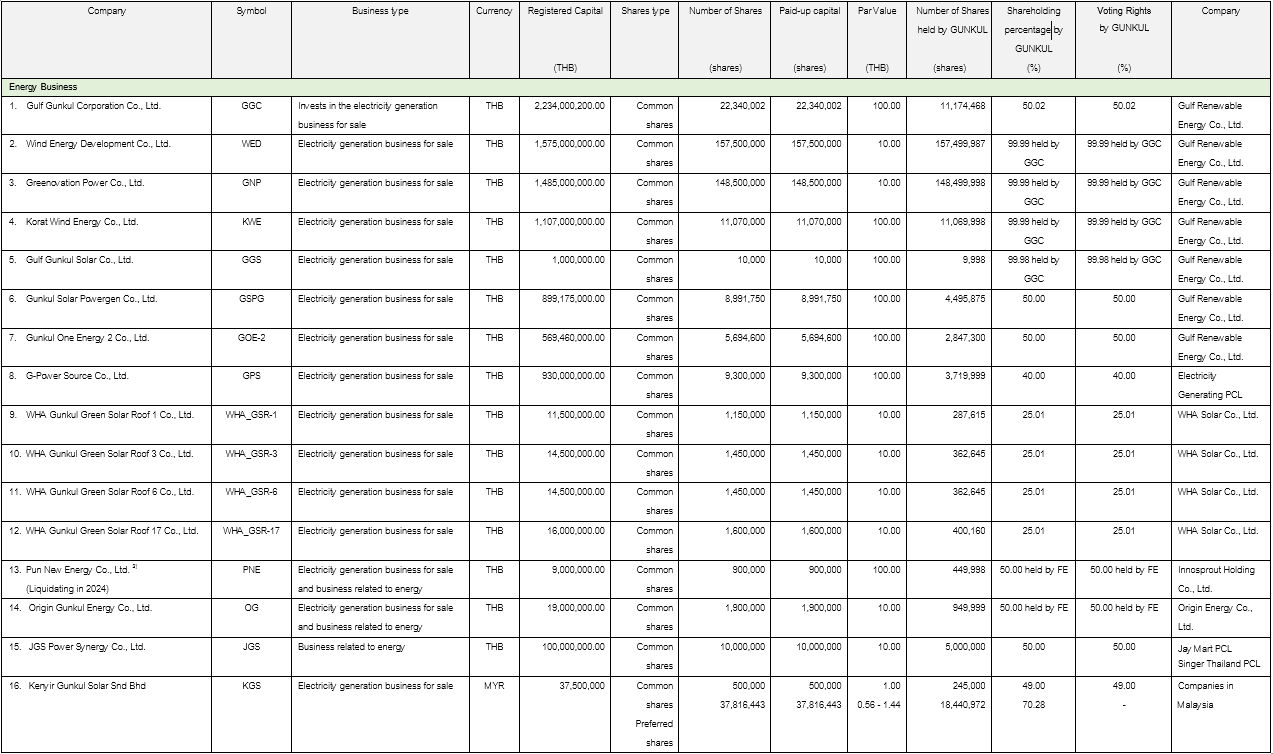
Does the company hold shares in other companies?
Yes
Income Structure
Product / Service Income
| Category | Description | This Year | This Year % | Last Year | Last Year % | 2 Years Ago | 2 Years Ago % |
|---|---|---|---|---|---|---|---|
| Total revenue from operations | Total revenue from operations | 8,203,177.83 | 100 | 9,450,838.45 | 100 | 7,605,241.95 | 100 |
| Revenue from sale | 1,570,238.75 | 19.14 | 2,344,381.45 | 24.81 | 1,827,653.93 | 24.03 | |
| Revenue from sale of electricity | 2,244,374.05 | 27.36 | 2,178,516.71 | 23.05 | 2,306,759.3 | 30.33 | |
| Revenue from construction and rendering services | 3,372,845.94 | 41.12 | 3,735,777.74 | 39.53 | 2,109,354.03 | 27.74 | |
| Interest income from finance lease | 405,665.56 | 4.95 | 388,691.33 | 4.11 | 373,902.27 | 4.92 | |
| Revenue from sale of assets under finance lease | 610,053.53 | 7.44 | 803,471.22 | 8.5 | 987,572.42 | 12.99 | |
| Other | Other | 265,061.8 | 3.23 | 280,398.66 | 2.97 | 131,884.79 | 1.73 |
Export Income
| Category | Description | This Year | This Year % | Last Year | Last Year % | 2 Years Ago | 2 Years Ago % |
|---|---|---|---|---|---|---|---|
| Total revenue | Total revenue from operations | 8,203,177.83 | 100 | 9,450,838.45 | 100 | 7,605,241.95 | 100 |
| Domestic | Domestic | 6,943,755.83 | 84.65 | 8,306,333.77 | 87.89 | 6,281,819 | 82.6 |
| International | International | 1,259,422 | 15.35 | 1,144,504.68 | 12.11 | 1,323,422.95 | 17.4 |
Other Income
| Operating Other Income | Non-Operating Other Income | Share of Profit |
|---|---|---|
| 1710 · As of year: 265061.8 · Description: Total other income · As of yesteryear: 280398.66 · As of year before yesteryear: 131884.79 · 1711 · As of year: 0.0 · Description: Other income from operations · As of yesteryear: 0.0 · As of year before yesteryear: 0.0 | 1712 · As of year: 265061.8 · Description: Other income not from operations · As of yesteryear: 280398.66 · As of year before yesteryear: 131884.79 · 33536.0 · Description: Interest Income · As of yesteryear: 19621.57 · As of year before yesteryear: 19636.75 · 0.0 · Description: Gain on Changes in Fair Value of Derivatives · As of yesteryear: 6177.61 · As of year before yesteryear: 0.0 · 0.0 · Description: Gain on Bargain Purchase · As of yesteryear: 136836.59 · As of year before yesteryear: 0.0 · 231525.8 · Description: Other Income · As of yesteryear: 117762.9 · As of year before yesteryear: 112248.04 | 1713 · As of year: 885026.99 · Description: Share of profit · As of yesteryear: 807041.2 · As of year before yesteryear: 1019491.85 |
Product / Service Characteristics
Business Type
3114
Business Groups
| Business Group | Description | |||||||||||||||||||||||||||||||||||||||||||||||||||||||||||||||||||||||||||||||||||||||||||||||||||||||||||||||||||||||||||||||||||||||||||||||||||||||||||||||||||||||||||||||||||||||||||||||||||||||||||||||||||||||||||||||||||||||||||||||||||||||||||||||||||||||||||||||||||||||||||||||||||||||
|---|---|---|---|---|---|---|---|---|---|---|---|---|---|---|---|---|---|---|---|---|---|---|---|---|---|---|---|---|---|---|---|---|---|---|---|---|---|---|---|---|---|---|---|---|---|---|---|---|---|---|---|---|---|---|---|---|---|---|---|---|---|---|---|---|---|---|---|---|---|---|---|---|---|---|---|---|---|---|---|---|---|---|---|---|---|---|---|---|---|---|---|---|---|---|---|---|---|---|---|---|---|---|---|---|---|---|---|---|---|---|---|---|---|---|---|---|---|---|---|---|---|---|---|---|---|---|---|---|---|---|---|---|---|---|---|---|---|---|---|---|---|---|---|---|---|---|---|---|---|---|---|---|---|---|---|---|---|---|---|---|---|---|---|---|---|---|---|---|---|---|---|---|---|---|---|---|---|---|---|---|---|---|---|---|---|---|---|---|---|---|---|---|---|---|---|---|---|---|---|---|---|---|---|---|---|---|---|---|---|---|---|---|---|---|---|---|---|---|---|---|---|---|---|---|---|---|---|---|---|---|---|---|---|---|---|---|---|---|---|---|---|---|---|---|---|---|---|---|---|---|---|---|---|---|---|---|---|---|---|---|---|---|---|---|---|---|---|---|---|---|---|---|---|---|---|---|---|---|---|---|---|---|---|---|---|---|---|---|---|---|---|---|---|---|---|---|
| Energy Business | Gunkul Engineering Public Company Limited and its group operate in the generation and distribution of electricity from renewable energy sources, including solar power and wind power, supplying electricity to the national grid through the following business segments:
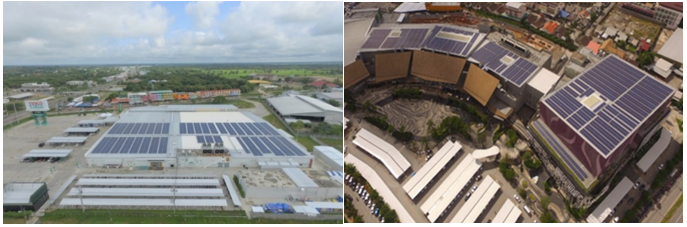
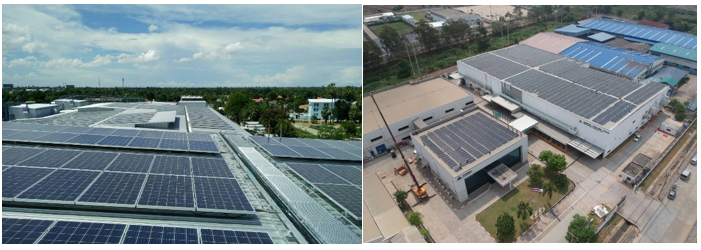
In addition, the Company provides operation and maintenance (O&M) services for power plants. It has been entrusted by external customers and strategic partners to manage operations and maintenance after project completion. This enables effective control of power generation processes and ensures optimal efficiency in electricity production and distribution for both rooftop and ground-mounted solar power plants. The Company recognizes that the future of power generation is expected to significantly evolve due to changes in the global energy landscape. This transition is driven by the shift from petroleum-based energy to renewable energy, as well as changes in energy usage and technological advancements, such as the adoption of electric vehicles, the increasing installation of solar rooftop systems in both residential and industrial sectors, and global efforts to reduce greenhouse gas emissions. In particular, the energy sector plays a critical role in achieving such targets, with increasing emphasis on clean energy utilization and the development of smart grid systems to accommodate the variability of renewable energy. Thailand has declared its commitment at the COP26 held in Glasgow, Scotland, in late 2021, to achieve carbon neutrality by 2050 and net zero greenhouse gas emissions by 2065. The Company and its group recognize the importance of environmental sustainability and energy transition in response to the government’s Net Zero pathway. This includes reducing reliance on fossil fuels, decreasing energy imports, enhancing energy security, and promoting electricity generation from renewable sources to support Thailand’s carbon neutrality targets. Accordingly, the Company and its group operate in the generation and distribution of electricity from renewable energy, including solar and wind power, supplying electricity to both public and private sectors. The Company develops ground-mounted solar power plants (Solar Farm) both domestically and internationally, as well as solar rooftop projects (Solar Rooftop). In addition, the Company recognizes the potential of floating solar power generation (Floating Solar Farm), including offshore floating solar projects, as well as wind power projects installed both onshore and offshore, in both domestic and international markets. Further details are as follows: 1. Solar Power Plants Overview:
All 24 projects have commenced commercial operations. 1) In November 2024, the company was renamed to Gunkul Power Generation Co., Ltd. and its status was changed from a joint venture to a subsidiary. Solar Power Plant Projects with Commercial Operation Date (COD)
Solar power plant projects selected under the Feed-in Tariff (FiT) scheme for 2022–2030 for the non-fuel cost category (2022) have a total installed capacity of 652.40 megawatts across 15 projects, comprising 12 ground-mounted solar power projects with a combined capacity of 568.80 megawatts, and 3 ground-mounted solar power projects integrated with Battery Energy Storage Systems (BESS), with a combined capacity of 83.60 megawatts. Solar Power Plant Projects Selected under the FiT Scheme (2022–2030) and Currently under Development/Construction
In addition, solar power plant projects selected under the Feed-in Tariff (FiT) scheme for 2022–2030 for the non-fuel cost category (2022) (additional round in 2024) are currently under development. These consist of 2 ground-mounted solar power projects with a total installed capacity of 15.6 megawatts. Additional Solar Power Plant Projects Selected under the FiT Scheme (2022–2030) for the Non-Fuel Cost Category (2022) (Additional Round in 2024) and Currently under Development/Construction
In 2023 and 2024, the Company successfully developed renewable energy projects in Thailand and was selected under the Energy Regulatory Commission’s (ERC) announcement on the procurement of electricity from renewable energy under the Feed-in Tariff (FiT) scheme for 2022–2030 for the non-fuel cost category (2022). The Company has entered into power purchase agreements with the Electricity Generating Authority of Thailand (EGAT) and the Provincial Electricity Authority (PEA) for a total of 15 projects, with a combined installed capacity of 652.40 megawatts. These projects comprise 4 projects under Gunkul One Energy 2 Co., Ltd. (“GOE-2”), 1 project under Gunkul One Energy 5 Co., Ltd. (“GOE-5”), 5 projects under Gunkul One Energy 9 Co., Ltd. (“GOE-9”), and 5 projects under Gunkul Solar Powergen Co., Ltd. (“GSPG”). In addition, the Company was selected under the ERC’s announcement on the procurement of electricity from renewable energy under the Feed-in Tariff (FiT) scheme for 2022–2030 for the non-fuel cost category (2022) (additional round in 2024). The Company has entered into power purchase agreements with the Provincial Electricity Authority (PEA) for 2 projects, with a combined installed capacity of 15.60 megawatts, comprising 2 projects under GOE-5. In total, the Company has secured 17 projects with a combined installed capacity of 668.00 megawatts, with project locations covering almost all regions of Thailand. The commercial operation dates (COD) are scheduled to commence from 2026 onwards. The Company also plans to further develop new solar farm projects in multiple locations, with a focus on adopting advanced technologies to enhance power generation efficiency and reduce operating costs. Engineering, Procurement and Construction (EPC) Solar Projects In addition to solar power projects in the forms of solar farms, solar rooftop under PPA schemes, and solar rooftop under Private PPA for industrial and private sector groups, the Group has recognized the rapidly growing demand among private sector customers for solar rooftop systems for self-consumption. As a result, the Group began expanding into the B2B and B2C markets in 2018 and broadened its EPC service offerings, providing turnkey installation services covering ground-mounted solar farms, solar rooftop systems, and floating solar systems.
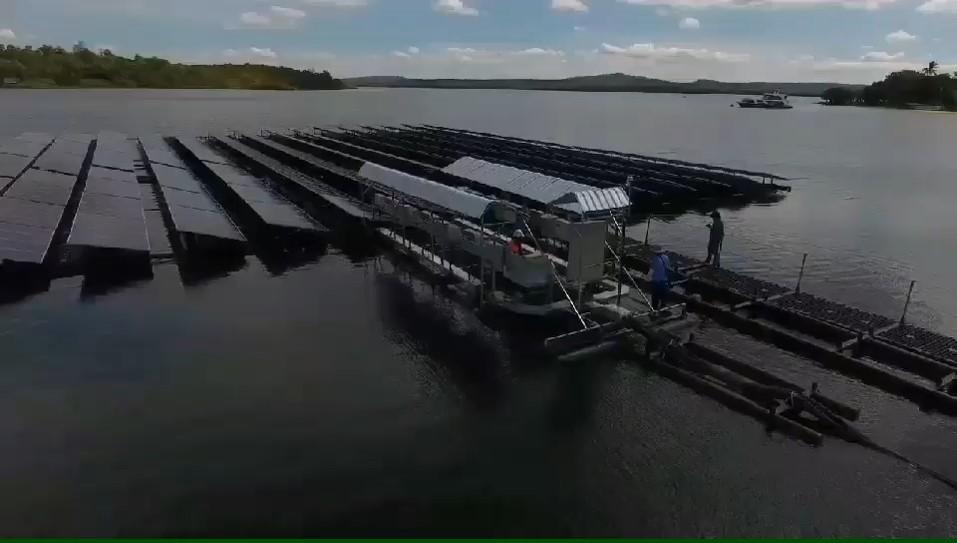
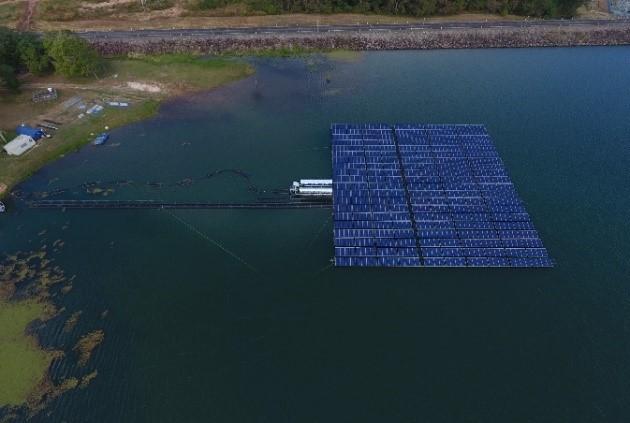
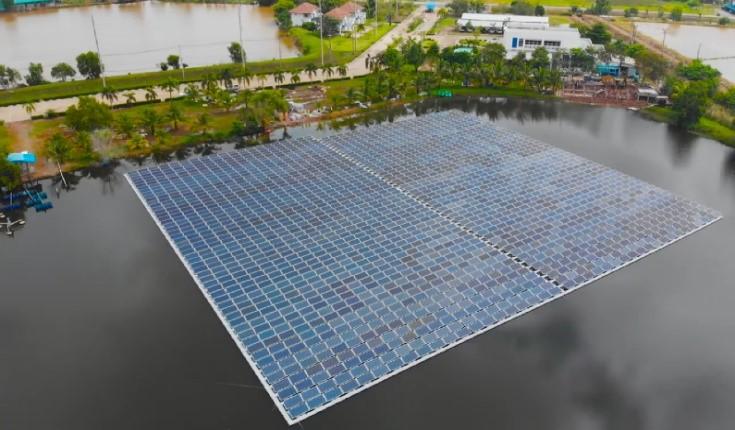
Illustration of a Floating Solar Power Project at Sirindhorn Dam with a Capacity of 256 Kilowatts
Illustration of a Floating Solar Power Project at Prachinburi Glass Industry Co., Ltd. with a Capacity of 696.80 Kilowatts The Company has been awarded engineering, procurement and construction (EPC) contracts for 2 floating solar power plant projects, namely the project of the Electricity Generating Authority of Thailand (EGAT) at Sirindhorn Dam and the project of Prachinburi Glass Industry Co., Ltd., with a combined installed capacity of 952.8 kWp. All projects have commenced commercial operations. In addition, during this year, the Company has been awarded EPC contracts for 4 floating solar power plant projects for the Sri Trang Group, with a total installed capacity of 14,895.75 kilowatts, for Sri Trang Agro-Industry Public Company Limited and Sri Trang Gloves (Thailand) Public Company Limited.
2. Wind Power Plants (Wind Farm) Overview: Based on studies of wind energy potential across different geographical areas, Thailand, which is located near the equator, generally experiences low to moderate average wind speeds. Nevertheless, wind energy potential can still be effectively utilized through the selection of appropriate wind turbine technologies suited to each area. Currently, the Company operates several wind power plant projects that have already been developed and have demonstrated strong operating performance. Wind power projects play a significant role in enhancing national energy security by reducing reliance on fossil fuels and contributing to the reduction of greenhouse gas emissions. In addition, wind power plants help provide long-term stability in electricity generation, as they represent a sustainable source of clean energy. The Company has developed wind power plants with power purchase agreements with the Provincial Electricity Authority (PEA) and the Electricity Generating Authority of Thailand (EGAT), with a total installed capacity of 350 megawatts. Of this, 170 megawatts across 5 projects have already commenced commercial operations, representing approximately 11% of the total installed capacity of wind power plants in commercial operation in Thailand as of 2024. In addition to projects that have commenced commercial operations, the Company also has 2 wind power projects under development, which have been selected under the Energy Regulatory Commission’s (ERC) regulations on the procurement of electricity from renewable energy under the Feed-in Tariff (FiT) scheme for 2022–2030 for wind energy, with a combined installed capacity of 180 megawatts. These projects are currently under development in accordance with the established plans and are expected to generate positive impacts for both the Company and the renewable energy industry in Thailand. Wind Power Plant Projects with Commercial Operations
Wind Power Plant Projects Selected under the FiT Scheme (2022–2030) and Currently under Development/Construction
The wind power plant projects for which the Group has submitted applications for power purchase agreements with the Provincial Electricity Authority (PEA) and the Electricity Generating Authority of Thailand (EGAT) include projects of Wind Energy Development Co., Ltd., Greenovation Power Co., Ltd., Korat Wind Energy Co., Ltd., Gunkul Wind Power 3 Co., Ltd., and Gunkul Wind Power 5 Co., Ltd. The Company also has plans to further expand its wind power projects in several high-potential areas, such as coastal regions and areas with strong wind resources, with a focus on continuously developing innovations and technologies for wind power generation. 3. Partnership & Innovation With over four decades of experience in B2B and B2G businesses, the Company is well-equipped with knowledge, expertise, high service standards, and a strong network of leading partners across various industries, both domestically and internationally. Coupled with the recognition that “energy is a fundamental right” that everyone should be able to access, understand, and have the ability to choose the most suitable energy for their needs, this concept has driven the Company to confidently expand into new markets and fully embrace B2C business opportunities. On 3 September 2020, the Company established an energy innovation business unit under the name “GUNKUL SPECTRUM” to demonstrate its commitment to supporting Thailand’s transition toward sustainable clean energy (Energy Transition). This initiative also aims to promote innovation within the organization to develop new products and enhance operational efficiency. The innovation development framework of GUNKUL SPECTRUM is structured around three key pillars:
Innovation is not only a key strategic priority but also a critical factor for long-term growth. The Company is committed to strengthening its internal capabilities while fostering collaborations with leading partners across various industries. These include financial institutions that enhance access to clean energy solutions through financing products, leading universities that focus on feasibility studies of emerging energy technologies, and real estate developers who are closely connected to end-users of energy. Such collaborations aim to support the transition toward a more decentralized energy landscape, where electricity is more widely distributed and not limited to centralized systems. The Company believes in the principle of partnership as a key driver in advancing a future where energy and the environment grow sustainably together, ultimately contributing to an improved quality of life for society as a whole. Commercial Projects Currently Developed and Operated 1. E-commerce Platform for Electrical Equipment and Solar Products – GodungFaifaa.com GUNKUL SPECTRUM aims to transform the experience of purchasing electrical equipment and solar energy systems for various stakeholders within the energy ecosystem through GodungFaifaa.com, an e-commerce platform developed in collaboration with SCB 10X under the concept “Add Energy To Cart.” The platform is supported by engaging marketing campaigns and is designed to simplify traditionally complex procurement processes, making energy-related products and services more accessible while offering quality products at competitive prices. The platform’s success has been recognized through awards, including the Business Innovation Award at the HUAWEI APAC event and the Elite Reseller Award 2022 at the Huawei FusionSolar Ecosystem Partner Summit. GodungFaifaa.com provides comprehensive end-to-end services, ranging from a wide selection of products, online quotation requests, convenient payment channels, and installment options at 0% interest, to nationwide logistics and delivery services.
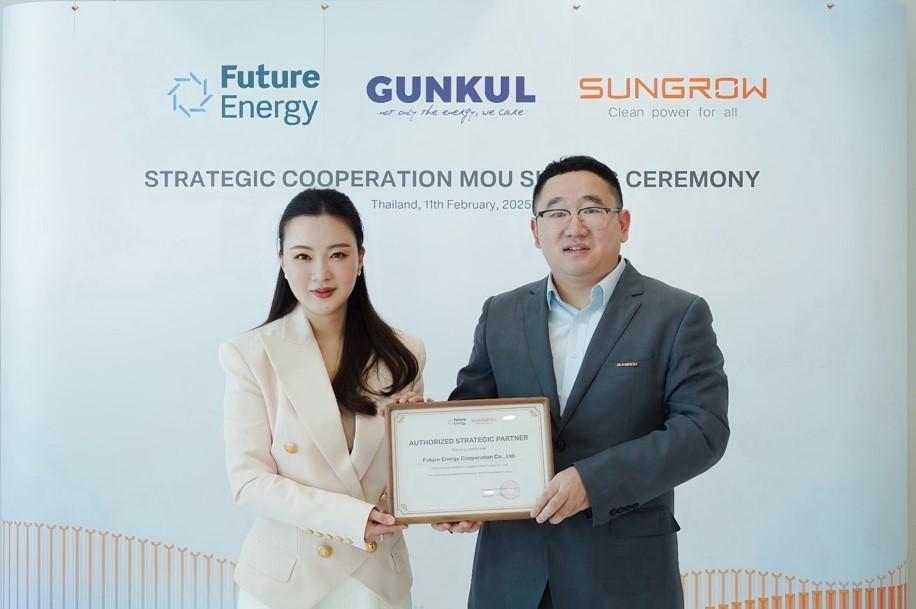
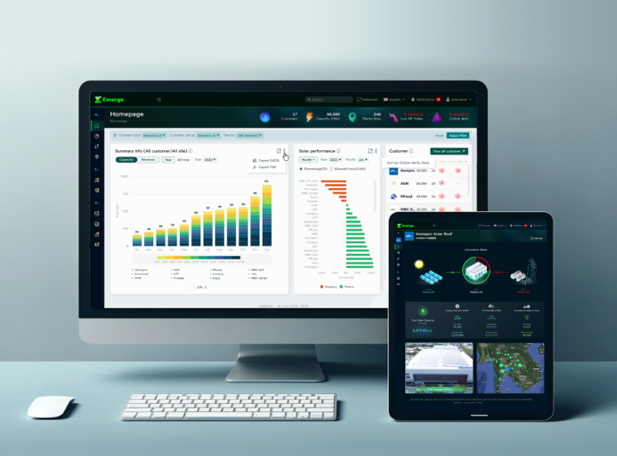
Public Relations News: GUNKUL Partners with SUNGROW to Expand Inverter and Battery Market GodungFaifaa.com is committed to becoming a leader in the electrical equipment and solar product market in Thailand, with a focus on achieving sustainable growth through enhancing market competitiveness, developing customer-centric services, and adopting new technologies in business operations. The platform also aims to establish a Partnership Program to expand its network with contractors, supporting electrical and solar installation projects while offering special benefits such as bulk purchase discounts and technical support. The Company believes that innovation development and strong relationships with customers and partners will create added value and strengthen the organization in the long term. 2. Emerge Platform – Electricity Resource Management System Emerge, or Energy Management for Enterprise and Retail by Gunkul Engineering, is a project under GUNKUL SPECTRUM. It originated from efforts to address challenges in managing solar power plants distributed across multiple locations, which involve both technical and business complexities. In response, the innovation unit conducted in-depth studies in collaboration with relevant departments to gather insights and data for the design and development of the Emerge platform. Emerge is a centralized platform that consolidates and stores power plant data within a single system. It features analytical and calculation capabilities covering both electricity generation and financial aspects, along with automation systems that help reduce errors and enhance operational efficiency. The platform not only strengthens competitive advantage but also enhances professionalism and builds confidence among customers and stakeholders, while supporting business expansion and long-term sustainable growth. Most recently, the platform received the SET AWARDS 2025: Outstanding Innovative Company Awards, organized by the Stock Exchange of Thailand.
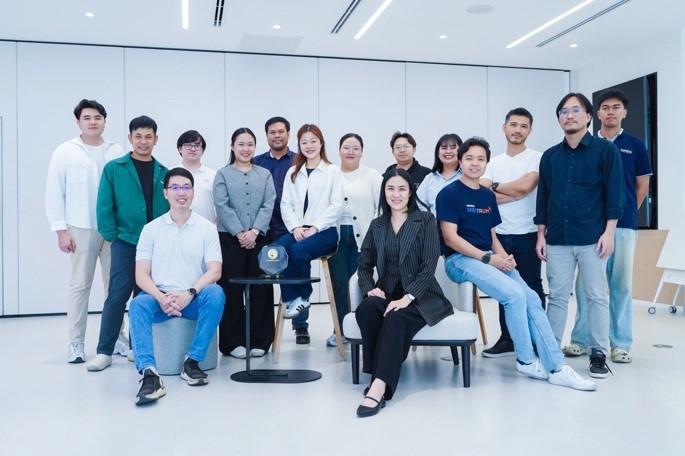
Illustration of the Emerge Platform Interface and the Development Team Key Features and Business Benefits of the Emerge Platform
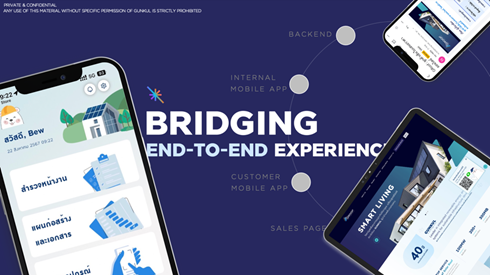
Emerge offers a continuously connected data management infrastructure with the capability for remote monitoring and control from any location. This contributes to improving the long-term stability of the national power system and serves as a key factor in reducing investment costs required to support the growth of renewable energy. Instead of requiring significant investment in traditional grid expansion, Emerge functions as an efficient centralized control system at a significantly lower cost, contributing to a reduction in overall electricity costs nationwide. Currently, the platform manages more than 1,100 power plants. This development not only creates new business opportunities but also reflects the potential of collaboration between the public and private sectors in advancing technologies that play a critical role in achieving Net Zero greenhouse gas emissions, thereby accelerating the transition toward clean energy in a tangible manner. 3. Energy Living Solution Platform for Residential In addition to its electricity trading business, the Company has expanded its collaboration with Origin Property to develop clean energy solutions for residential projects under a 3-year framework (2022–2027). The initiative focuses on promoting “Solar Village” projects through two main approaches. The first approach involves the generation and distribution of solar energy under Private Power Purchase Agreements (Private PPA), including the installation of solar rooftop systems with operation and maintenance services. Electricity generated is supplied to common areas, with initial operations commencing in the second quarter of 2022. The Company has also installed 5 kW solar rooftop systems for more than 128 detached houses under the GRAND BRITANIA project. In addition, installations have been expanded to condominium projects under Origin Property, effectively reducing common area electricity costs, as well as ongoing installations in low-rise projects. The second approach involves the installation and provision of electric vehicle (EV) charging stations in flagship condominium projects, such as Park Origin Thonglor and Knightsbridge Tiwanon, as well as projects in other provinces, including Knightsbridge Ocean Sriracha. These initiatives aim to support the growth of electric vehicles and enhance access to clean energy, reinforcing the concept of “ENERGY x URBAN LIVING SOLUTION” to promote sustainability and drive residential developments toward a Zero-Carbon Ecosystem. Furthermore, the Company has been entrusted to install solar rooftop systems for ultra-luxury real estate projects developed by Asset Five (A5), enhancing the living experience through clean energy solutions. 4. Collaboration in Battery Energy Storage Systems (BESS) and Direct Power Purchase Agreements (Direct PPA) The Company recognizes that battery energy storage systems (BESS), particularly when managed through Virtual Power Plant (VPP) platforms, will play a critical role in transforming the country’s future energy infrastructure and enhancing grid stability in a system increasingly driven by clean energy. In the future, both electricity producers and consumers will be able to participate in efficient energy allocation without compromising grid reliability. In September 2022, the Company entered into a Memorandum of Understanding (MOU) with two leading partners—specialists in power control and distribution systems and digital energy platform experts from the Republic of Korea—to jointly explore and develop energy business opportunities in Thailand. This collaboration aims to expand the Company’s innovation portfolio, focusing on Virtual Power Plant (VPP) platform technologies and battery energy storage systems (BESS), while reinforcing the Company’s commitment to driving the country toward a low-carbon economy. In addition, the Company has initiated studies and collaborations in relation to Direct Power Purchase Agreements (Direct PPA), a mechanism that enables renewable energy producers to sell electricity directly to large-scale industrial and commercial consumers without relying solely on government distribution channels. The Company has entered into a Memorandum of Understanding (MOU) with business partners, such as Murata Electronics, to jointly explore and develop Direct PPA opportunities in Thailand. This initiative aims to meet the increasing demand for clean energy among corporate customers with sustainability and greenhouse gas reduction targets. Direct PPA also aligns with government policies that promote greater competition in the energy market and enhances the Company’s competitiveness in offering clean energy at predictable and stable long-term pricing. 5. Digital Ecosystem Development to Enhance Organizational Products (Digital Ecosystem Builder) Gunkul Spectrum not only focuses on developing partnerships and providing services to external partners but also plays a key role in building and enhancing the Company’s digital ecosystem. This initiative aims to improve internal processes, reduce workforce limitations, and optimize cost control. The Company recognizes that effective data management and integration are critical drivers of business operations. One of the key projects supported by Gunkul Spectrum is the development of a digital platform for GRoof, a subsidiary providing end-to-end solar rooftop installation services, which currently serves more than 1,100 sites nationwide. This initiative is designed to enhance revenue generation opportunities, improve customer experience, and significantly increase service efficiency. In addition, the Company has contributed to the design and development of the customer-facing website (Gunkulroof.com), which serves as the primary communication channel for providing information, enhancing transparency, and strengthening customer confidence in GRoof’s services.
Illustration of the GRoof Digital Ecosystem Developed by Gunkul Spectrum The unit plays a key role in developing an Executive Dashboard that consolidates critical organizational data, leveraging in-depth user research to design features that effectively address actual usage requirements. The objective is to establish a centralized platform that enables executives, sales teams, and operational teams to access the same set of data in real time, with accuracy and continuous updates. In addition, the unit has developed mobile applications for customers who have installed solar rooftop systems, as well as for internal use by site survey and installation teams. These applications facilitate seamless data integration across the entire process—from appointment scheduling and installation to performance reporting—thereby improving operational efficiency, reducing data discrepancies, and minimizing issues arising from fragmented documentation. This results in more streamlined and faster workflows. These initiatives reflect Gunkul Spectrum’s commitment to innovation and its drive to leverage technology to create differentiation and enhance long-term competitive capabilities. | |||||||||||||||||||||||||||||||||||||||||||||||||||||||||||||||||||||||||||||||||||||||||||||||||||||||||||||||||||||||||||||||||||||||||||||||||||||||||||||||||||||||||||||||||||||||||||||||||||||||||||||||||||||||||||||||||||||||||||||||||||||||||||||||||||||||||||||||||||||||||||||||||||||||
| Engineering and Turnkey Business Group |
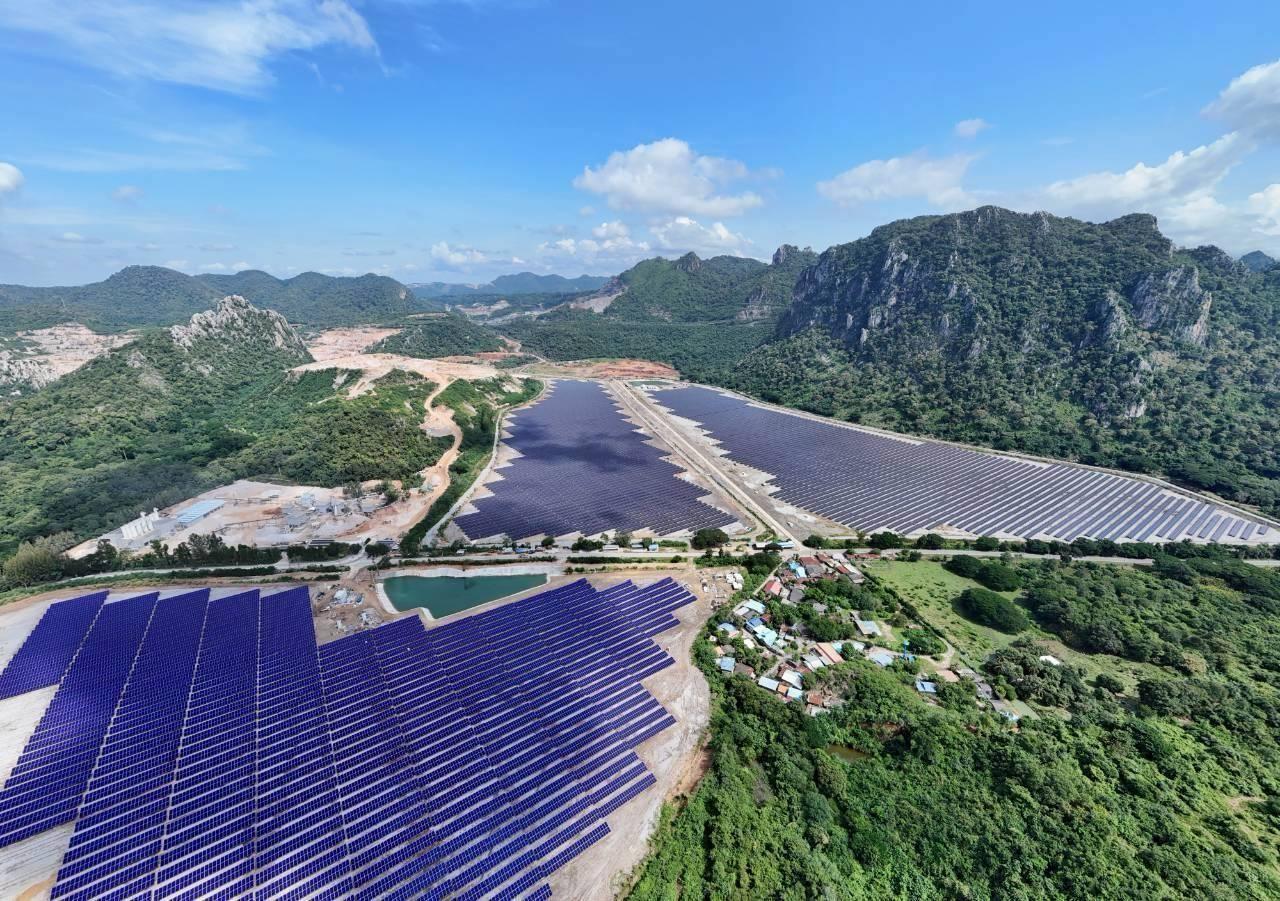
Illustration of a Solar Power Plant (Solar Farm) Project with a Capacity of 61.88 MWac, Completed in 2025
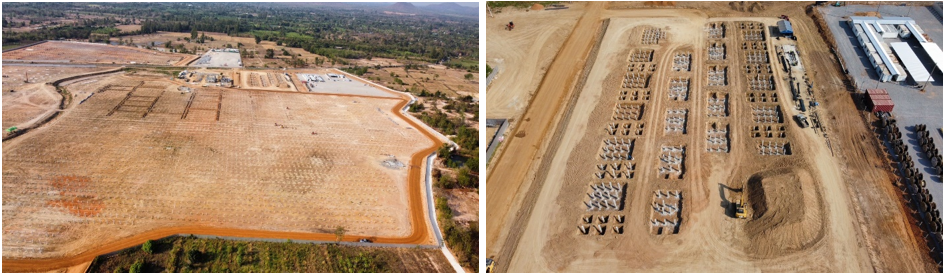
Illustration of the Solar and Battery Energy Storage System Power Plant Project with a Capacity of 142.231 MWDC, Currently under Construction
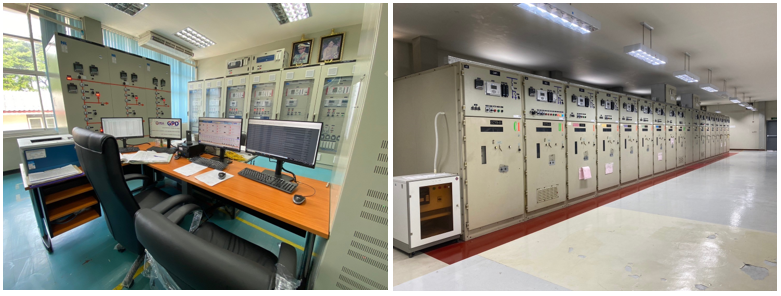
1) Electrical System Construction During the period from 2021 to 2026, GPD has undertaken projects to improve protection and control systems in substations and Micro Grid systems, which are critical components in the development of electrical infrastructure. During this period, the Company has completed more than 7 projects, with a total contract value of approximately THB 634.43 million. These projects focus on enhancing the efficiency of control and protection systems in substations and Micro Grid systems associated with electricity distribution across various areas. Currently, GPD continues to carry out substation protection and control system improvement and Micro Grid projects, with 1 ongoing project valued at approximately THB 51.12 million. This reflects the Company’s continued commitment to developing and upgrading electrical systems to improve stability and safety for future use. The total construction value of electrical system projects amounts to THB 685.55 million.
Illustration of the Substation Control and Protection System Efficiency Improvement Project, Phase 1, under the 2022 Capital Expenditure Plan, Item 2 (Group 2), Completed in 2025
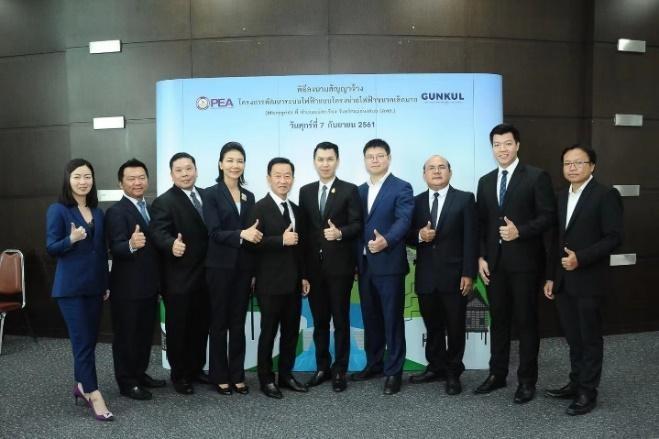
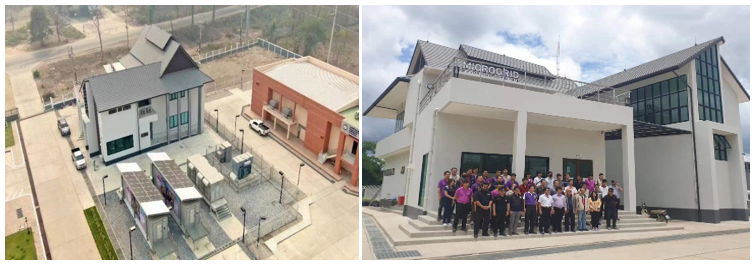
Illustration of the Contract Signing Ceremony for the Very Small Power Grid (Micro Grid) Development Project
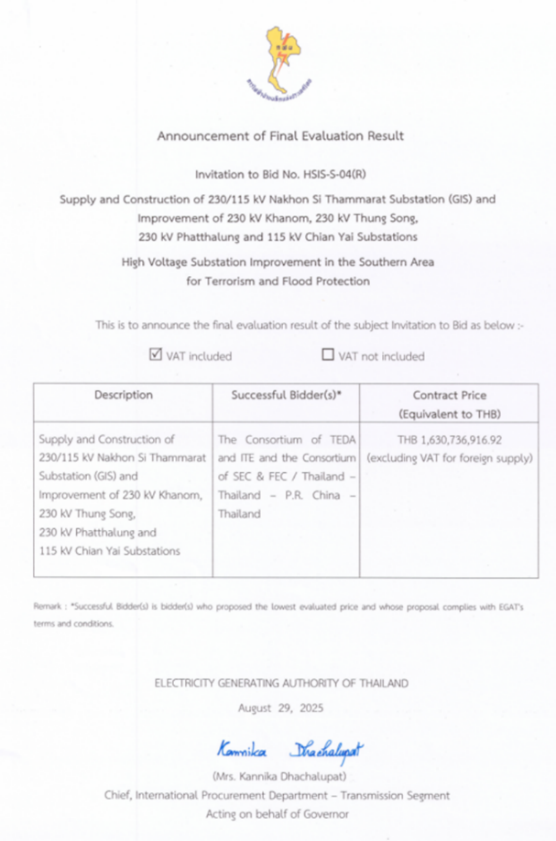
Illustration of Additional Contracted Works (Micro Grid) under the Power System Development Project in Mae Sariang District, Mae Hong Son Province 2) Substation Construction GPD and its group companies have been entrusted by customers and various organizations to undertake substation construction projects for over 17 years, having completed 16 projects covering 27 substations, with a total project value of approximately THB 3,671.68 million. These projects are critical to the development of electrical infrastructure, as substations play a key role in ensuring stable and secure electricity supply at both local and national levels. Substation construction requires specialized expertise and experience in the design and installation of various systems, including power distribution systems, control and protection systems, as well as system testing, to ensure that all processes comply with engineering standards and effectively support energy demand. The continued trust and recognition from customers in the capabilities and quality of GPD and its group companies reflect confidence in the expertise of its engineering teams and specialists, who are capable of managing complex projects that require precision in construction and equipment installation. Such opportunities also demonstrate confidence in the Company’s ability to manage large-scale projects and its commitment to delivering high-quality services that meet customer requirements in all aspects. In 2025, GPD and its group companies were entrusted by the Electricity Generating Authority of Thailand (EGAT) to enter into a contract for the construction of the 230/115 kV Nakhon Si Thammarat (GIS) substation, as well as the improvement of the 230 kV Khanom, 230 kV Thung Song, 230 kV Phatthalung, and 115 kV Chian Yai substations, under The Consortium of TEDA and ITE and the Consortium of SEC & FEC. The project has a total value of THB 1,630 million, with the contract signed on 21 November 2025, and is currently in the initial construction phase. This project plays a significant role in enhancing the stability of the high-voltage power system in the southern region, reducing the risk of power outages, and improving the continuity of electricity supply for both residential and industrial users in the area. The total construction value of substation projects undertaken by GPD amounts to THB 5,301.68 million.
Illustration of the Announcement of the Winning Bidder for the Construction of the 230/115 kV Nakhon Si Thammarat (GIS) Substation and the Improvement of the 230 kV Khanom, 230 kV Thung Song, 230 kV Phatthalung, and 115 kV Chian Yai Substations
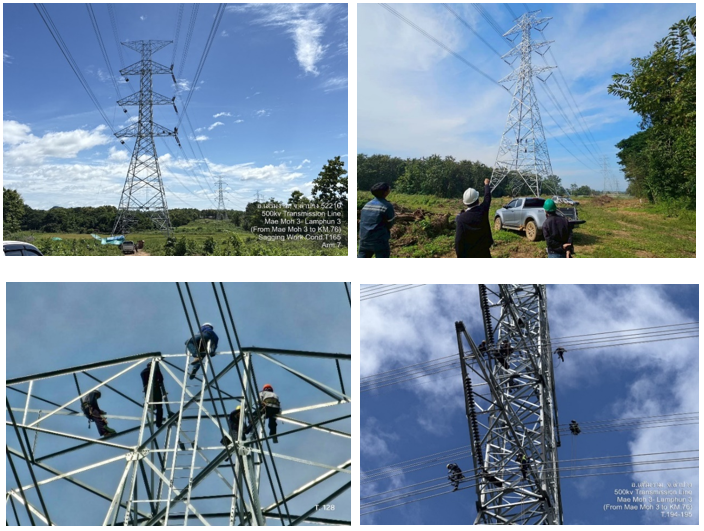
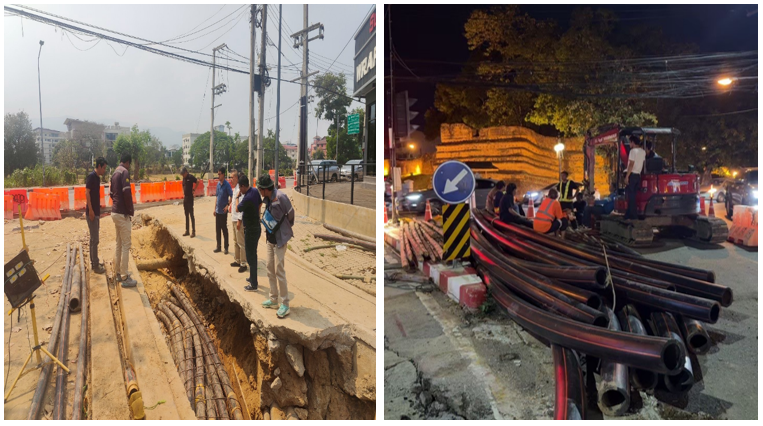
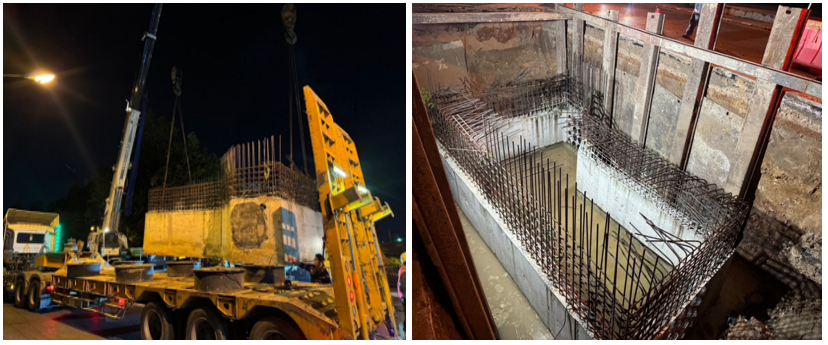
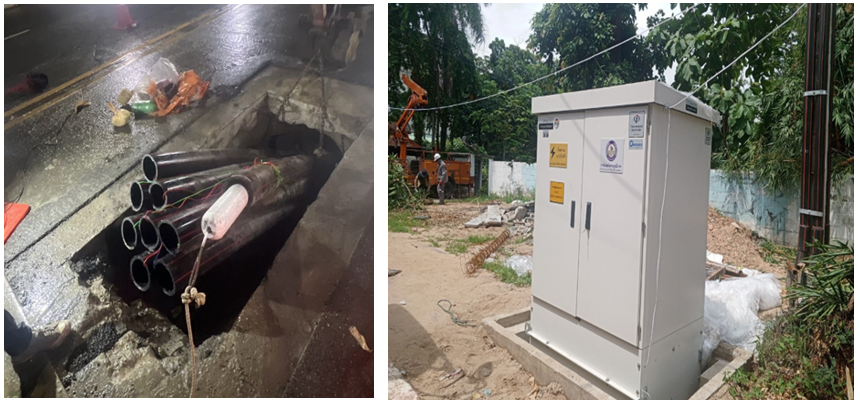
Illustration of the Construction of the Ingredion Substation in Rayong Province 3) Overhead Transmission Line Systems and Underground Electrical Systems GPD and its group companies possess extensive expertise in the development of overhead transmission line systems and underground electrical systems, which are essential components of the power grid for efficient and stable energy distribution. The Company has provided design, construction, and installation services for such systems for over 20 years, having completed a total of 34 projects ranging from 22 kV to 500 kV, with a total project value of approximately THB 2,626.84 million, and currently has projects under construction with a total value of approximately THB 6,547.63 million. In aggregate, GPD has undertaken overhead transmission line and underground electrical system projects with a total construction value of THB 9,174.74 million. In 2025, the Company was entrusted with the execution of the 500 kV high-voltage transmission line project (Bang Lamung 2 – Pluak Daeng) under the Eastern power transmission system improvement project to enhance grid stability, with a project value of THB 675.14 million. To respond to diverse customer requirements, overhead transmission line systems consist of high-voltage conductors installed on transmission towers erected above ground. GPD and its group companies have expertise in the construction of overhead transmission systems, with due consideration to safety, durability, and efficiency in power delivery. Construction works include the installation of transmission towers, stringing of conductors, and installation of related control equipment, particularly for projects requiring electricity distribution over wide areas, such as urban and rural regions. For underground electrical systems, GPD and its group companies specialize in the design and installation of underground power cables to enhance safety, mitigate environmental impacts, and improve the landscape in urban areas. The scope of work includes excavation, installation of cables within underground conduits, connection to substations, and system testing to ensure long-term reliability. Both overhead transmission line systems and underground electrical systems play a critical role in the development of the country’s power infrastructure. GPD and its group companies are equipped with experienced personnel and modern equipment to deliver such projects with high quality and efficiency, in compliance with customer requirements and industry standards. GPD and its group companies have been entrusted with the construction and installation of high-voltage transmission systems at voltage levels of 115 kV and 500 kV, which are essential for interconnecting power networks in key areas, thereby enhancing grid stability and improving the efficiency of electricity supply to both industrial sectors and the general public. Underground electrical system projects at voltage levels of 22 kV and 115 kV are aimed at reducing environmental impacts, improving urban landscapes, and enhancing safety by mitigating risks associated with overhead power lines. These projects represent a significant step in the development of the country’s power infrastructure, with a focus on establishing a stable, safe, and future-ready system capable of accommodating increasing electricity demand. The appointment of GPD and its group companies to undertake such large-scale projects reflects confidence in the Company’s expertise in design, construction, and project management. GPD and its group companies remain committed to delivering high-quality works through experienced personnel and advanced technologies to support the growth of the domestic power industry and promote long-term sustainability.
Illustration of the Procurement and Construction of 500 kV High-Voltage Transmission Line Projects, Including Mae Moh 3 – Lamphun 3 (from Mae Moh 3 Substation to Kilometer 76), Mae Moh 3 – Tha Tako, and Mae Moh 3 (Existing 500 kV Substation) – Mae Moh 3 (New 500 kV GIS Substation), under the Upper Northern Power Transmission System Improvement Project to Enhance Grid Stability
Illustration of the Construction of 22 kV Underground Distribution System under the Metropolitan Power System Development Project Phase 1 (Lot 6), Arak Road (Chang Puak Gate – Sri Phum Gate), Chiang Mai Province
Illustration of the Construction of 115 kV Underground Cable Transmission System between Chiang Mai 7 Substation – Chiang Mai 6 Substation, Chiang Mai 7 Substation – Atsadathorn Road (Sri Phum Gate), and 22 kV Underground Distribution System (Lot 7) along Mahidol Road (Intersection Improvement Area – Atsadathorn Road, Sri Phum Gate), Chiang Mai
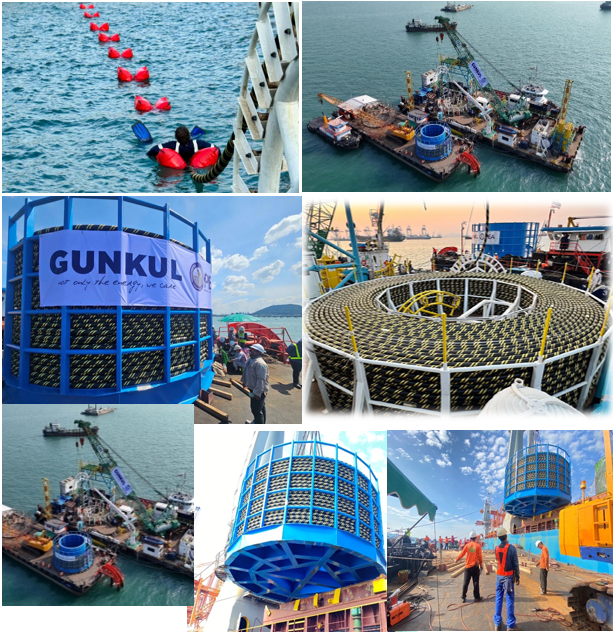
Illustration of the Construction of 115 kV Underground Cable Transmission System under the Metropolitan Power System Development Project Phase 1 between Chiang Mai 2 Substation – Chiang Mai 8 Substation and Chiang Mai 8 Substation – Chiang Mai 7 Substation, Chiang Mai Province 4) Submarine Power Systems Submarine power systems are one of the key areas in which the Company has established expertise and has been entrusted to undertake construction projects since 2018. To date, the Company has completed 3 projects with a total construction value of approximately THB 932.76 million. Submarine power systems are critical for power grid infrastructure where electrical connections are required across areas separated by water bodies, such as rivers, lakes, or seas. The Company possesses a team of specialists and advanced technologies to support the design, installation, and maintenance of submarine power systems, ensuring efficient operation and long-term reliability. These systems are designed to deliver continuous and stable electricity transmission, with specialized engineering considerations for underwater conditions, including depth, pressure, salinity, and other environmental factors that may affect installation and performance. Submarine cables are typically manufactured using materials resistant to corrosion from seawater, with protective insulation layers and high-strength structures to extend service life and reduce the risk of damage. Installation requires advanced technologies, including specialized cable-laying vessels and underwater inspection and testing equipment, to ensure system stability and safety. Submarine power systems enable efficient electricity transmission to areas where conventional transmission systems cannot be deployed, such as islands or remote locations separated by water, while also reducing reliance on localized power systems. Additionally, such systems minimize the need for overhead structures, thereby reducing visual and environmental impacts. In 2025, Gunkul Engineering Public Company Limited, in collaboration with Thai Duong Electrics Construction Co., Ltd., completed the construction and rehabilitation of a 22 kV submarine cable system between Si Racha District and Ko Sichang. This project, with a total value of THB 809.77 million, was executed under a joint responsibility structure of 49:51. The scope of work included the installation of a 22 kV submarine cable system to connect electricity between Si Racha District and Ko Sichang, focusing on the rehabilitation and upgrade of existing submarine cable infrastructure, as well as the installation of new cables to enhance system stability and continuity of power supply. The project aims to strengthen the reliability and stability of electricity supply to Ko Sichang, support increasing electricity demand, and promote economic development and tourism on the island. The total construction value of submarine power system projects undertaken by GPD amounts to THB 1,742.53 million.
Illustration of the Construction and Rehabilitation Project of the 22 kV Submarine Cable System (Si Racha District – Ko Sichang Circuit)
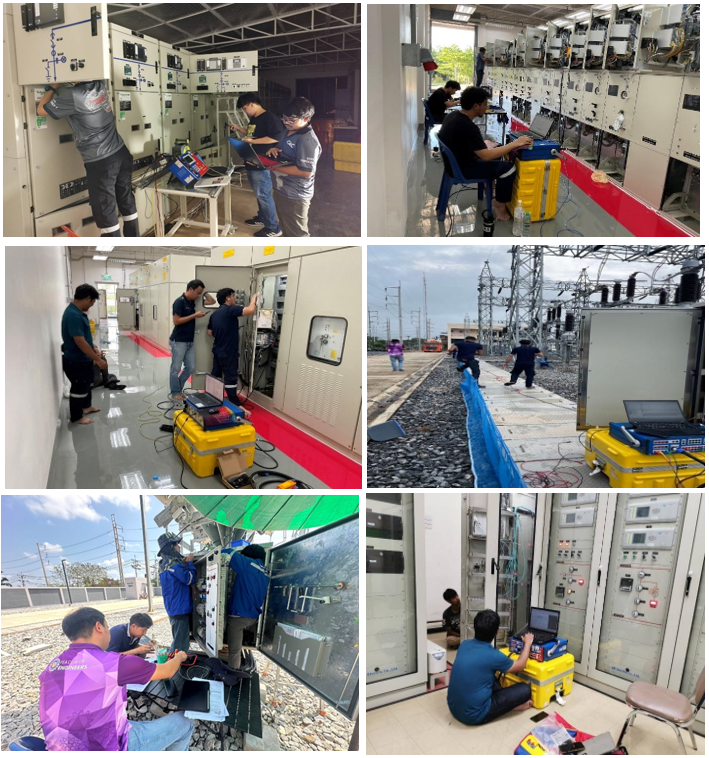
The Company has expanded its business from substation construction to provide more comprehensive services by establishing a dedicated testing team in 2021 to support business growth. As of 2024, the Company has been entrusted by customers and various organizations to undertake more than 18 testing projects, with a total contract value of approximately THB 82.8 million.
Illustration of Testing and Commissioning Works at Substations
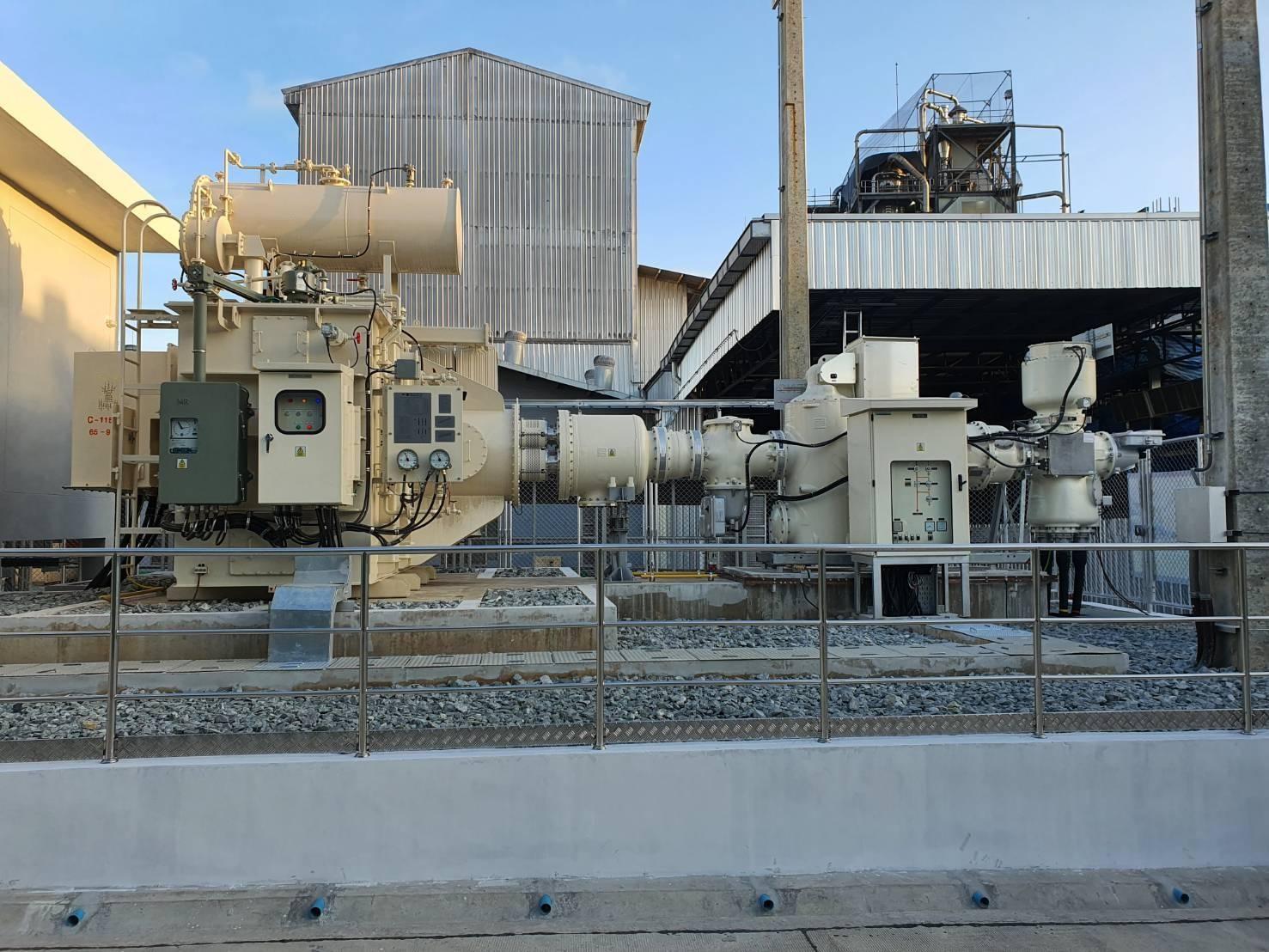
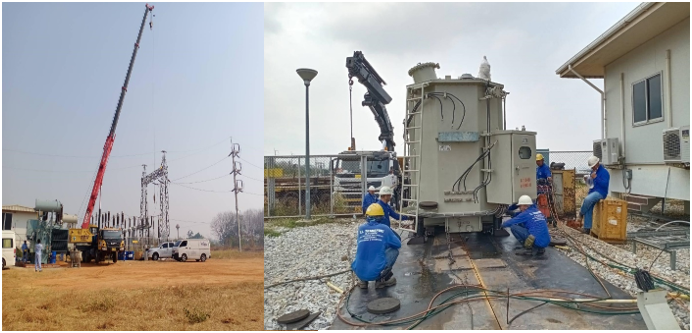
Illustration of Transformer Improvement Works for the Lum Rang Project, Bo Phloi District, Kanchanaburi Province
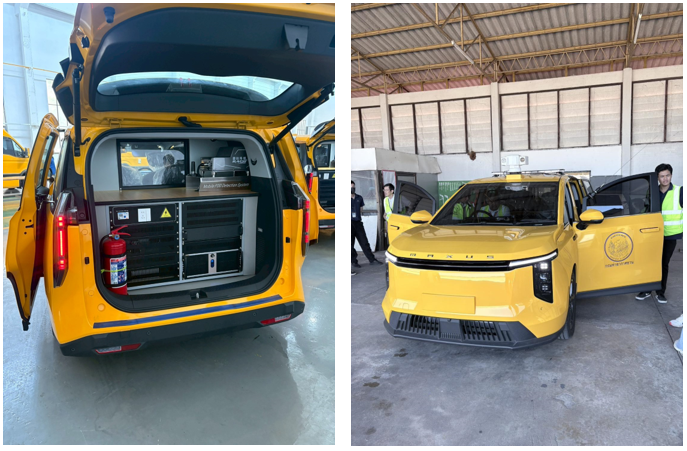
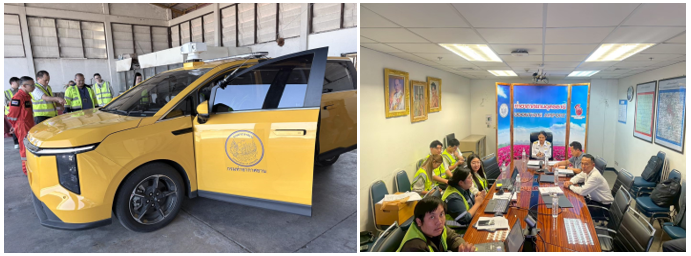
Illustration of the Procurement of Vehicles Equipped with Foreign Object Detection Systems for Runways at Udon Thani International Airport and Ubon Ratchathani International Airport
In addition, procurement of products and services for electrical system construction is a critical process that must be carried out efficiently to ensure compliance with project standards and specifications, while meeting customer requirements in terms of quality, safety, and cost-effectiveness. Key components are as follows: - Product Procurement GPD and its group companies have strong experience in sourcing high-quality suppliers recognized within the electrical construction industry, supported by an extensive network of business partners both domestically and internationally. These partners possess specialized expertise and are capable of delivering comprehensive products and services tailored to project requirements, including electrical equipment, construction materials, and advanced technologies such as SCADA systems. A strong supplier network enables the Company to execute projects efficiently, ensuring timely delivery, effective cost control, and adherence to quality standards, while also enhancing competitiveness in project bidding.
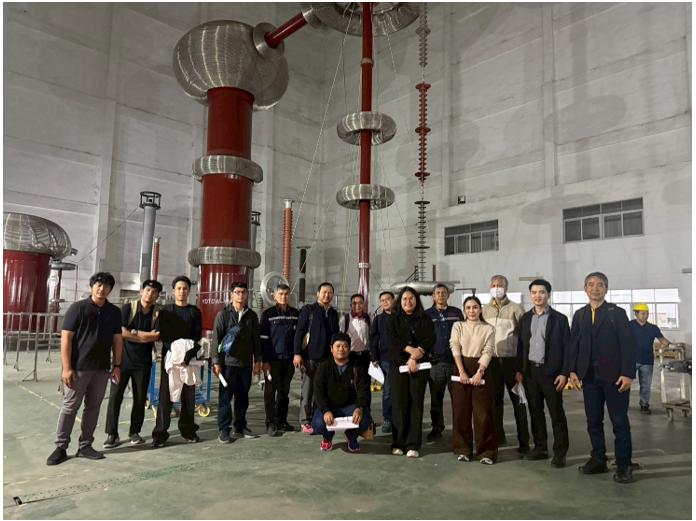
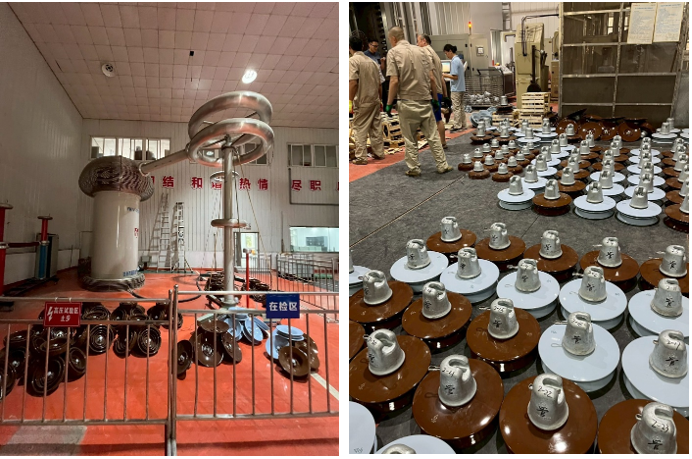
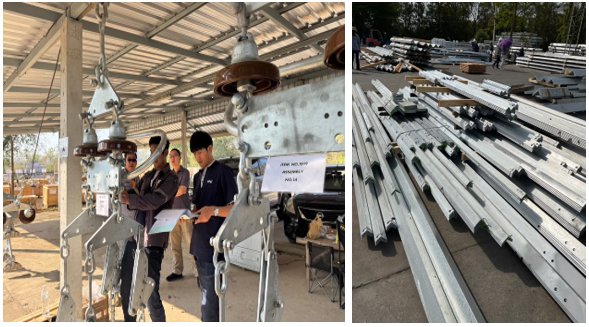
Illustration of the Factory Visit at Changyuan High Energy Electricity Co., Ltd.
Illustration of the Factory Visit at Dalian Insulator Group T&D Co., Ltd.
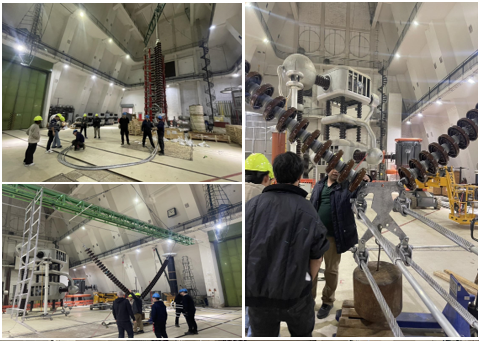
Illustration of Equipment Testing for 500 kV Transmission Line Projects
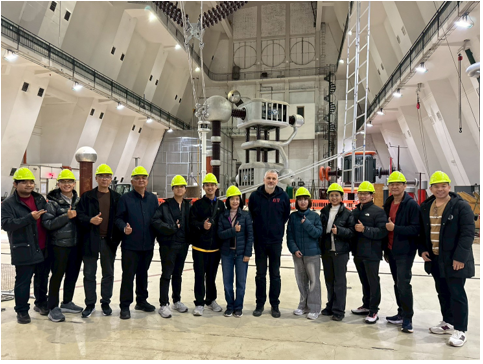
Illustration of Testing and Commissioning Works at the EGU HV Laboratory Substation in the Czech Republic 2. Service Procurement GPD and its group companies focus on providing comprehensive electrical engineering services (One-Stop Service) to ensure efficient project execution in accordance with engineering standards. The scope of services includes the following key areas: - Engineering Design: Design of electrical systems in compliance with technical requirements and tailored to the specific environmental conditions of each project - Electrical Installation: Installation of electrical equipment and power networks in accordance with high safety standards - Testing and Commissioning: System readiness verification prior to operation to ensure full functionality and stability - Maintenance Services: Ongoing maintenance of equipment and electrical systems to ensure long-term operational efficiency The Company has a team of highly experienced professionals in the electrical construction industry, with key areas of expertise as follows: 1) Electrical System Design 2) Structural System Design
Strategic Highlight
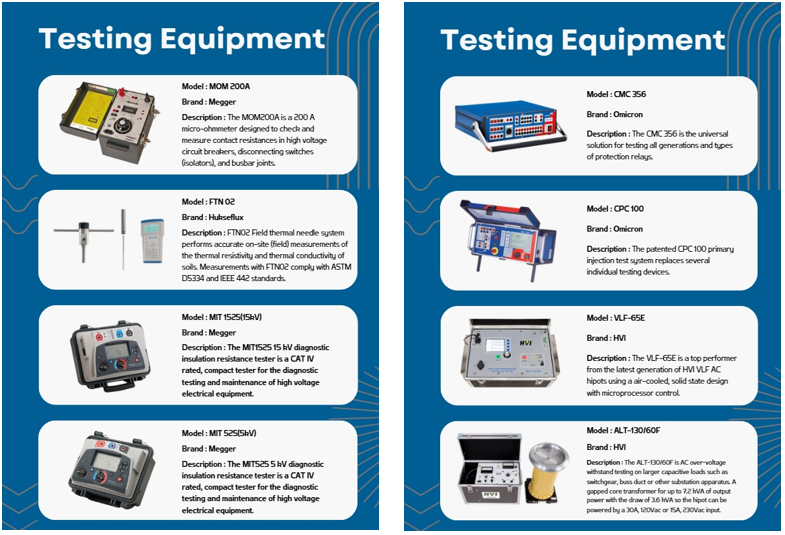
Illustration of Testing Equipment Supporting Testing and Commissioning Works 3. Coordination and Standards The Company coordinates with relevant government authorities, including the Electricity Generating Authority of Thailand (EGAT), the Provincial Electricity Authority (PEA), and the Metropolitan Electricity Authority (MEA), as well as public and private sector entities, to obtain approvals, conduct system inspections, and secure necessary permits for construction operations. Compliance with safety standards is strictly enforced to ensure that electrical systems meet all applicable requirements. The procurement of high-quality products and services, together with professional project management, are key factors in enhancing reliability and achieving customer satisfaction. 4. Approach and Performance in Managing and Operating to Minimize Social, Community, and Environmental Impacts The Company recognizes the importance of its impact on society, communities, and the environment. Accordingly, social and environmental responsibility criteria are incorporated into the vendor selection process to ensure that business partners demonstrate adequate awareness and responsibility in these areas. In addition, the Company ensures that products selected for installation comply with applicable laws and do not cause environmental harm, such as noise pollution. Environmentally friendly products are prioritized, and the Company collaborates with its partners to design products that are safe for users. These practices reflect the Company’s commitment to sustainable operations and responsible business conduct.
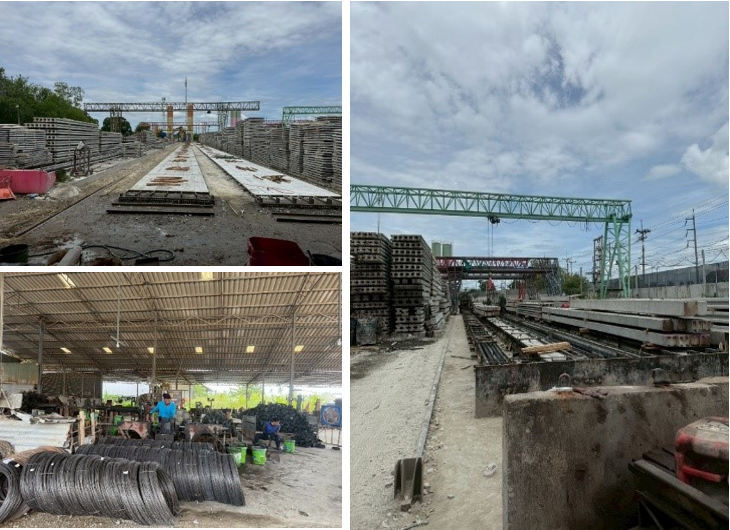
Illustration of the Factory Visit to a Pile Manufacturer for Evaluation and Selection of Products for Customer Installation
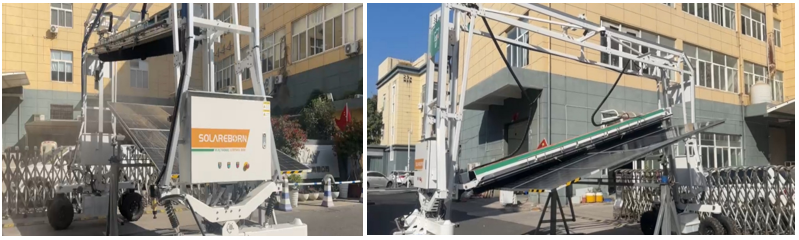
Illustration of the Factory Visit to a Solar Panel Cleaning Vehicle Manufacturer (Solareborn) | |||||||||||||||||||||||||||||||||||||||||||||||||||||||||||||||||||||||||||||||||||||||||||||||||||||||||||||||||||||||||||||||||||||||||||||||||||||||||||||||||||||||||||||||||||||||||||||||||||||||||||||||||||||||||||||||||||||||||||||||||||||||||||||||||||||||||||||||||||||||||||||||||||||||
| High-Voltage Electrical Equipment Business Group |
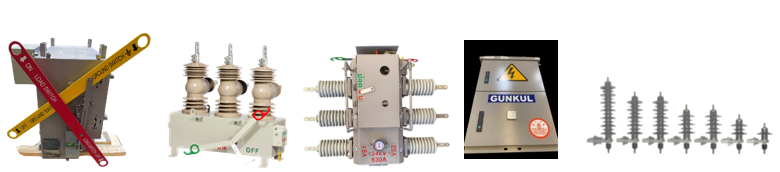
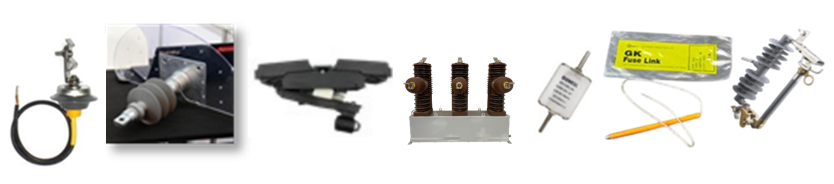
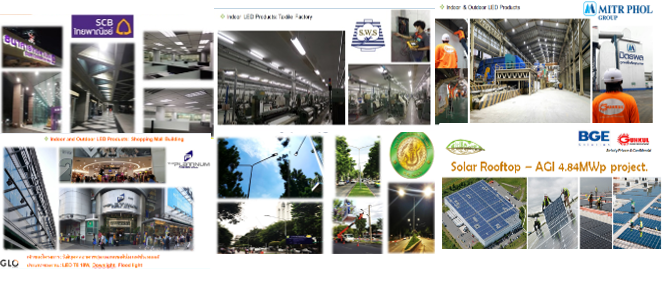
The Group, through its subsidiaries—G.K. Assembly Co., Ltd. (“GKA”), G.K. Power Products Co., Ltd. (“GKP”), G A P Supply Co., Ltd. (“GAP”), K.N.P. Supply Co., Ltd. (“KNP”), G S A P Supply Co., Ltd. (“GSAP”), and R S A P Supply Co., Ltd. (“RSAP”)—engages in the manufacturing, procurement, and distribution of electrical equipment for power systems. These operations cover the entire electricity value chain, from power generation to end users. The Group is recognized as one of the leading players in this business, particularly in terms of product diversity, with more than 5,000 product items available to meet the varying requirements of different customer segments. The product portfolio includes both in-house manufactured products and those sourced from reputable manufacturers known for high quality and standards, both domestically and internationally, including suppliers from the United States, Germany, Korea, Sweden, Japan, and the People’s Republic of China. The products can be categorized into seven groups based on their applications as follows: 1) Switching and Protection Equipment for Power Systems
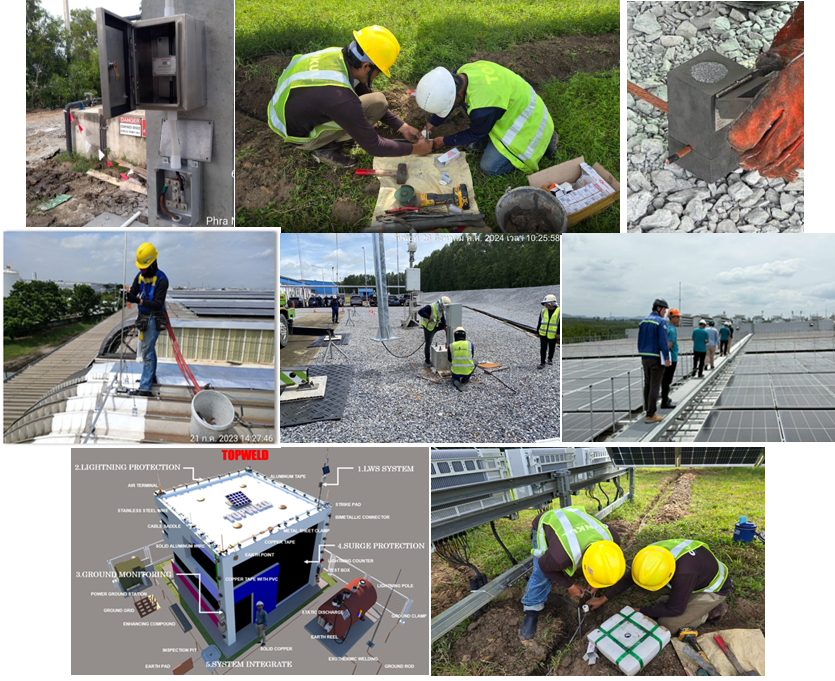
2) Grounding and Lightning Protection Systems
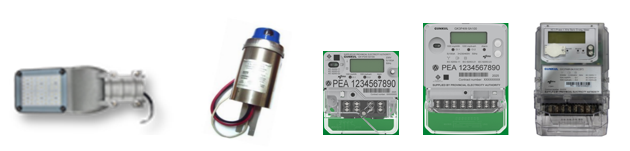
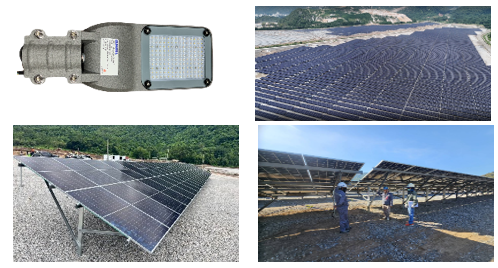
3) Lighting and Energy Metering Equipment
4) Equipment for Installation, Maintenance, and Expansion of Power Systems
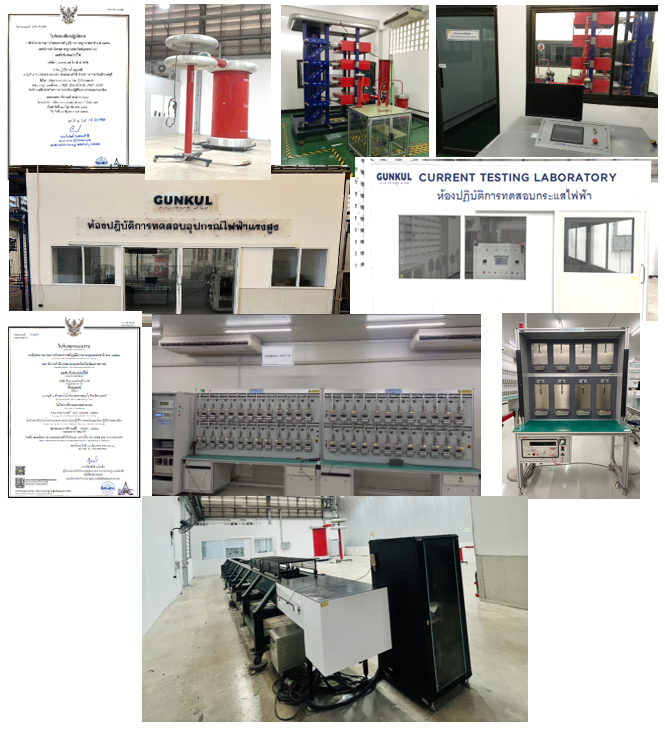
5) Tools and Personal Protective Equipment (PPE) 6) Electrical Equipment Testing Services
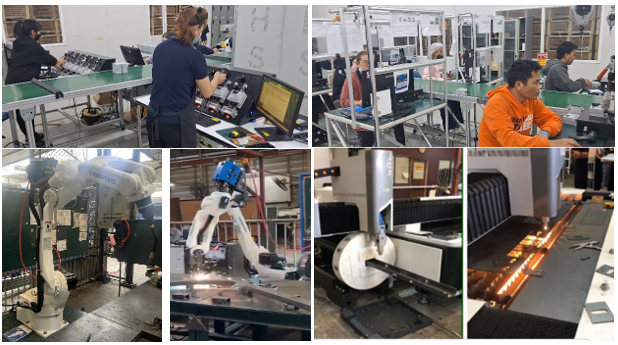
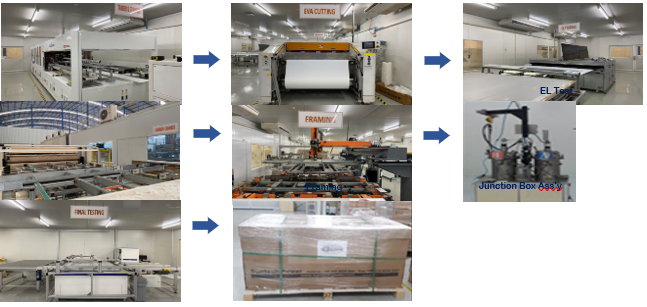
7) Continuous Improvement in Manufacturing Processes
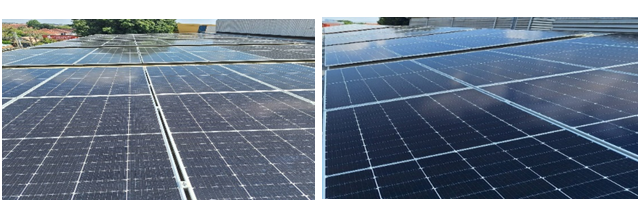
In addition, the Company has implemented projects to reduce electricity consumption from the grid by upgrading its solar cell installations from 90 kWp to 207 kWp.
Installation of Solar Rooftop Systems at the Warehouse Building and the Front Warehouse Building | |||||||||||||||||||||||||||||||||||||||||||||||||||||||||||||||||||||||||||||||||||||||||||||||||||||||||||||||||||||||||||||||||||||||||||||||||||||||||||||||||||||||||||||||||||||||||||||||||||||||||||||||||||||||||||||||||||||||||||||||||||||||||||||||||||||||||||||||||||||||||||||||||||||||
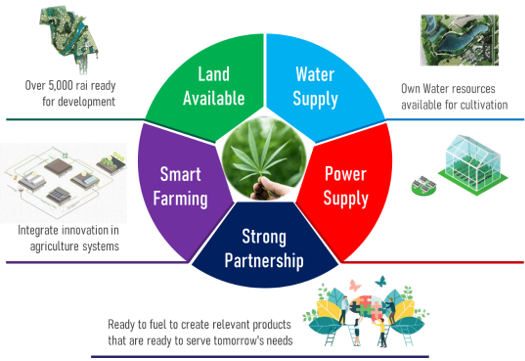
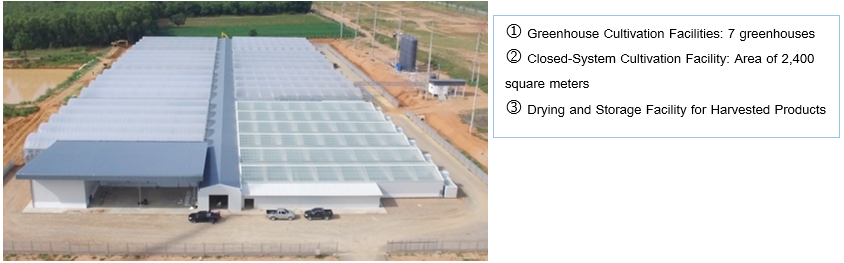
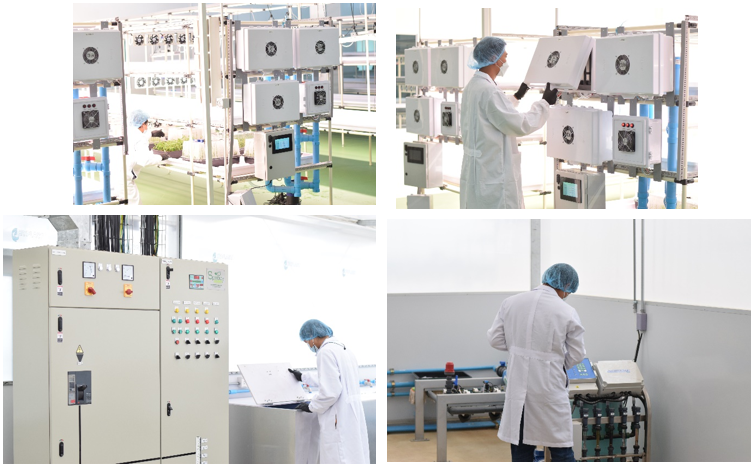
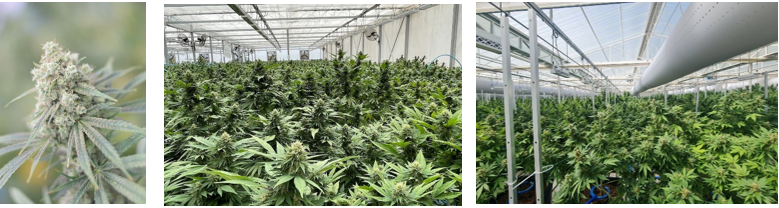
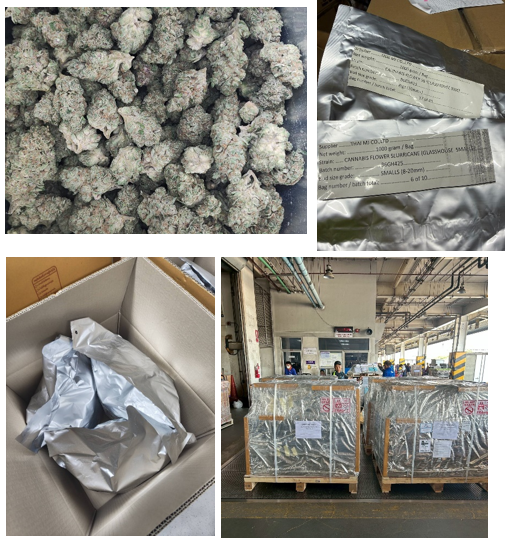
| Other Business Group: Hemp and Cannabis Business Group | The Company recognizes business opportunities in health and wellness investment. Leveraging available land from its wind power projects that is not currently utilized, and following the Ministry of Public Health’s approval to remove hemp from the narcotics list, the Company has initiated its hemp and cannabis business. This includes cultivation for sale, as well as the production and distribution of products derived from hemp and cannabis, such as food and pharmaceutical products, cosmetic products, and herbal health beverages. The Company aims to collaborate with partners to become a fully integrated hemp and cannabis business operator, covering the entire value chain from upstream to downstream. This initiative is intended to generate returns, create added value, and significantly enhance the Company’s performance growth, serving as a foundation for establishing a new S-curve for the business. The Company has structured and developed a comprehensive strategy for its hemp and cannabis business through the establishment of G.K. Hemp Group Co., Ltd. (GKHG) and two subsidiaries: G.K. Smart Farming Co., Ltd. (GKSF), responsible for seed sourcing/importation and cultivation using smart farming systems in closed greenhouse environments to ensure high-quality and standardized outputs; and G.K. Bio Extraction Co., Ltd. (GKBE), responsible for processing activities, including CBD extraction from dried hemp flowers and oil extraction from hemp and cannabis seeds. These products are high-quality inputs for downstream industries, including pharmaceuticals for medical use, dietary supplements, personal care products, and food and beverages. The Company’s hemp and cannabis business is supported by several key strengths:
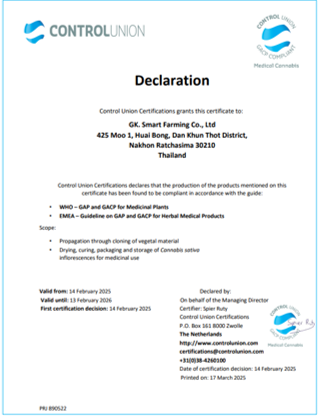
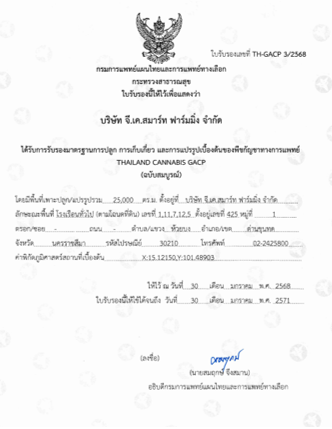
In its past operations, the Company has developed and constructed cultivation facilities, extraction plants, and laboratories for the analysis of key compounds in hemp and cannabis, in accordance with medical-grade standards, with an investment exceeding THB 800 million. The facilities have an annual production capacity of more than 10,000 kilograms of dried hemp and cannabis flowers and a daily extraction capacity of 100 kilograms of dried flowers. In addition, on 9 June 2022, the Ministry of Public Health issued an announcement reclassifying cannabis, whereby “cannabis plants” are no longer categorized as a Category 5 narcotic under the Narcotics Code. This regulatory change has created opportunities for the general public to use cannabis as an alternative for health care and medical purposes. Internationally, more than 30 countries have legalized cannabis for medical use, with some countries also permitting its use for recreational purposes. Furthermore, certain countries, such as Japan and the Philippines, have begun to recognize the benefits of CBD extracts and are studying and preparing new regulations to expand the permitted use of hemp and cannabis. These developments have increased opportunities for marketing and distributing hemp and cannabis products both domestically and internationally. To prepare for exports, the Company has obtained certification for cultivation and harvesting standards for medical cannabis under the Control Union Medical Cannabis Standard (CUMCS) since 2023. For the domestic market, in line with government policies supporting medical cannabis, the Ministry of Public Health announced on 23 June 2025 that the sale and export of cannabis by licensed operators must comply with Good Agricultural and Collection Practices (Thai Cannabis GACP) certified by the Department of Thai Traditional and Alternative Medicine. The Company obtained such certification on 30 January 2025, enabling it to legally sell and export cannabis in compliance with medical standards and regulatory requirements.
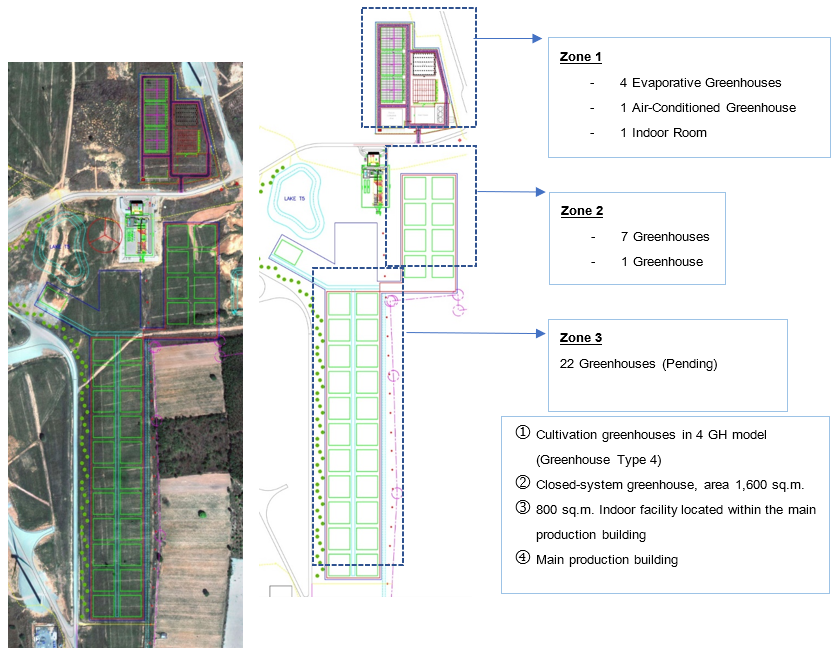
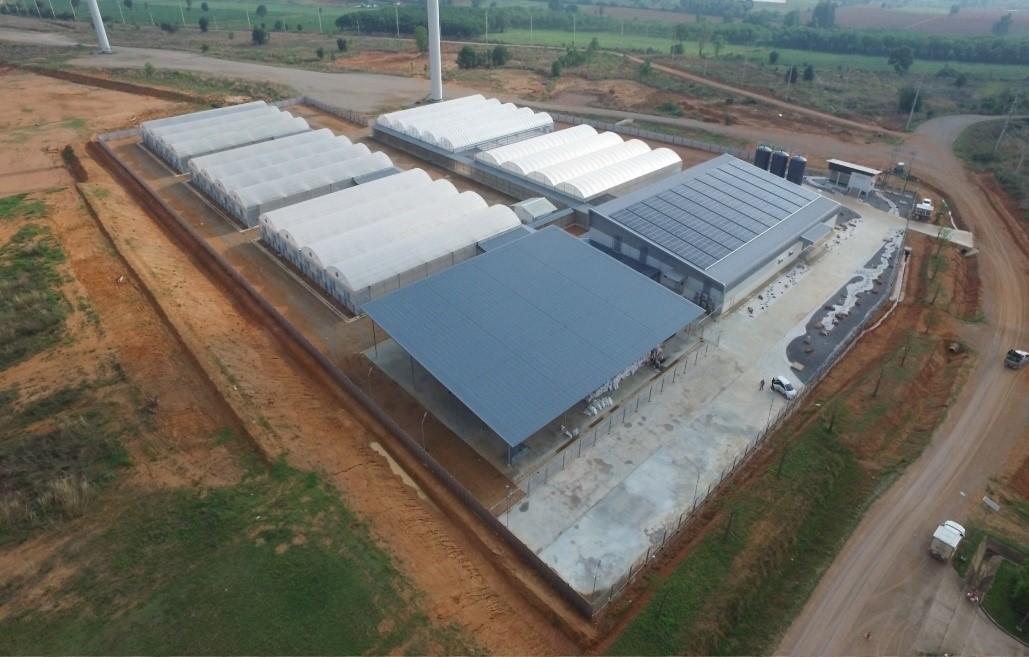
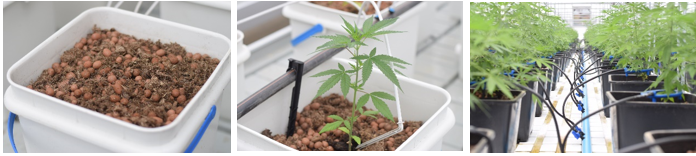
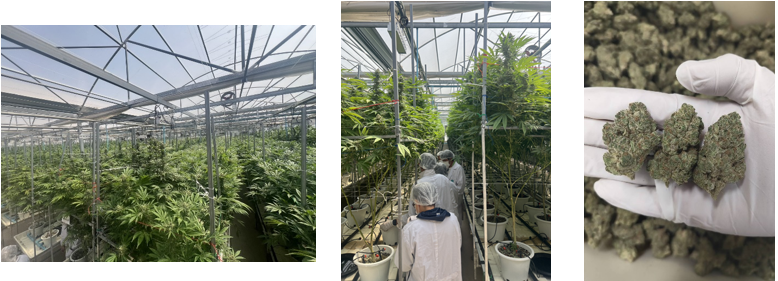
1. Cultivation Segment In the initial phase, the Company utilized approximately 80 rai of land to construct cultivation facilities. To date, two zones have been completed, comprising a total of 14 greenhouses. The Company has also prepared for the development of a third zone, which will include 22 additional greenhouses, to accommodate increasing demand in the coming years, in accordance with the planned site layout.
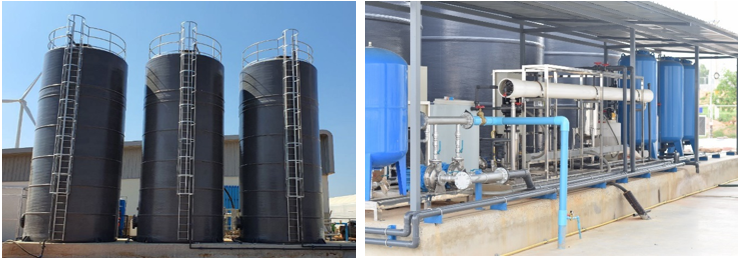
Zone 1 The facilities within Zone 1 comprise various facilities, including a fertilizer storage facility, a material preparation facility, an electrical power control building, a water treatment building, and the main production building, which includes drying rooms, sorting rooms, weighing areas, and storage rooms for harvested products. All operations are controlled in accordance with GACP standards.
Zone 2 The facilities within Zone 2 comprise various facilities, including an electrical power control building and a water treatment building, as well as drying rooms, sorting rooms, weighing areas, and storage rooms for harvested products. All operations are controlled in accordance with GACP standards.
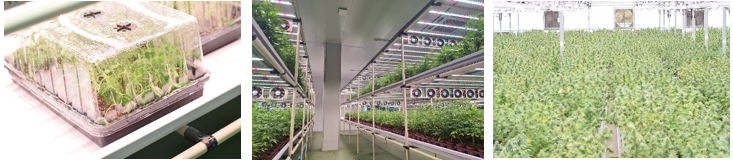
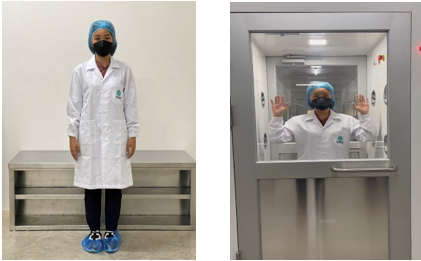
In pursuit of producing high-quality products suitable for further development into hemp and cannabis for medical purposes, the Company implements quality control measures covering personnel operations, seed germination, seedling cultivation, and planting at various stages, as well as the control of key factors and water quality used for plant irrigation. The measures are categorized as follows:
In addition, the Company has also obtained certification for Good Agricultural and Collection Practices from the Department of Thai Traditional and Alternative Medicine (Thai Cannabis GACP), further reinforcing the Company’s standards in management and high-quality production. The products are free from contamination, including microbial and heavy metal contamination, in accordance with Thai medical standards, and comply with the requirements under the Ministry of Public Health regulations applicable to licensed distributors and exporters of medical cannabis in Thailand.
From the implementation of the aforementioned quality control measures, together with the suitability of the climate and selected cultivation area, the Company has consistently achieved high-quality yields and is able to conduct 3–4 harvest cycles per year.
During the past operations, the Company has imported more than 30 strains of cannabis and hemp seeds and has successfully selected mother plants with strong physical characteristics and high and consistent levels of key compounds, namely CBD and THC (THC ≥ 22%), which meet the demands of both domestic and international markets. Most recently, the Company has entered into a collaboration with a business partner to initiate a pilot project for the joint cultivation of cannabis for commercial distribution and export within the Company’s premises (cannabis cultivation farm of GK Smart Farming Co., Ltd., Nakhon Ratchasima Province). The business partner is an expert with experience in indoor cannabis cultivation and has previously achieved success in exports. The project commenced in March 2025, covering 6 cultivation greenhouses over an area of 6 rai. The operations to date have successfully identified suitable strains for the cultivation environment and produced medical-grade cannabis flowers that meet market demand. In November 2025, the cannabis flower products from the Company’s cultivation under this project were successfully exported to Australia in a trial shipment of 150 kilograms. Currently, under this collaboration, confirmed purchase orders for medical cannabis flowers for export to Australia and Europe have been secured in the amount of 1,100 kilograms, and total export volume is expected to be no less than 3,000 kilograms in 2026. However, pursuant to the terms under the memorandum of understanding, GK Smart Farming Co., Ltd. plans to consider entering into a joint venture with the business partner to expand production capacity and export capabilities in the future.
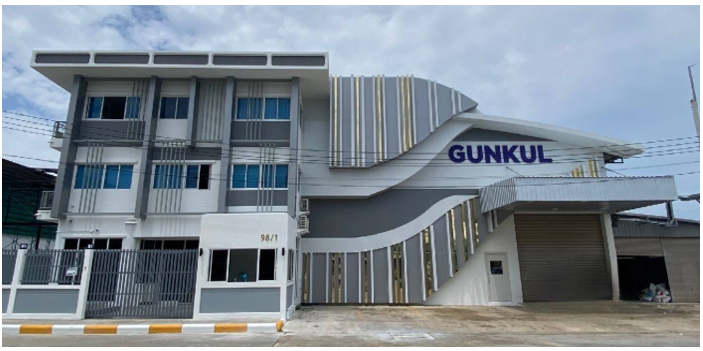
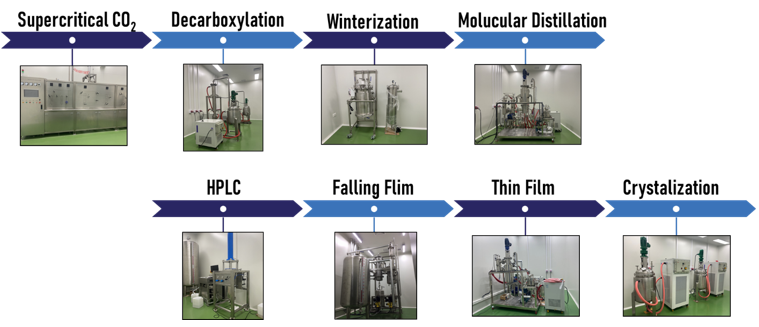
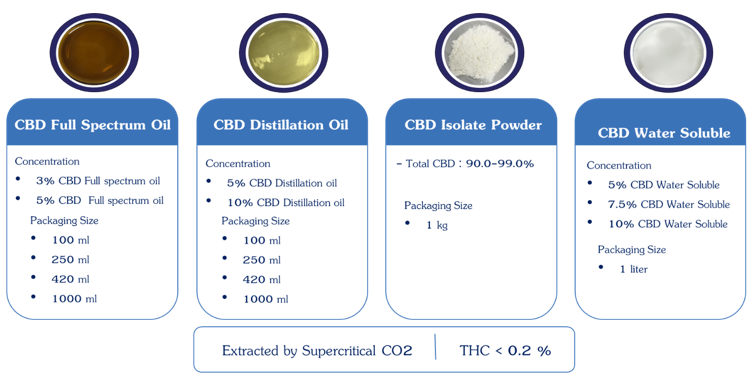
2. Extraction Segment Operations are conducted under GK Bio Extraction Co., Ltd., which is responsible for the extraction of active compounds from dried cannabis and hemp flowers, as well as analytical testing of key active compounds. The Company utilizes advanced technology to ensure product quality and is capable of operating at a maximum production capacity of up to 100 kilograms per day. Such capacity enables the Company not only to support its own production but also to provide extraction services to external parties.
The extraction facility is located at 98/1 Moo 1, Bueng Nam Rak Subdistrict, Thanyaburi District, Pathum Thani Province. The extraction process consists of multiple stages to produce various types of extracts, including Full Spectrum Crude, Distillation Crude, and CBD Isolate, as well as formulation into liquid forms that can be dissolved in beverages, which can be categorized into the following segments:
Product Types from Extraction
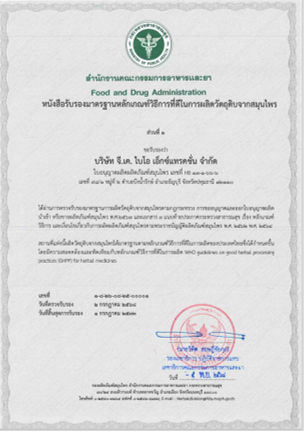
In 2025, the Company planned to expand its extract product portfolio to include THC extraction from cannabis plants. Accordingly, the Company applied for certification under the Good Herbal Processing Practices (GHPP) standard and obtained such certification on 2 July 2025. The Company is currently in the process of applying for a license to produce and extract THC from the Food and Drug Administration and expects to obtain such license within 2026. This initiative is intended to expand the market for medical herbal extract products.
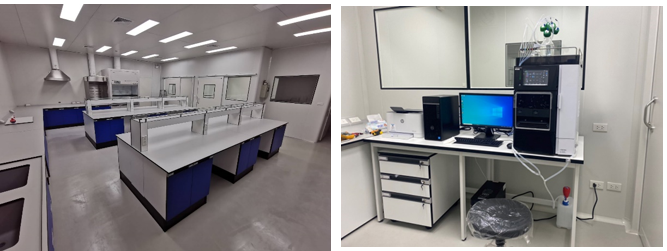
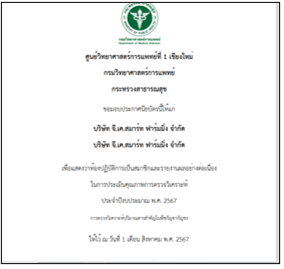
In addition, the Company has established a laboratory to analyze the content of active compounds in cannabis and hemp plants. The laboratory is capable of analyzing CBD and THC levels in both extracts and flower products. Currently, the laboratory has successfully completed proficiency testing in comparison with the Department of Medical Sciences and has been certified as a participant in quality assessment for such analytical testing.
As a result, the Company’s laboratory test results are reliable and can also be provided as analytical services to external organizations.
3. Sales and Marketing Segment The Company has operated across the entire value chain, including upstream, midstream, and downstream businesses, namely standardized cannabis and hemp cultivation farms, medical-grade cannabis and hemp extraction facilities, and downstream product processing. The Company focuses on target markets across each segment as follows:
The Company expects that the implementation of the aforementioned plans will generate significant additional revenue and profit from its cannabis and hemp business segment. 4. Licensing and Standards Segment Currently, regulatory requirements and laws related to cannabis and hemp businesses are subject to frequent changes, both in terms of facilitation and increased regulatory control and restrictions. The Company has therefore undertaken to obtain all relevant licenses to ensure compliance with applicable regulations, as follows:
|

Research & Development
Has R&D Policy (Y/N)
Yes
Introduction
The Company has established a research and development policy under its Sustainability Policy, with a focus on promoting advanced technology and digital innovation as key strategic drivers to achieve sustainable business growth.
In terms of operations, the Company aims to become a leader in the renewable energy and integrated electrical systems business by expanding investments in new businesses related to clean energy and technology, while continuously developing innovations in operational processes to enhance efficiency.
In addition, the Company places importance on strengthening organizational capabilities and knowledge bases to support future changes, alongside the development of robust, secure, and environmentally friendly infrastructure, in order to create sustainable value for all stakeholders.
R&D Cost — Description
Over the past three years, the Company has focused on investing in innovation and technology to enhance its competitiveness and achieve sustainable growth. A significant portion of such expenditures has been allocated to the development of digital platforms and smart energy solutions, including the EMERGE platform, which is an innovation for power grid management and energy trading.
In addition, the Company has made investments through Gunkul Spectrum to support research and development of new business models and energy storage systems. The Company has also invested in technologies for the manufacturing of electrical equipment that emphasize resource efficiency and environmental friendliness (eco-friendly efficiency), with the objective of enhancing the stability and modernization of the country’s energy infrastructure.
R&D Cost — Label
Research and development (R&D) expenses over the past 3 years (Million Baht)
R&D Cost — This Year
22.49
R&D Cost — Last Year
21.55
R&D Cost — 2 Years Ago
16.27
Assets Used in the Business
Permanent Assets — Description
As at 31 December 2025, the principal fixed assets used in the operations of the Company and its group, as presented in the consolidated financial statements, comprised land, buildings and equipment, investment properties, and right-of-use assets, with a total value of Baht 12,485.92 million.
These assets include land, buildings and structures, factories, warehouses, document storage facilities, building improvements and utilities, construction in progress, as well as machinery and factory equipment, furniture and fixtures, office equipment, solar power plant rooftop structures, and vehicles. Such assets are both owned and leased by the Company, its subsidiaries, and its associates/joint ventures for use in their operations.
Details of depreciation are disclosed in the Company’s financial statements under Note 3: “Significant Accounting Policies,” specifically (x) Property, Plant and Equipment and (y) Leases.
Permanent Assets — Appraisal
| Asset | Ownership | Obligation | Appraisal Value | Description |
|---|---|---|---|---|
| Land and land improvements | Owned | Mortgaged | 1,488.06 | |
| Buildings, building improvements and utilities | Owned | Mortgaged | 1,276.11 | |
| Machinery and equipment | Owned | Mortgaged | 8,928.83 | |
| Furniture and office equipment | Owned | Mortgaged | 31.32 | |
| Vehicles | Owned | Mortgaged | 49.09 | |
| Construction in progress | Owned | Mortgaged | 67.95 | |
| Investment properties | Owned | Mortgaged | 130.4 | |
| Right-of-Use Assets - Land | Leased | Leased | 417.06 | Lease term ranging from 10 to 30 years |
| Right-of-Use Assets - Office buildings | Leased | Leased | 44.46 | Lease term of 3 years |
| Right-of-Use Assets - Warehouses | Owned | Owned | 6.86 | |
| Right-of-Use Assets - Solar power plant rooftop structures | Leased | Leased | 12.93 | Lease term ranging from 10 to 25 years |
| Right-of-Use Assets - Vehicles | Leased | Leased | 32.85 | Lease term of 5 years |
Intangible Assets — Description
As at 31 December 2025, intangible assets, goodwill, and derivative assets as presented in the consolidated financial statements amounted to Baht 967.82 million. These comprised software licenses, rights to connect to electricity distribution systems, rights under power purchase agreements and electricity business operations, goodwill, and intangible assets under installation.
Details of amortization are disclosed in the Company’s financial statements under Note 3: “Significant Accounting Policies,” specifically (x) Goodwill and (y) Intangible Assets.
Intangible Assets — Appraisal
| Asset | Type | Type (if Other) | Appraisal Value |
|---|---|---|---|
| Software licenses | Software | 35.83 | |
| Software licenses | Others | Enhancing Operational Efficiency through the Application of Digital Technology | 64.94 |
| Rights under power purchase agreements / electricity business operations | Others | Electricity business | 762.12 |
| Goodwill | Others | Non-Infringement of Intellectual Property and Copyright | 80.93 |
| Software licenses | Copyright | 17 |
Has Subsidiaries Investment Policy (Y/N)
Yes
Subsidiaries Investment Policy — Description
Currently, the Company has 115 subsidiaries in which it holds a majority shareholding and 16 associated companies. The Company places importance on group governance to ensure that business operations are aligned in the same direction, operate efficiently, and are consistent with the Company’s policies and standards.
The Company has established a policy to supervise its subsidiaries by appointing its directors and executives to serve as directors and/or executives in such subsidiaries, in order to oversee operations, risk management, and internal controls in accordance with the Company’s policy framework, as well as to ensure transparency and accountability.
For associated companies, the Company appoints its representatives to serve as directors in proportion to its shareholding, in order to participate appropriately in governance and performance monitoring. The number of representatives is determined based on the Company’s investment proportion in each entity.
With respect to its investment policy, the Company considers investments in businesses with growth potential that are aligned with or supportive of its core business and are capable of generating appropriate returns, while taking into account associated investment risks, in order to support the sustainable long-term growth of the Group.
Marketing Policy & Competition
Reporting Mode
3117
Marketing Policy (Overall)
The Company conducts its marketing activities based on the principles of responsible and ethical marketing (Responsible Marketing) in accordance with its Sustainability Policy. The Company places importance on providing accurate, complete, and transparent information regarding its products and services to enable stakeholders to make informed decisions.
During the past year, the Company has implemented a proactive marketing strategy to deliver comprehensive clean energy solutions under a one-stop ecosystem approach, addressing the needs of different stakeholder groups. The Company has focused on the development and expansion of services in the form of Private PPA and Solar Rooftop projects, which contribute to increasing access to clean energy and supporting the energy transition.
In addition, the Company has introduced energy innovations through digital platforms for smart energy management, as well as energy storage solutions, to enhance energy efficiency, reduce system losses, and strengthen energy security for electricity users.
The Company also emphasizes the development and marketing of environmentally friendly products, taking into consideration efficient resource utilization throughout the value chain in order to create sustainable value across environmental, social, and economic dimensions.
Industry & Competition (Overall)
During the past year, competition within the renewable energy and high-voltage electrical systems industry has intensified significantly, driven by national policies aimed at achieving Carbon Neutrality and Net Zero Emissions. This has led to a rapid increase in demand for clean energy from both the public and private sectors. Such factors have attracted a large number of new entrants into the market, particularly in the Solar Rooftop installation business and Private PPA models, resulting in heightened price competition within the industry.
In response, the Company has adjusted its strategy by focusing on differentiation through a One-Stop Ecosystem business model, offering integrated services across the entire value chain, from power generation and engineering procurement and construction (EPC) to electrical equipment supply. This approach aims to mitigate the impact of price competition and build a sustainable customer base.
In addition, the Company places importance on advancing innovation to maintain its leadership position, in order to address the needs of future power grid systems and meet consumer demand for efficiency alongside sustainability.
Procurement of Products & Services
Reporting Mode
3117
Procurement (Overall)
The Company procures products and services for distribution through a One-Stop Ecosystem model to enhance its competitive advantage, taking into consideration supply chain efficiency alongside product and service quality, standards, and sustainability. The Company’s procurement and service model can be categorized into three main channels as follows:
In-house production through the Group’s manufacturing base for the high-voltage electrical equipment business, enabling the Company to control quality, standards, and production costs in accordance with its requirements, while emphasizing resource efficiency and continuous improvement of production processes.
Procurement from leading manufacturers and suppliers, both domestically and internationally, to source high-quality equipment with advanced and diverse technologies. The Company places importance on a systematic supplier selection process, taking into account quality, standards, and environmental, social, and governance (ESG) practices to ensure transparency and sustainability throughout the supply chain.
Provision of engineering services (Engineering Services) by sourcing appropriate materials, equipment, and technologies and integrating them into comprehensive clean energy solutions. This approach enhances energy efficiency, reduces system losses, and effectively meets the needs of customers across various sectors.
Raw Material Acquisition (Overall)
The Company places importance on the selection of high-quality raw materials, while taking into consideration sustainability throughout the supply chain. In its manufacturing operations, the Company has increased the proportion of environmentally friendly raw materials (eco-friendly raw materials), such as materials containing recycled content, in order to promote resource efficiency and reduce environmental impacts from production processes.
For the procurement of raw materials and equipment used in engineering services, the Company has established systematic criteria for supplier selection and evaluation, incorporating environmental, social, and governance considerations (ESG assessment). This ensures that materials and equipment meet the required standards and are sourced from supply chains that are transparent, ethical, and traceable.
Such an approach enhances the Company’s supply chain standards, reduces environmental and social risks, and supports sustainable business operations in the long term.
Production Policy (Overall)
The Company emphasizes production processes in compliance with international standards (ISO), with priority given to occupational health and safety, alongside systematic and efficient production management.
The Company places importance on resource efficiency to minimize losses in the production process, with continuous process optimization to reduce waste and enhance raw material utilization. In addition, energy management systems have been implemented in the electrical equipment manufacturing facilities to improve energy efficiency and reduce direct greenhouse gas emissions from production processes.
Furthermore, the Company manages waste in accordance with the principles of the circular economy, focusing on resource reuse, waste reduction, and proper waste management to minimize environmental impact, while supporting ongoing operations in alignment with the Green Factory concept.
Distributors (Overall)
The Company places importance on supplier management within its supply chain by identifying a group of critical Tier 1 suppliers, which are key suppliers that have a significant impact on business operations in terms of procurement value and operational continuity.
In 2025, such critical suppliers accounted for 73.62% of the total procurement value. The Company places emphasis on maintaining close relationships with this group of suppliers, as well as establishing criteria for supplier selection and performance evaluation, incorporating environmental, social, and governance (ESG) considerations. This ensures that the supply chain remains transparent, efficient, and capable of effectively managing associated risks.
Number of Raw-Material Distributors (Overall)
92
Production Capacity (Overall)
| Item | Unit | Used | Capacity |
|---|---|---|---|
| G.K. Assembly Co., Ltd. | Piece | 100 | 7,000,000 |
| G.K. Power Products Co., Ltd. | Piece | 100 | 4,000,000 |
| GAP Supply Co., Ltd. | Piece | 100 | 3,000,000 |
Domestic/Overseas Purchase Proportion (Overall)
| Raw Material | Source Country | Value |
|---|---|---|
| Plastic, Brass, Copper, Aluminium, Steel, Insulator | China | 0 |
| Plastic, Brass, Copper, Aluminium | India | 0 |
| Steel, Insulator | South Korea | 0 |
| Plastic, Brass, Copper, Aluminium | Thailand | 0 |
Nature of Business — Overview
Introduction
Business Overview
Gunkul Engineering Public Company Limited (the “Company”) operates its core businesses across three key segments covering an integrated power system, with a focus on advanced technology and innovation to promote sustainability and enhance infrastructure, as follows:
Clean Energy Business
Operates solar and wind power plants, including providing operation and maintenance services for power plants. The Company focuses on developing a business ecosystem and innovation that support collaboration between the Company and its partners.Engineering and Turnkey Business
Provides construction services for renewable power plants, as well as the development of substations, transmission systems, underground electrical systems, submarine cables, microgrid systems, and energy storage systems, offering comprehensive turnkey solutions.High Voltage Electrical Equipment Business
Manufactures, procures, and distributes electrical equipment, including energy-saving and alternative energy products, to meet diverse demands and support future energy development.
The Company is committed to developing its energy business based on sustainable business practices, with emphasis on environmental, social, and stakeholder considerations under good corporate governance principles. This is aligned with the Power Development Plan and the Alternative Energy Development Plan, as well as global trends toward a Net Zero Carbon society, enabling all sectors to fully access and utilize energy. The Company aims to enhance quality, standards, and safety in order to become a leader in renewable energy, innovation, and digital platforms, guided by the principle of “not only the energy, we care” as the core of its operations.
Energy Industry Overview and Market Trends
The world is currently facing megatrends—macro-level changes that have long-term impacts on the economy, society, technology, and the environment. Key trends include global population growth, climate change, the advancement of digital technology and Artificial Intelligence (AI), as well as changes in consumer behavior. In particular, climate change has both direct and indirect impacts on all living beings worldwide.
To address this crisis, countries have collaborated through the Conference of the Parties (COP) under the United Nations Framework Convention on Climate Change, with the objective of achieving Net Zero Emissions, phasing out fossil fuels, and supporting clean technology initiatives. The COP29 conference, held in November 2024 in Baku, Azerbaijan, reached significant agreements on climate finance, establishing a New Collective Quantified Goal (NCQG) for developed countries to provide financial support to developing countries in addressing climate change. The conference also emphasized targets to triple global renewable energy capacity and double energy efficiency by 2030.
At the same time, the rapid growth of Artificial Intelligence (AI) and the global expansion of data centers have become new drivers of substantial electricity demand, particularly for clean energy among leading technology operators. This presents strategic opportunities for renewable energy producers to expand their customer base into the digital industry. The Company and its group recognize these opportunities and have established strategies to expand into clean energy services for data centers, including long-term power purchase agreements and the development of energy infrastructure capable of supporting continuous and stable electricity demand.
Thailand, as a member of COP, has advanced policies to support renewable energy utilization in line with its targets of achieving Carbon Neutrality by 2050 and Net Zero Emissions by 2065, with a focus on diversified clean energy generation. In addition, changes in international trade policies, such as carbon border taxation and carbon labeling, are driving producers to accelerate the adoption of renewable energy in order to maintain competitiveness in the global market.
The Company and its group recognize growth opportunities arising from these megatrends and acknowledge the importance of energy sustainability, in alignment with the government’s Net Zero Pathway policy, which emphasizes energy transition to reduce reliance on fossil fuels, enhance energy security, and promote renewable energy generation, ultimately supporting Thailand’s Carbon Neutrality goals.
Clean Energy Business Group
Overview of Thailand’s Electricity System
1. Structure of Thailand’s Electricity Industry
Thailand’s electricity industry structure operates under the Enhanced Single Buyer Model (ESB), which was approved by the Cabinet on 9 December 2003. At present, the Electricity Generating Authority of Thailand (EGAT) is responsible for electricity generation and transmission, as well as purchasing electricity from Independent Power Producers (IPPs), Small Power Producers (SPPs), and electricity imports from neighboring countries. Meanwhile, the Metropolitan Electricity Authority (MEA) and the Provincial Electricity Authority (PEA) purchase electricity from Very Small Power Producers (VSPPs). EGAT is responsible for transmitting electricity through the transmission system to MEA and PEA for distribution to end-users within their respective service areas.
2. Power System Control Center
Under the supervision of EGAT, the Power System Control Center is responsible for controlling, managing, and supervising the operation of power plants, including power plants with power purchase agreements from foreign countries, in order to ensure that the national power system remains balanced, secure, stable, and highly efficient, in accordance with the Energy Industry Act B.E. 2550 (2007).
3. National Power Development Planning
The national power development planning must be aligned with the National Economic and Social Development Plan of the Office of the National Economic and Social Development Council (NESDC), reflecting government policies, future economic growth, and Thailand’s greenhouse gas emission reduction policy. The Ministry of Energy and the Energy Policy and Planning Office (EPPO) have established the framework for the National Energy Plan and prepared the Thailand Power Development Plan 2024–2037 (PDP2024), which focuses on three key aspects, as follows:
Security
To respond to increasing energy demand in line with economic growth, population growth, and urban expansion, it is necessary to emphasize an appropriate fuel mix while maintaining stability in both the power generation system and the transmission system, taking into account electricity users and regional security. In addition, power generation systems in areas with self-generation must also be planned so that the power grid can flexibly accommodate the energy transition.
In allocating power plant capacity, consideration should be given to regional security, fuel procurement capability, and the integration of Distributed Energy Resources (DER) into the management of the national electricity system. In addition, probabilistic planning principles, such as the Loss of Load Expectation (LOLE), should be adopted as planning criteria for long-term system security.
Economy
Consideration of appropriate costs and stable electricity tariffs must reflect actual costs, while the public should not bear unfair burdens. At the same time, energy costs must not become an obstacle to the country’s long-term economic and social development.
The reform of the pricing structure of various fuel types should be aligned with actual costs and subject to appropriate tax burdens in order to improve energy efficiency, reduce wasteful energy consumption, and promote efficient energy use in all sectors.
Ecology
Environmental impacts should be reduced by limiting carbon dioxide emissions in accordance with the targets of the national energy plan and Thailand’s Long-Term Low Greenhouse Gas Emission Development Strategy (LT-LEDS), under the policies on Carbon Neutrality and Net Zero Emissions.
Key measures include supporting electricity generation from renewable energy, improving efficiency in the electricity system in both generation and consumption, increasing the proportion of domestic renewable energy generation, and adopting high-efficiency technologies to reduce impacts on the environment and communities through the full utilization of Smart Grid technology in order to achieve long-term energy sustainability.
4. Key Assumptions for the Preparation of the PDP2024 Draft
Adoption of New Power System Security Criteria
The Loss of Load Expectation (LOLE) at a level of not more than 0.7 day/year is adopted as the criterion in place of the Reserve Margin criterion. In the past, Thailand determined that the Reserve Margin must not be less than 15 percent, together with LOLE not exceeding 1 day/year.
LOLE reflects the current situation in which generation from Variable Renewable Energy (VRE), such as solar power, has increased in proportion but cannot be relied upon at all times. Therefore, the use of LOLE is more appropriate than considering Reserve Margin only during peak demand periods.
Setting LOLE at not more than 0.7 day/year reflects an appropriate balance between investment in power plants and the reduction of losses arising from power outages (Outage Cost).
Allocation of Renewable Power Plants in Two Phases
During 2021–2030:Based on the power purchase plan under the clean energy generation expansion plan in accordance with the Thailand Power Development Plan B.E. 2561–2580 (2018–2037), Revision 1 (PDP2018 Rev.1), for the period 2021–2030 (Second Additional Revision), as approved by the National Energy Policy Administration Committee (NEPC) on 7 March 2023.
During 2031–2037:New renewable energy or clean energy shall account for no less than 50 percent of total power generation capacity by 2037, based on the country’s renewable energy generation potential.
Utilization of Distributed Energy Resource (DER) Technology
DER will replace the construction of peaking power plants totaling 2,000 megawatts, comprising 1,000 megawatts from demand response measures under the Smart Grid plan and another 1,000 megawatts from other DER sources, to support new technologies such as Vehicle-to-Grid (V2G), among others.
Carbon Dioxide (CO2) Emission Reduction Targets in the Power Generation Sector
By 2030:Reduce CO2 emissions by 30–40 percent from the Business-as-Usual (BAU) scenario in accordance with the Nationally Determined Contribution (NDC).
After 2030:Proceed in accordance with the LT-LEDS prepared by the Ministry of Natural Resources and Environment.
Increasing the Proportion of Hydrogen (H2) Usage in the Power Generation Sector
Hydrogen (H2) is to be blended with natural gas in order to reduce fossil fuel consumption of baseload power plants at a proportion of 5 percent of the volume of natural gas used in the power generation sector of the three electricity authorities. Such blending will commence in the upstream natural gas pipeline system on the eastern side from 2030 onward. The determination of such hydrogen blending ratio is intended to avoid excessive impacts on fuel costs, while allowing related parties sufficient time to prepare for hydrogen procurement and the related infrastructure, as well as enabling natural gas users in the system to adapt and prepare for increasing the proportion of hydrogen use at the national level in the future.
The Ministry of Energy has reviewed and prepared five principal energy plans to align with the 20-Year National Strategy (2018–2037), namely:
Thailand Power Development Plan (PDP)
Energy Efficiency Plan (EEP)
Alternative Energy Development Plan (AEDP)
Thailand Gas Plan (GAS)
Oil Plan (OIL)
At present, the renewable energy business group operates and conducts its business in accordance with two principal plans, namely the Thailand Power Development Plan B.E. 2561–2580 (2018–2037), Revision 1 (PDP2018 Revision 1), and the Alternative Energy Development Plan B.E. 2561–2580 (AEDP2018).
The Thailand Power Development Plan B.E. 2561–2580 (2018–2037), Revision 1 (PDP2018 Revision 1), stipulates that the net electricity generation capacity in the system of the three electricity authorities at the end of 2037 will total 77,211 megawatts, consisting of net electricity generation capacity as of the end of 2017 of 46,090 megawatts, additional new power generation capacity of 56,431 megawatts, which includes 18,833 megawatts of renewable power generation capacity, and retired power generation capacity during 2018–2037 totaling 25,310 megawatts.
Power Generation Capacity during 2018–2037 (Unit: Megawatts)
Power Generation Capacity during 2018–2037 | Megawatts |
Power generation capacity as of December 2017 | 46,090 |
New power generation capacity during 2018–2037 | 56,431 |
Retired power generation capacity during 2018–2037 | (25,310) |
Total power generation capacity as of the end of 2037 | 77,211 |
Sources:
1. Energy Policy and Planning Office (EPPO): Thailand Integrated Energy Blueprint (TIEB)
2. Alternative Energy Development Plan (AEDP2018)
3. Thailand Power Development Plan B.E. 2561–2580 (2018–2037), Revision 1 (PDP2018 Revision 1)
PDP2024 Targets
The Thailand Power Development Plan (PDP2024), covering the period 2024–2037, focuses on increasing the proportion of electricity generation from renewable energy in alignment with the Net Zero Emissions and Carbon Neutrality targets. One of the key objectives of PDP2024 is to increase the share of renewable energy generation from 19 percent under PDP2018 Revision 1 to 32 percent by 2037, and further expand to 50 percent by 2050. Particular emphasis is placed on solar and wind energy, which are projected to account for 29.8 percent and 8.3 percent of total electricity generation, respectively.
In addition, PDP2024 emphasizes the development of technologies to enhance the efficiency and stability of the power system, including the deployment of Battery Energy Storage Systems (BESS), as well as the development of Smart Grid and Virtual Power Plant (VPP) systems to improve grid management efficiency. The plan also aims to increase electricity generation capacity from various types of renewable energy to support sustainable energy demand in the future, as follows:
Draft Targets for Electricity Generation from Renewable and Alternative Energy (Unit: Megawatts) | ||||
Fuel Type | Government Commitment (as of Dec 2023) | New Capacity (2024–2037) | Total Capacity by End of 2037 | |
Existing (COD) | PPA/Policy Acceptance | |||
Biomass | 3,450 | 420 | 1,046 | 4,565 |
Biogas (Wastewater) | 371 | 33 | 360 | 764 |
Biogas (Energy Crops) | 6 | 175 | 576 | 757 |
Municipal Solid Waste | 376 | 466 | 300 | 1,142 |
Wind Power | 1,544 | 2,490 | 5,345 | 9,379 |
Industrial Waste | 34 | 203 | 12 | 249 |
Small Hydropower | 201 | 42 | 99 | 342 |
Large Hydropower | 2,918 | - | - | 2,918 |
Geothermal | - | - | 21 | 21 |
Solar Power | 3,110 | 5,994 | 24,412 | 33,516 |
Floating Solar | 69 | 39 | 2,681 | 2,789 |
Imported Hydropower | 4,462 | - | 6,907 | 10,295 |
Hydrogen | - | - | Blending at 5% from 2030 onwards | |
Biomass (IPS) | 925 | - | - | 925 |
Biogas (IPS) | 161 | - | - | 161 |
Solar Power (IPS) | 2,300 | - | 3 | 5,439 |
Small Hydropower (Off-Grid) | 3 | - | 2 | 5 |
Solar Power (Off-Grid) | 4 | - | 15 | 19 |
Total: 73,286 | ||||
Based on the targets outlined in the PDP2024, the proportion of electricity generation from renewable energy in Thailand is expected to increase significantly, particularly in solar and wind energy, which are the two primary energy sources in which Gunkul Engineering Public Company Limited has expertise and has continuously developed projects.
Overview of Energy Situation and Electricity Demand in Thailand
According to the Energy Regulatory Commission (ERC), Thailand’s electricity demand increased by 3.78 percent between 2022 and 2023, as detailed below:
In 2022, the average electricity demand was 29,482.38 megawatts.
In 2023, the average electricity demand was 30,595.73 megawatts.
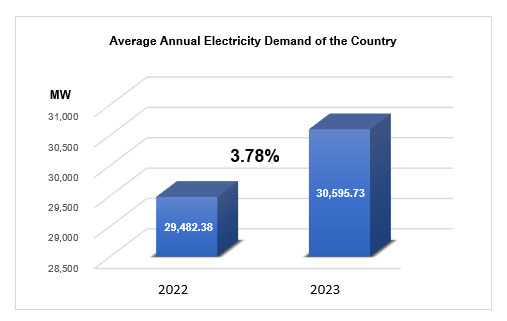
In addition, the Energy Policy and Planning Office (EPPO), Ministry of Energy, reported as of October 2023 on electricity generation, procurement, and consumption. Thailand had a total contracted power generation capacity of 53,762 megawatts. Compared to the same period of the previous year (YoY), power generation increased by 7.2 percent, and electricity consumption also increased by 7.2 percent. Also, Electricity consumption increased across all sectors, particularly in the residential sector, which rose by 14.5 percent, and the commercial sector, which increased by 10.5 percent. The details are illustrated in the figure below.
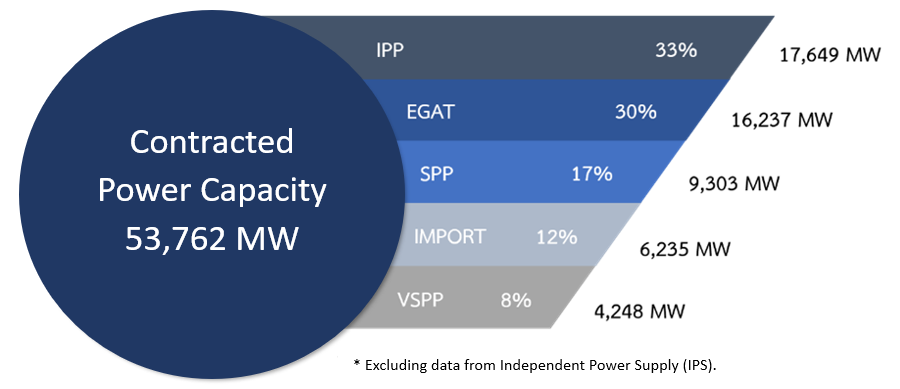
In addition, research from Bualuang Securities provides insights into the trend of peak electricity demand, as follows:
Based on EGAT statistics and research estimates, changes in peak electricity demand fluctuate in line with economic conditions and weather patterns:
In 2022, peak electricity demand increased by 1,876 megawatts.
In 2023, peak electricity demand continued to increase by 2,281 megawatts.
In 2024, peak electricity demand in the EGAT system reached 36.5 gigawatts in April. However, on a year-on-year basis, it declined by approximately 1,844 megawatts.
Key Drivers
According to the referenced sources, energy consumption trends during the period and in the foreseeable future are driven by two key factors:
Growth of Data Centers:
A primary driver stemming from foreign direct investment (FDI) inflows, particularly in the Eastern Economic Corridor (EEC) and Bangkok. Data centers require a stable load profile with continuous electricity consumption 24 hours a day, which differs from typical electricity usage patterns.Adoption of Electric Vehicles (EVs):
The rapid increase in EV adoption and usage is another key factor contributing to higher electricity demand, to the extent that the existing Power Development Plan (PDP) may no longer be sufficient to accommodate such demand.
Additional Observations
System Adequacy:
Although the current reserve margin appears sufficient, when excluding unstable energy sources (such as solar power during nighttime or hydropower imports from Lao PDR during the dry season), the effective reserve margin during peak demand periods in the summer nighttime may be reduced to approximately 16 percent. This level may be insufficient if additional demand from data centers increases by 2–3 gigawatts.PDP Revision:
Given that electricity demand has risen beyond previous projections, there is an urgent need to revise the PDP to incorporate additional demand from EVs and data centers, which may lead to further procurement of new power plants, including Independent Power Producers (IPPs).
Overview of Japan’s Electricity System
In October 2020, the Japanese government announced its target to reduce greenhouse gas emissions in order to achieve Carbon Neutrality. However, as of 2021, Japan still relied heavily on fossil fuels, accounting for 68.6 percent of its primary energy sources, as shown in Table 1.
To achieve its Carbon Neutrality target, the government has established an energy plan aiming to increase the share of electricity generation from renewable energy to 36–38 percent by 2030. Solar power is expected to play a major role, with total installed capacity exceeding 104 gigawatts, representing an increase of more than 33 percent from 78 gigawatts in 2021.
Japan has accelerated its energy transition under the Green Transformation (GX) initiative to achieve the targeted share of 36–38 percent clean energy by 2030. This includes the reintroduction of hydrogen energy innovation and nuclear power as key mechanisms to maintain system stability while reducing carbon emissions.
Table 1: Share of Primary Energy Consumption by Fuel Type up to 2021 and Targets for 2030
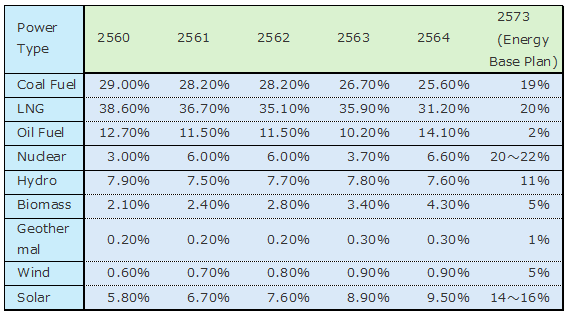
Source: Agency for Natural Resources and Energy, summarized by ISEP.
In fiscal year 2017, the Japanese government transitioned from a government-fixed tariff system to a competitive bidding system for determining electricity purchase prices, in order to align tariffs with declining production costs. According to the most recent auction data in 2022 for projects with a capacity of 1,000 kilowatts or more, the lowest bid price was set at JPY 9.63 per kilowatt-hour, representing a continuous decline from the first auction in 2017, which ranged between JPY 17.2–20 per kilowatt-hour.
However, several factors, including intense price competition and geographical constraints that increase project development costs, have led to lower investment returns, which may not align with the Company’s investment policies. Despite the declining trend in electricity tariffs, the Company continues to identify investment opportunities in legacy FIT projects, which still offer relatively high tariff rates. In addition, the Company has personnel with expertise in operating businesses in Japan, which helps reduce operating costs and enhance investment returns.
The Japanese government continues to support renewable energy, particularly large-scale solar and wind projects, through the Feed-in Premium (FIP) scheme, which differs from both the FIT and auction systems. Under the FIP scheme, operators receive revenue from electricity sales along with additional premiums throughout the project life. The Company is currently studying the pricing mechanisms of the FIP scheme, which are more complex than the FIT and auction systems, in order to accurately assess investment feasibility.
With its expertise in renewable energy and understanding of the Japanese market, the Company continues to explore new investment opportunities, primarily considering government policies, and has also begun studying investments in other types of renewable energy with long-term potential.
Overview of Malaysia’s Electricity System
In October 2020, the Japanese government announced its target to reduce greenhouse gas emissions to achieve Carbon Neutrality. However, as of 2021, Japan still relied heavily on fossil fuels, accounting for 68.6 percent of its primary energy sources.
In 2023, Malaysia’s economy expanded by more than 7 percent, exceeding earlier projections of 5.3–6.3 percent, driven by the recovery of the tourism sector, strong exports, and government economic stimulus policies. With continued economic growth, the electricity system has become a critical infrastructure requiring further development. Malaysia’s transmission network, which consists of transmission lines ranging from 132 kilovolts to 500 kilovolts, can be divided into three main regions:
Sarawak – operated by Sarawak Energy Berhad (SEB)
Sabah – operated by Sabah Electricity Sdn. Bhd. (SESB)
Peninsular Malaysia – operated by Tenaga Nasional Berhad (TNB)
Electricity Generation Capacity Mix in Malaysia (2022)
Natural Gas: 15,790 megawatts, representing 41 percent
Coal: 12,790 megawatts, representing 33 percent
Renewable Energy: 7,926 megawatts, representing 21 percent, comprising:
Hydropower: 5,687 megawatts
Solar Power: 2,239 megawatts
Malaysia has experienced an average annual electricity consumption growth rate of 3.86 percent during the period from 2006 to 2022. In 2022, total electricity generation reached 186,592 GWh, as illustrated in the figure below.
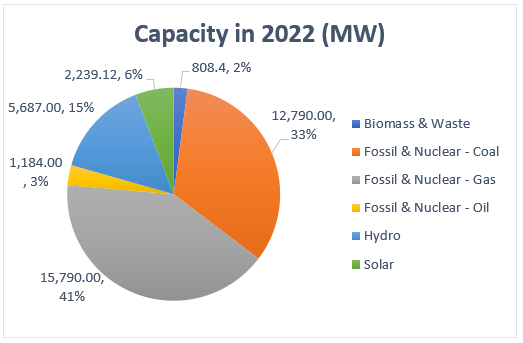
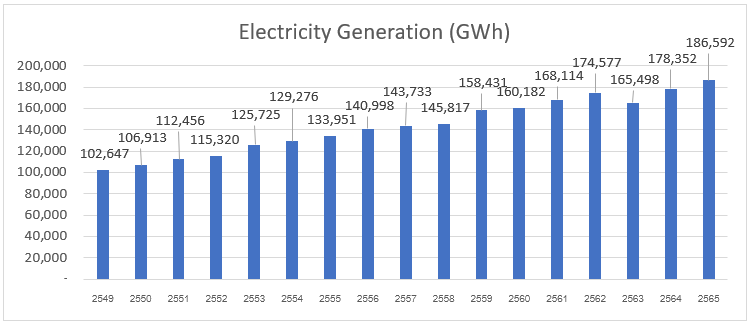
Source: BloombergNEF
The Malaysian government has established a medium-term renewable energy development plan, targeting an increase in the share of renewable energy to 31 percent by 2025 and 40 percent by 2035. To achieve these targets, renewable energy generation capacity in the system is required to reach 12,916 megawatts by 2025 and increase to 17,996 megawatts by 2035, as illustrated in the figure below.
In May 2023, the Malaysian government reaffirmed its commitment to transitioning the country toward a low-carbon economy, setting a target to increase installed renewable energy capacity to 70 percent of total energy by 2050.
To support this objective, the government has established the National Energy Transition Roadmap (NETR), which focuses on two key goals:
Increasing the share of renewable energy to 70 percent by 2050
Phasing out new coal-fired power plant projects
To achieve these goals, the Malaysian government will need to implement policies that support the growth of renewable energy over the next 30 years. In addition, the National Energy Council was established in 2022 to define directions and implement energy policies and the National Energy Policy (2022–2040), as well as to enhance carbon footprint reporting and reduce greenhouse gas emissions.
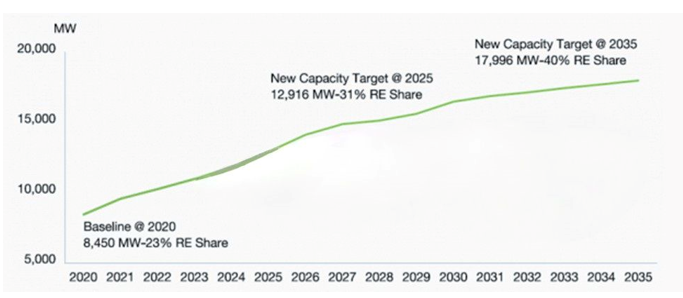
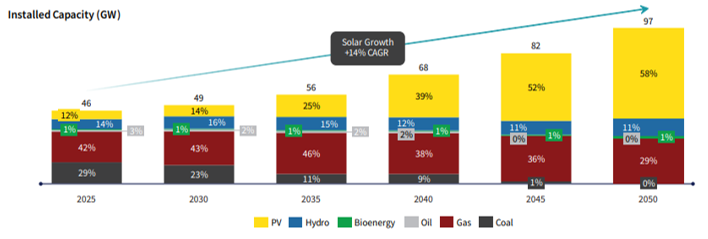
Source : National Energy Transition Roadmap (NETR), Ministry of Economy
The Malaysian government strongly supports solar power plants by providing opportunities for private sector participation in the ownership of Large Scale Solar (LSS) projects through a competitive bidding process conducted by government agencies.
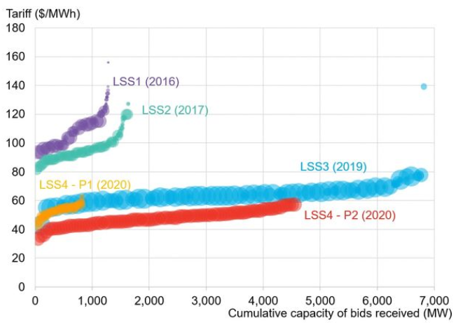
Source: BloombergNEF
In addition, the Corporate Green Power Program has been introduced to support private sector participation in renewable energy by allocating a total generation capacity of 800 megawatts. The program allows private companies seeking to procure electricity from solar energy to enter into power purchase agreements directly with selected project developers. In November 2023, the Malaysian government announced the list of selected project developers, with a requirement that the projects commence commercial operation by 2025.
In addition to solar energy, the government also supports other forms of renewable energy, such as small hydropower, biogas, and biomass power plants, with tax incentives provided to operators in the renewable energy sector.
The Company has partnered with local investors to develop a Large Scale Solar PV (LSSPV) power plant project with a capacity of 29.99 megawatts in Malaysia. The project has been completed and has commenced commercial operation since 31 December 2020.
Source : https://www.st.gov.my, www.spglobal.com, BloombergNEF, Malaysia Energy Transition Outlook (2023) by IRENA
Overview of Vietnam’s Electricity System
The Ministry of Industry and Trade of Vietnam (MOIT) has announced the National Power Development Plan VIII (Power Development Plan VIII – PDP8), covering the period from 2021 to 2030, with a vision extending to 2050. The plan was officially promulgated in May 2023 to align with Vietnam’s Net-Zero Target by 2050, as committed under the COP26 agreement.
Under PDP8, Vietnam has established its energy structure in response to rapid economic growth and the expansion of high-tech industries. The Vietnamese government has further revised the plan in 2025 (Revised PDP8), with a focus on a significant transformation of the energy structure. The revised plan aims to reduce reliance on coal in a tangible manner and replace it with an increased share of renewable energy and liquefied natural gas (LNG) to support the country’s average GDP growth of 6.5–7.5 percent per year.
Electricity demand in Vietnam is expected to increase significantly, with installed capacity projected to reach approximately 150,489 megawatts by 2030. In addition, the implementation of the Direct Power Purchase Agreement (DPPA) mechanism represents a key milestone, enabling the private sector to directly access clean energy and enhancing long-term international competitiveness in a sustainable manner (Source: Ministry of Industry and Trade (MOIT)).
Source of Electricity | 2030 (MW) | 2045 (MW) |
Hydropower | 29,346 | 36,016 |
Coal-Fired Thermal Power | 30,127 | 0 |
Biomass / Ammonia Thermal Power | - | 25,632 – 32,432 |
Domestic Gas | 14,930 | 7,900 |
Domestic Gas Converted to LNG | - | |
Domestic Gas Fully Converted to Hydrogen | - | 7,030 |
LNG Thermal Power | 22,400 | - |
LNG Co-firing with Hydrogen | - | 4,500 – 9,000 |
LNG Fully Converted to Hydrogen | - | 16,400 – 20,900 |
Onshore Wind Power | 21,880 | 60,050 – 77,050 |
Offshore Wind Power | 6,000 | 70,000 – 91,500 |
Grid-connected Solar Power | 10,236 | 168,594 – 189,294 |
Non-grid Solar Power | 2,600 | |
Biomass and Waste-to-Energy | 2,270 | 6,015 |
Waste Heat Recovery Power | 2,700 | 4,500 |
Other Alternative Energy | 300 | 30,900 – 46,200 |
Pumped Storage Hydropower | 2,400 | 30,650 – 45,550 |
Battery Energy Storage | 300 | |
Imported Power | 5,000 | 11,042 |
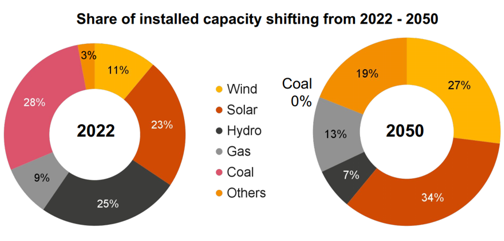
Source: PwC (Vietnam)
Based on the aforementioned plan, the proportion of electricity generated from renewable energy relative to the total installed capacity is targeted at 28% by 2030 and 61% by 2050. The Government of Vietnam is developing the power network to align with the system’s capacity potential, with a focus on enhancing transmission infrastructure in the northern region of the country during 2021–2030 to accommodate the increasing share of renewable energy.
In this regard, the PDP8 aims to reduce the use of coal-fired power generation to zero by 2050. In addition, the plan targets a reduction in the share of hydropower from 25% to 10% by 2050, while promoting liquefied natural gas (LNG) as a baseload energy source to ensure energy balance.
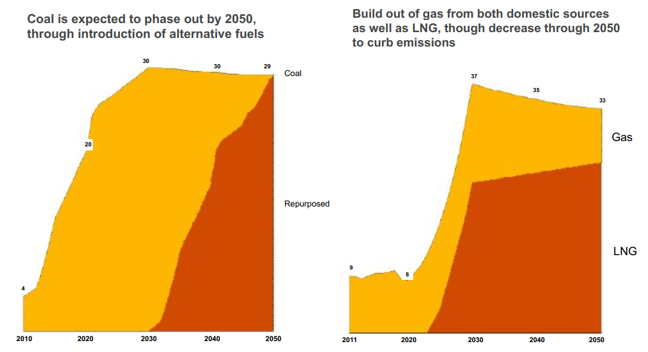
Source: PwC (Vietnam)
The PDP8 estimates that, during the period 2021–2030, Vietnam will require approximately USD 134.7 billion in investment in the power sector, comprising approximately USD 119.8 billion for power generation development and approximately USD 15.0 billion for transmission system development. For the period 2031–2050, total investment is projected to be approximately USD 399.2–523.1 billion, including approximately USD 364.4–511.2 billion for power generation development and approximately USD 34.8–38.6 billion for transmission system development.
The Government of Vietnam continues to support electricity generation from renewable energy, with a focus on solar and wind power. Since 2014, Vietnam’s renewable energy installed capacity has grown rapidly and currently exceeds 30,000 megawatts, making Vietnam one of the fastest-growing renewable energy markets in the world.
However, the Government of Vietnam continues to face challenges related to delays in the development of transmission infrastructure, which remains insufficient to accommodate the growth of renewable energy. The government aims to address these challenges under the PDP8, while also placing importance on new power generation technologies, particularly battery energy, waste-to-energy, and thermal energy from hydrogen and ammonia. These emerging energy technologies are expected to play a key role in enabling the country to achieve its Net-zero target by 2050.
Overview of the Renewable Energy Power Generation and Distribution Business in Vietnam
Although the PDP8 faces several challenges, investment opportunities in Vietnam’s energy sector remain substantial, with a planned investment of nearly USD 650 billion over the next 30 years. This is expected to attract potential foreign investors.
Large-scale projects, such as LNG projects, coal-fired power plant conversion, as well as wind, solar, and battery energy projects, continue to present significant opportunities for the private sector. However, investors are required to closely monitor the policies and regulatory directions of the Government of Vietnam.
Renewable Energy Targets in Vietnam
The Government of Vietnam expects domestic energy consumption to increase to 567 terawatt-hours by 2030, with renewable energy targets as follows:
Energy Type | 2030 (MW) | 2050 (MW) |
Solar Energy | 12,836 | 168,594 – 189,294 |
Wind Energy | 27,880 | 130,050 – 168,550 |
The Company is interested in investing in renewable energy in Vietnam, particularly in solar and wind power, which are areas in which the Company has expertise in development and construction.
Engineering and Turnkey Business Group
Thailand’s energy policy focuses on promoting clean energy to support sustainable development and mitigate the impacts of climate change, with an emphasis on increasing the share of renewable energy, such as solar, wind, biomass, and bioenergy.
In addition, the government supports investment in renewable energy projects at both the household and industrial levels to promote the efficient and sustainable growth of clean energy. This has resulted in continued interest from both domestic and international companies in investing in renewable power generation businesses.
With respect to the Engineering, Procurement and Construction (EPC) business for renewable power plants, which is one of the Company’s core businesses, the growth trend aligns with the increasing scale and number of renewable power plants. The renewable energy power generation industry in Thailand continues to have significant potential for further expansion in the future.
Currently, Gunkul Power Development Co., Ltd. (GPD), a subsidiary of Gunkul Engineering Public Company Limited, operates a comprehensive engineering and construction business for electrical and energy systems, providing services that include:
Construction and improvement of substations
Construction and improvement of power transmission and distribution systems
Construction of renewable energy power generation systems
Provision of electrical engineering services and other related utility systems
With a strong commitment to adopting new technologies and innovations in its operations, GPD has been recognized as one of the leading companies in engineering and construction of electrical and energy systems. The Company has expertise in executing large-scale projects for both public and private sectors. Key ongoing projects include:
Expansion of urban energy infrastructure systems
Construction and development of underground power distribution systems
Construction of renewable energy power plants
Construction and development of overhead, underground, and submarine transmission systems
With its accumulated capabilities and experience, GPD is committed to becoming a leader in the engineering and construction of electrical and energy systems on a sustainable basis, while continuously developing its business to support increasing future demand.
High Voltage Electrical Equipment Business Group
1. Manufacturing, Procurement, and Distribution of Electrical System Equipment
The growth trend of the manufacturing, procurement, and distribution of electrical system equipment is directly correlated with the power generation business, which expands in line with electricity demand and generation capacity in the country. Key factors driving the expansion of this industry include the development of transmission and distribution systems, as well as government policies aimed at increasing the country’s power generation capacity.
Relevant authorities, such as the Electricity Generating Authority of Thailand (EGAT) and the Energy Policy and Planning Office (EPPO) under the Ministry of Energy, have projected future electricity demand in Thailand and established the framework under the Power Development Plan (PDP) to support investment planning for various development projects to accommodate rising electricity demand.
Under the PDP2018 Rev.1 of the three electricity authorities, namely EGAT, the Metropolitan Electricity Authority (MEA), and the Provincial Electricity Authority (PEA), investment plans have been established for the development of electrical infrastructure, including:
Construction and development of transmission systems and substations
Improvement and expansion of electricity distribution systems
Conversion of overhead power lines to underground systems in Bangkok and major cities
Development of power systems to support the establishment of special economic zones in 10 border provinces
Development of submarine cable systems to Koh Samui District, Surat Thani Province
Transmission system projects to support water management projects for Bhumibol Dam
Development of power systems under the Smart Grid Master Plan
These large-scale investment policies, with a total investment value exceeding THB 100 billion, enable the private sector to expand production capacity and increase investment in the electrical equipment industry. In addition, government support for transportation infrastructure and urban mass transit systems, such as electric railway projects in Bangkok and its vicinity, is another factor supporting the continued growth of the electrical equipment business in Thailand.
2. Manufacturing, Procurement, and Distribution of Renewable Energy Equipment
The business of manufacturing, procurement, and distribution of renewable energy equipment continues to expand, supported by government policies under PDP2018 Rev.1, which promotes power purchase from renewable energy sources in accordance with the Alternative Energy Development Plan (AEDP2018). This includes support for solar rooftop installations for self-consumption by industrial operators, as well as enabling private investment in solar rooftop systems and the liberalized sale of electricity to private sector customers.
Furthermore, the Board of Investment (BOI) has announced investment promotion measures to improve production efficiency under Announcement No. 9/2017, granting tax incentives for projects related to energy conservation, renewable energy utilization, and environmental impact reduction. This has created strong incentives for industrial sectors, warehouses, and large buildings to invest in renewable energy technologies. Key project examples include:
Industrial factories installing rooftop solar panels and utilizing the generated electricity for internal consumption to reduce energy costs
Increased opportunities for the private sector to invest in renewable energy systems and supply electricity to other business sectors
In response to the growth of the renewable energy sector and government support, the Company has developed and enhanced its product offerings, particularly in grounding system structures and equipment, to support solar power plant projects with a combined capacity of more than 800 megawatts during 2020–2028. This is aimed at meeting the growing demand from private energy companies. The expansion of the renewable energy market and the increasing promotion of clean energy usage are key factors driving the continuous development and growth of the renewable energy equipment business in line with rising future energy demand.
Hemp and Cannabis Business Group
At present, the hemp and cannabis market in Thailand is highly volatile due to regulatory uncertainty and ongoing changes in relevant laws and regulations. Most recently, the relevant authorities are in the process of drafting the Hemp and Cannabis Act, which primarily aims to regulate usage for medical purposes, patient treatment, product standardization, farm registration requirements, and the imposition of penalties for importation, production, or use that does not comply with the prescribed objectives. The legislation is expected to be finalized in 2025.
Following the enactment of such legislation, the Company believes that the overall market conditions will improve, as producers that do not meet the required standards or qualifications will be unable to obtain cultivation licenses. This is expected to reduce the supply of cannabis flowers in the market. In addition, permitting sales exclusively for medical purposes, which involve high-quality products, is anticipated to support higher market prices and improve the overall perception of cannabis within the country.
Furthermore, globally, more than 30 countries have legalized the use of medical cannabis, with the number expected to continue increasing. In 2024, the global hemp and cannabis market is estimated to be valued at over USD 20.24 billion and is projected to grow at an average rate of 2.1% per annum, reaching approximately USD 22.46 billion by 2029.
Medical Cannabis Legalized Word Map Update
Source: https://www.cannabisbusinesstimes.com/
Medical Cannabis Revenue - Worldwide
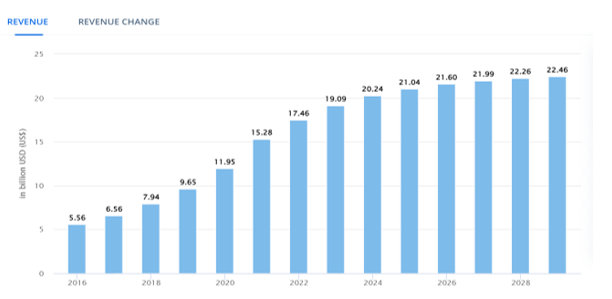
Source: https://www.statista.com/outlook/hmo/cannabis/medical-cannabis/worldwide
Competitive Landscape and Business Strategy
Clean Energy Business Group
The renewable energy market, both globally and in Thailand, continues to expand, driven by government policies aimed at increasing the share of electricity generation from renewable sources in order to reduce greenhouse gas emissions in line with long-term Net Zero Emissions targets.
In 2023, electricity generation from solar and wind energy showed a strong growth trend in response to increasing demand for clean energy both globally and domestically. This growth is supported by each country’s Net Zero Pathway policies, including Thailand, which has established key milestones to achieve carbon neutrality and net zero greenhouse gas emissions within the following timelines:
2025: Improve power plant efficiency, increase the share of renewable energy, and gradually phase out oil-fired power plants
2030: Deploy energy storage systems (battery storage) in conjunction with solar and wind energy
2040: Gradually phase out coal-fired power plants and increase the share of renewable energy to 68%
2050: Eliminate coal-fired power plants and increase the share of renewable energy to 74%, while achieving carbon neutrality
2065: Thailand achieves net zero greenhouse gas emissions
Timeline for the Transition of Power Generation Systems Toward Net Zero Greenhouse Gas Emissions
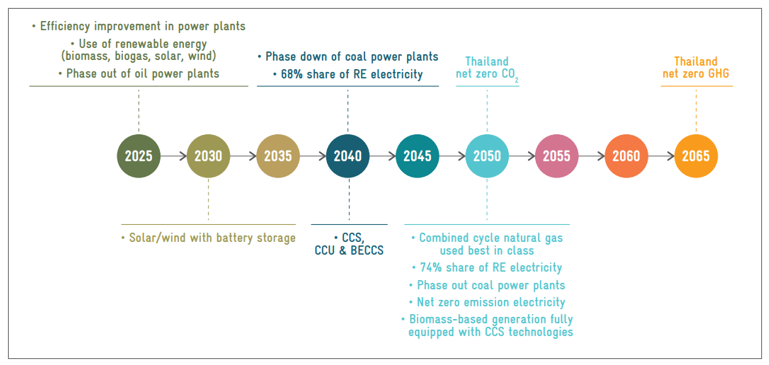
Source: Thailand’s Long-term Low Greenhouse Gas Emission Development Strategy,
Office of Natural Resources and Environmental Policy and Planning
Under the PDP2024, Thailand targets an increase in installed capacity of approximately 30,000 megawatts from solar energy and approximately 8,000 megawatts from wind energy by 2037.
Accordingly, the Company has opportunities to expand its business and increase its market share in the renewable energy sector in Thailand and the Southeast Asian region, with a focus on the following key strategies:
Capacity Expansion: The Company can further develop solar and wind energy projects by expanding existing projects and developing new ones to align with the increasing long-term demand for renewable energy.
Adoption of New Technologies: The Company places importance on the development of technology and innovation, such as:
Battery Energy Storage Systems (BESS) to enhance grid stability
Solar Floating to reduce limitations related to land availability
These technologies will improve power generation efficiency and respond to future market demand.
Alignment with Government Policies: The Company operates in alignment with government policies promoting renewable energy, which will enable it to receive government support and enhance its competitiveness.
Sustainability and Long-term Growth: The Company is committed to conducting its business in a sustainable manner and contributing to the achievement of the country’s Net Zero Emissions targets, thereby strengthening confidence among all stakeholder groups.
Risk Factors Affecting Competition and Business Growth
Although the renewable energy market continues to grow, there remain key risk factors that require effective management, including:
Impacts from Climate Change and Carbon Taxation:
Climate change may affect the efficiency and reliability of renewable energy generation, while carbon tax policies may increase operational costs for the business.Energy Market Volatility and Natural Disasters:
Energy crises and unpredictable natural disasters may impact the stability of power systems and overall operations.Intensifying Competition from New Market Entrants:
Declining costs of clean energy technologies and rapid advancements in technical know-how may lower barriers to entry, enabling new players to enter the market more easily.Government Policies Supporting Foreign Investment in Clean Energy Projects:
Such policies may enable foreign companies to compete more effectively and capture market share from domestic operators.
Business Growth Strategy
Business Objectives
Currently, the Company has a total installed power generation capacity of more than 1,629 megawatts across four countries, with a target to expand its total capacity to 2,000 megawatts by 2027.
Short-term and Long-term Strategies
The Company recognizes its competitive advantage in existing markets, supported by its expertise in electrical engineering and renewable energy, while also seeking to create new market spaces as opportunities for New S-Curve growth. This underpins the Company’s focus on innovation to enhance comprehensive access to electricity users, based on four key innovation pillars as follows:
Incremental Innovation: Innovations that improve certain processes to reduce costs
Breakthrough Innovation: Innovations that create new solutions and disrupt existing businesses
Business Model Innovation: Innovations arising from improvements in internal processes that lead to new business models
New Venture Innovation: Innovations that fundamentally transform existing businesses, requiring both capability enhancement and entry into new markets
Short-term (1 Year)
1. Enhancing Operational Efficiency and Investment in New Technologies
Focus on improving and optimizing existing renewable energy projects, such as the installation of Battery Energy Storage Systems (BESS) and upgrading technologies used in power plants to increase efficiency and reduce production costs
Explore new opportunities for developing renewable energy projects both domestically and internationally, particularly in high-growth markets such as Southeast Asia
Prepare for participation in upcoming government bidding processes for new projects, with the objective of expanding total installed capacity and reinforcing leadership in renewable energy
Enhance business value by expanding investments into high-value business segments and extending product offerings to better serve a broader customer base
2. Strengthening Financial Stability and Risk Management
Conduct comprehensive and prudent risk assessments for various projects to ensure effective implementation and value creation
Focus on securing appropriate funding sources for new project development, both domestically and internationally, to strengthen the Company’s financial position
Medium-term (3–5 Years)
1. Development of Renewable Energy Projects in Line with Government Plans
Focus on executing projects under the national Power Development Plan (PDP), particularly renewable energy projects awarded through competitive bidding, such as solar and wind projects, with emphasis on effective project management to achieve scheduled commercial operation dates (SCOD)
Collaborate with leading partners through joint ventures, both domestically and internationally, to support growth in alignment with industry trends and global developments, as well as to expand investments in renewable energy projects in high-potential countries, thereby strengthening regional presence
Support the growth of each business unit in emerging industries aligned with national direction to enhance management efficiency and create long-term sustainable growth opportunities
2. Development of Clean Energy Innovation and Technology
Promote research and development of new clean energy technologies, such as Smart Grid systems, Virtual Power Plants, and hydrogen energy, to position the Company as a leader in the renewable energy industry
Emphasize the adoption of advanced and environmentally friendly technologies in operations to reduce greenhouse gas emissions and support the achievement of Net Zero targets
Long-term (More than 10 Years)
1. Becoming a Leader and Trusted Partner in the Global Renewable Energy Industry
Expand into new high-potential markets, such as Indonesia, the Philippines, Taiwan, and others, where demand for clean energy continues to grow
Develop new renewable energy projects and pursue strategic acquisitions to strengthen the investment portfolio and increase renewable energy generation capacity
2. Sustainable Development and Stakeholder Confidence
Conduct business in accordance with ESG (Environmental, Social, and Governance) principles to ensure sustainable growth and build confidence among shareholders and stakeholders
Continuously assess environmental impacts and enhance environmental and social management strategies to play a significant role in addressing climate change and promoting sustainable social development
3. Human Capital and Organizational Development for Sustainable Growth
Enhance the capabilities of personnel at all levels through training and skill development to ensure readiness for future growth
Foster an organizational culture that emphasizes innovation alongside sustainability, enabling the Company to remain resilient and adaptable to future challenges
Investment Plan and Opportunities in Overseas Renewable Energy
The Company has plans to expand its business internationally to support future growth, driven by the following key factors:
Rapid Growth of Global Renewable Energy:
Investment in renewable energy, including solar power, continues to increase to meet rising energy demand and reduce greenhouse gas emissions.Technological Advancements:
Emerging technologies, such as high-efficiency photovoltaic cells, enhanced energy storage systems with greater capacity, and the application of artificial intelligence (AI) in energy management, have improved the competitiveness and efficiency of solar energy.International Collaboration:
There is increasing international cooperation in research and development of renewable energy technologies, as well as the exchange of knowledge and experience in the development of solar power plants.Support from International Organizations:
Organizations such as the International Renewable Energy Agency (IRENA) and the World Bank provide financial and technical support for the development of solar energy projects worldwide.
The Company focuses on countries with clear renewable energy development plans and strong economic stability. It also conducts comprehensive assessments of investment risks, as well as government policy and investment support. Target countries for investment are categorized into two groups as follows:
Countries under Investment Study: The Philippines and Taiwan
Countries with Existing Investments: Vietnam and Japan
Competitive Strengths of the Company
Gunkul Engineering Public Company Limited is committed to developing renewable energy projects domestically through a comprehensive strategy that covers the entire value chain, from greenfield development to construction, commercial operation (COD), and ongoing operations, all managed in-house. This integrated approach helps reduce project risks and enhance returns, as the Company possesses extensive experience and in-depth understanding of projects it develops itself, enabling effective risk mitigation and efficient project management.
The renewable energy industry is one of the fastest-growing sectors both globally and in Thailand, driven by increasing demand for clean and sustainable energy. Companies that are able to adapt and offer technologies aligned with these trends gain a long-term competitive advantage. The Company’s alignment with the PDP2024 reflects its capability to adapt and grow in a rapidly evolving market. Furthermore, its readiness in project development and investment in new technologies enables the Company to fully capitalize on emerging opportunities, supported by several key strengths that differentiate and enhance its competitiveness in the renewable energy market, as follows:
1. Strong Market Share
The renewable energy trading market in Thailand is highly competitive. GUNKUL is recognized as one of the leading players in the renewable energy sector in Thailand, with a strong market share in both wind and solar energy projects. The Company has developed and operated several large-scale renewable energy projects and is widely recognized as a high-quality project developer.
This strong market position reinforces the Company’s credibility in sustainable renewable power generation, particularly in government power purchase bidding schemes conducted under the Feed-in Tariff (FiT) mechanism. In 2022, the government announced the procurement of approximately 5,000 megawatts of renewable energy capacity, primarily from solar and wind power (non-fuel cost category, 2022). The Company was awarded approximately 17.15% of the total capacity offered under this category, demonstrating its capability in developing renewable energy projects in Thailand and expanding its business into international markets.
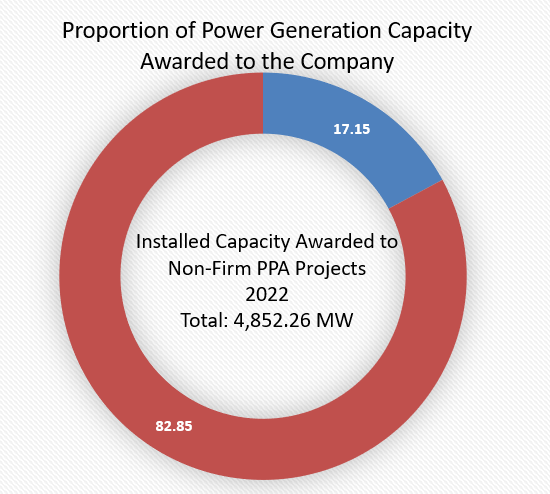
Source: Announcement of the Energy Regulatory Commission on the List of Qualified Applicants for Power Generation under the Regulations on Procurement of Electricity from Renewable Energy in the Form of Feed-in Tariff (FiT) for 2022–2030 (Non-Fuel Cost Category), B.E. 2565 (2022).
2. Extensive Experience in Renewable Energy
With many years of experience in developing a wide range of renewable energy projects, the Company has expertise across wind, solar, and other renewable energy sources. The Company has developed projects both domestically and internationally, particularly in Southeast Asia. This experience enables the Company to effectively manage technical challenges and project execution.
3. Turnkey Solutions Capability
The Company has the capability to deliver comprehensive renewable energy projects, covering the entire value chain from design, procurement, and construction to operation and maintenance. This end-to-end capability represents a key competitive advantage, allowing the Company to maintain high standards of quality control and optimize power generation efficiency.
4. Flexibility and Adaptability
The Company’s ability to rapidly adapt to market changes enables it to effectively respond to challenges and opportunities in the renewable energy industry, including changes in energy regulations and government policies, as well as advancements in clean energy technologies such as Battery Energy Storage Systems (BESS), Smart Grid, and Virtual Power Plants. This adaptability allows the Company to deliver more advanced and efficient products and services to its customers.
5. Innovation and Technology Investment
The Company is committed to advancing innovation in renewable energy through continuous investment in new technologies to enhance efficiency in power generation and energy management. This includes the deployment of energy storage systems to improve grid stability and the development of projects related to floating solar and wind energy, which represent emerging trends in the renewable energy industry.
6. Sustainable and Transparent Management
The Company conducts its business in accordance with ESG (Environmental, Social, and Governance) principles, placing importance on transparency in management, environmental impact, and social responsibility. The Company also implements strategies that promote long-term sustainability to ensure that its projects generate balanced and sustainable benefits for the Company, its shareholders, and relevant communities.
As outlined above, the Company is well-prepared in all aspects, including human capital development and prudent investment policies, with careful consideration of appropriate investments, risk management, and sustainable organizational development. The Company not only aims to generate profits but also emphasizes environmental, social, and governance considerations to achieve a balance between business growth and long-term sustainability.
Engineering and Turnkey Business Group
At present, construction contractors, both domestic and international, play a significant role in EPC (Engineering, Procurement and Construction) projects, with intense competition to secure contracts across various projects. The EPC model emphasizes comprehensive services, covering engineering design, procurement of equipment and materials, construction, as well as testing and commissioning, and the delivery of completed projects to clients.
Companies with strong expertise and sufficient resources are able to efficiently meet the requirements of large-scale projects, particularly those requiring technical know-how, effective cost management, and timely project delivery. These factors provide a competitive advantage in securing both public and private sector contracts. The Group has extensive and comprehensive experience in electrical system construction, including solar and wind power plants, substations, and transmission systems (overhead, underground, and submarine), as well as coordination with electricity authorities and relevant government agencies. This has strengthened customer confidence and led to continued engagement with the Company, providing a competitive edge over other market participants.
Competitive Landscape
The EPC and turnkey market is highly competitive, with several key players, including major domestic contractors and multinational companies with specialized technologies, particularly in large government projects that require pre-qualification and proven technical expertise
Key growth drivers include ongoing government investments in transmission and distribution expansion under the PDP, the development of Smart Grid systems in Thailand, and increasing investment in electrical infrastructure across ASEAN
Business Strategy
Partnership Approach: Collaborate with specialized engineering firms, both domestically and internationally, to jointly bid for large-scale projects and leverage shared technological expertise
Digital Project Management: Utilize specialized software systems for design and construction management to enhance efficiency and cost control accuracy
Safety and Quality Enhancement: Strengthen safety and quality standards to build client confidence and reduce risks in large-scale construction projects
Short-term and Long-term Strategies
Short-term (1–2 Years)
Accelerate the completion of existing backlog projects efficiently, with strict cost control and supply chain risk management
Expand bidding activities in both public and private sector projects, focusing on Smart Grid, underground cable systems, and substations
Enhance internal capabilities through training programs on new technologies in both design and construction
Long-term (3–5 Years and Beyond)
Expand into international markets by exploring joint ventures or engineering project opportunities in neighboring countries, such as Vietnam and Malaysia, where electricity infrastructure development is accelerating in line with economic growth
Strengthen research and development (R&D) capabilities to create technological differentiation in power systems, including energy storage systems, microgrids, and digital substations
Expand into Operation and Maintenance (O&M) services to generate recurring income through post-construction management of electrical infrastructure systems
High Voltage Electrical Equipment Business Group
The Group’s primary target customers include government agencies, state-owned enterprises, and private sector companies. These customers typically establish qualification criteria for bidders and assess the capabilities and experience of each participant in supplying equipment for various projects. The Group competes with approximately 8–10 operators in bidding processes. While some competitors offer a range of products, no single competitor currently provides a comprehensive product portfolio across all categories to the same extent as the Group. In addition, due to the Group’s broad product range, certain suppliers in specific product categories also act as business partners of the Group.
As the power system is a fundamental infrastructure of the country, the government continues to prioritize investment in this sector annually, resulting in sustained growth in the overall market value of related businesses in line with public investment policies. At the same time, the number of new entrants into the market remains limited due to the significant capital requirements and the need to meet strict quality and technical standards specified by customers. Consequently, competition in this industry continues to focus on product development to meet international standards and customer requirements, while maintaining customer confidence, despite increasing price competition from imported products, particularly from China.
The Group’s key strengths lie in the quality and diversity of its product offerings, supported by over 40 years of experience in the business. This has enabled the Group to develop strong expertise in sourcing high-quality products from both domestic and international partners. In addition, the Group operates its own manufacturing facilities, allowing for better control over product quality and production costs compared to competitors without in-house production capabilities.
The Group’s manufacturing facilities have been continuously upgraded with advanced technologies and automation, such as laser cutting machines, robotic welding systems, and continuous flow assembly lines, enhancing efficiency and production flexibility. This enables the Group to maintain higher inventory readiness and respond more effectively to customer demands.
Furthermore, the Group emphasizes product quality and continuous research and development to meet diverse customer needs. Products manufactured by the Group are produced and tested in accordance with industrial and international standards, registered with the Ministry of Industry, and certified under relevant industrial standards. As a result, the Group has established strong relationships and gained high levels of trust among its customers, leading to consistent repeat business.
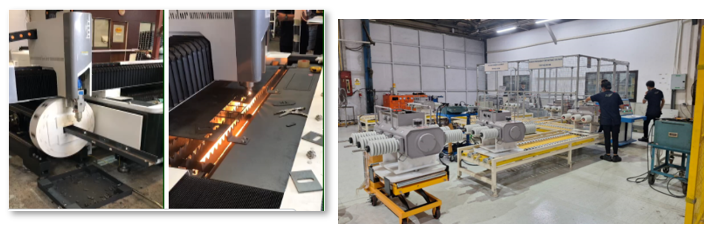
Competitive Landscape
There are both domestic and international manufacturers of high-voltage electrical equipment (e.g., from China, Japan, and Korea) competing in terms of price and quality
Domestic electricity authorities continue to implement large-scale investment projects (such as substations and underground cable systems), resulting in increased demand for high-voltage electrical equipment
Key risk factors include volatility in raw material prices (copper, steel, and aluminum) and fluctuations in foreign exchange rates
Business Strategy
Focus on Quality and Safety Standards: To ensure acceptance in bidding processes with electricity authorities and international projects
Supply Chain Partnership: Establish long-term agreements with high-quality raw material suppliers to maintain cost competitiveness
Short-term and Long-term Strategies
Short-term (1–2 Years)
Expand presence in both public and private sectors by targeting inclusion in vendor lists of government agencies and large corporations
Strengthen cost and logistics management through advance raw material planning and collaboration with logistics partners to mitigate cost volatility
Enhance production efficiency by adopting automation systems and Lean Manufacturing in assembly processes
Long-term (3–5 Years and Beyond)
Invest in research and development to produce high-standard products, such as high-voltage equipment supporting 500 kV and above, and Smart Grid-compatible equipment requiring high stability
Build a Thai technology brand with international standards to enhance product value and strengthen long-term market positioning
Expand into ASEAN markets by developing distributor networks and forming partnerships with local partners
Hemp and Cannabis Business Group
Driven by the growing attractiveness of hemp and cannabis, along with expanding opportunities in both global and domestic markets, a number of operators have shown interest in investing in this business. The Company, however, holds a competitive advantage through its land area of more than 5,000 rai, which is readily available for development, supported by reliable water resources for cultivation, as well as advanced agricultural innovations. These include the use of solar energy, which provides low-cost electricity for controlling lighting and temperature in closed greenhouse systems, resulting in lower production costs. In addition, the Company has obtained medical-grade cultivation certifications to support export markets, further strengthening its competitive position.
Competitive Landscape
Following the establishment of clearer regulatory frameworks, smaller operators that do not meet required standards are expected to gradually exit the market, leaving primarily large-scale or qualified players
The domestic market is expected to increasingly focus on medical and wellness applications, as regulations emphasize quality control and proper usage
In international markets, particularly in the United States, Canada, and certain European countries, cannabis use for both medical and recreational purposes is more widely accepted; however, competition is intense and regulatory requirements are stringent
Business Strategy
Focus on High-Standard Genetics and Production Processes: To support licensing requirements under new regulations and to prepare for future exports
Collaboration with Medical and Research Institutions: To conduct clinical research and develop reliable hemp and cannabis-based products
Development of Wellness and Medical Product Brands: Such as CBD oil, pharmaceuticals/nutraceuticals, and cosmetics with certified standards
Short-term and Long-term Strategies
Short-term (1–2 Years)
Enhance cultivation and extraction processes to meet international standards (e.g., GMP/GAP) in preparation for regulatory approvals under new legislation
Establish partnerships with hospitals and clinics to pilot medical applications and support research development
Conduct domestic marketing through legally compliant channels to build awareness of product quality and regulatory compliance
Long-term (3–5 Years and Beyond)
Expand into export markets once Thailand’s regulatory framework becomes fully established and production facilities obtain international certifications (e.g., EU GMP, U.S. FDA)
Develop a fully integrated value chain, covering genetics research, cultivation, extraction, production, and distribution (Medical Cannabis Supply Chain)
Product Information — Overview
Introduction
Gunkul Engineering Public Company Limited (the “Company”) operates its core businesses across three segments: the energy business, the engineering and turnkey business, and the high-voltage electrical equipment business. The Company provides integrated services across the entire power system value chain, leveraging advanced technology and innovation to strengthen infrastructure in a sustainable manner.
Projects Under Construction
Has Projects Under Construction (Y/N)
Yes
Description
As at 31 December 2025, the subsidiaries had construction contracts under execution in the engineering, procurement, and construction (EPC) business that had not yet been completed or delivered, with a total value of approximately Baht 3,077.36 million.
More Detail
Total Projects
14
Total Project Value
6913.5
Recognized Value
2939.27
Remaining / Unrecognized Value
3974.23
Projects
| Project Name | Value | Income % | Est. Years | Est. Months | Est. Completion |
|---|---|---|---|---|---|
| Underground Project No. 1 | 1,350 | 80.72 | 7 | 7 | 2027-05-01 |
| Underground Project No. 2 | 189 | 99.07 | 1 | 8 | 2026-01-01 |
| Transmission Line Project No. 1 | 317 | 11.66 | 1 | 12 | 2027-09-01 |
| Transmission Line and Underground Project No. 1 | 600 | 22 | 1 | 6 | 2026-10-01 |
| Transmission Line and Underground Project No. 2 | 247 | 22.7 | 1 | 6 | 2026-11-01 |
| Transmission Line and Underground Project No. 3 | 115 | 19 | 1 | 2 | 2026-08-01 |
| Balance of Plant Project No. 1 | 934 | 20 | 0 | 11 | 2026-12-01 |
| Solar Farm Project No. 1 | 162 | 18.85 | 1 | 0 | 2026-12-01 |
| Solar Farm Project No. 2 | 90 | 89.26 | 0 | 1 | 2026-04-01 |
| Solar Farm Project No. 3 | 437 | 9 | 1 | 0 | 2026-12-01 |
| Solar Farm Project No. 4 | 527 | 9 | 1 | 0 | 2026-11-01 |
| Solar Farm Project No. 5 | 455 | 39 | 1 | 0 | 2026-12-01 |
| Solar Farm Project No. 6 | 537 | 39 | 1 | 0 | 2026-09-01 |
| Solar Farm Project No. 7 | 949 | 32 | 1 | 0 | 2026-09-01 |
Debentures & Bills of Exchange
Introduction
As of 31 December 2025, the Company had outstanding named debentures offered to institutional investors and high net worth investors, unsecured, totaling THB 2,300 million, with maturity dates in July 2026 and November 2026.
Has Debentures (Y/N)
Yes
Debentures
| Debenture Name | Interest Rate (%) | Outstanding | Maturity Date | Term | Types |
|---|---|---|---|---|---|
| Debentures of Gunkul Engineering Public Company Limited No. 1/2023, due for redemption in B.E. 2569 (2026) | 4 | 1,500 | 7 July 2026 | 3 years and 2 months | 2789 · Description: Senior Debenture · 2791 · Description: Unsecured Debenture |
| Debentures of Gunkul Engineering Public Company Limited No. 1/2024, due for redemption in B.E. 2569 (2026) | 4.25 | 800 | 22 November 2026 | 2 years and 9 months | 2789 · Description: Senior Debenture · 2791 · Description: Unsecured Debenture |
Convertible Securities
Has Convertible Securities (Y/N)
No